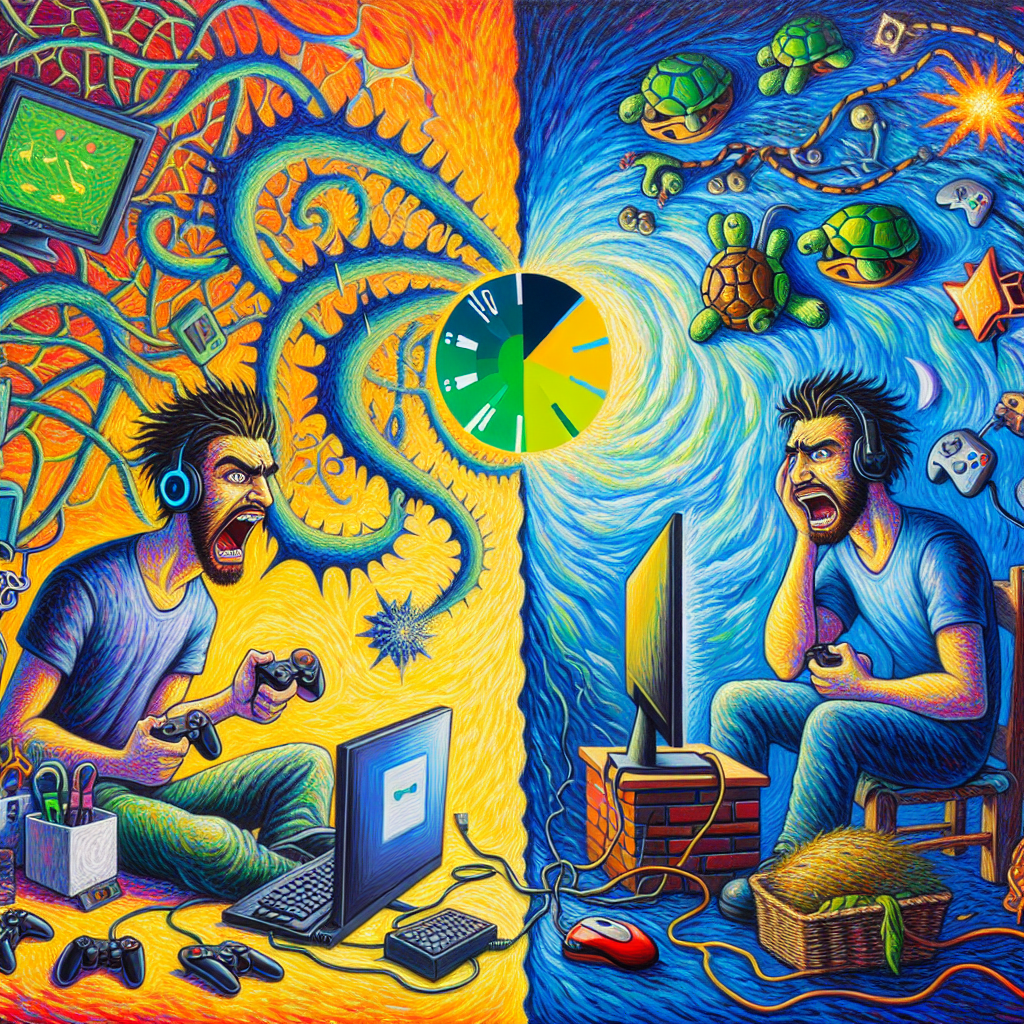
Unlocking Leadership Potential: The Impact Of Gaming
By Tom Seest
At HowDoYouGame, we help people who love board games by collating information and news about games.
Be sure to read our other related stories at HowDoYouGame to learn more about games.
Is Your Lack Of Gaming Costing Them Future Leadership Skills?
Is Your Lack of Gaming Costing Them Future Leadership Skills?
In today’s fast-paced, technology-driven world, it’s easy to raise an eyebrow at the idea of gaming. It may seem like a frivolous pastime, a distraction from serious commitments. But let me engage you for a moment—what if I told you that the very act of playing games can profoundly impact leadership skills? Yes, I said that. Dive into the realm of gamification, and you might just find a treasure trove of valuable lessons hiding behind those colorful screens.
Think about it: gaming is more than just pressing buttons and crushing pixelated foes. It’s a dynamic landscape where strategy meets collaboration—two essential components of effective leadership. When you engage in a game, you often collaborate with others, navigating challenges that require creativity, adaptability, and, let’s face it, guts. Each quest or mission can help hone decision-making skills on the fly. Each setback can teach resilience, which is the hallmark of any great leader.
But let’s be real: not every game offers these benefits. The beauty of gamification lies in its ability to tailor experiences that promote growth. Imagine a world where challenges are designed not just for enjoyment but to cultivate skills that one day might influence boardrooms, communities, and even our daily lives. When we strip the preconceptions away, gaming becomes a simulation—a safe space to experiment with leadership styles and strategies without real-world consequences.
Consider the young leader navigating a virtual battlefield or a complex puzzle. They’re learning to assess risk, motivate a team, and adapt strategies on the spot. These are skills that textbooks can outline but cannot teach with the same vigor as a game. That “lightbulb moment” when they figure out the best way to lead their virtual squad can translate into real-world confidence and capability.
So, what does it mean if you or your young leaders dismiss gaming as merely trivial? It may mean a missed opportunity to cultivate those essential skills. As we unravel the impact of gamification, it becomes apparent that schools, workplaces, and home environments can merge learning with entertainment, paving the way for the powerhouse leaders of tomorrow. Embrace the game; don’t just watch from the sidelines. Let’s capitalize on this engaging frontier and turn leisure into the launchpad for leadership.

Is Your Lack Of Gaming Costing Them Future Leadership Skills?
Is Your Lack Of Gaming Costing Them Future Leadership Skills?
- Gaming may seem like a frivolous pastime, but it can significantly enhance leadership skills.
- Engaging in games fosters collaboration, strategy, creativity, and adaptability—critical traits for effective leaders.
- Games provide opportunities for honing decision-making skills and resilience through challenges and setbacks.
- Not all games offer leadership benefits; gamification can be tailored to promote skill development.
- Gaming serves as a simulation where individuals can experiment with different leadership styles and strategies safely.
- Young leaders can learn key skills such as risk assessment and team motivation through gaming experiences.
- Dismissing gaming might mean missing opportunities to develop essential leadership skills for the future.

Is Your Lack Of Gaming Costing Them Future Leadership Skills?
Table Of Contents
- Is Your Lack Of Gaming Costing Them Future Leadership Skills?
- Is Lack Of Gaming Impacting Youth Leadership Development?
- How Do Games Enhance Leadership Abilities?
- What Skills Can Gaming Teach For Future Leaders?
- Are There Specific Games That Foster Leadership Qualities?
- How Can Parents Encourage Beneficial Gaming Habits?
- What Role Does Teamwork In Gaming Play In Leadership Growth?
- How Can Gaming Experiences Translate To Real-World Skills?
- Conclusion
- Other Resources
- Glossary Of Terms
- Other Questions
- Haiku
- Poem
- Checklist
Is Lack Of Gaming Impacting Youth Leadership Development?
In our increasingly digital world, one might be tempted to dismiss gaming as nothing more than a pastime for kids. But if we look a little closer, we find that this world of pixels and scores has a remarkable potential to shape young minds and foster leadership skills. The conversation around youth development today often overlooks a crucial player: gamification.
Remember the days spent navigating virtual worlds, collaborating with teammates, or strategizing to complete a challenging quest? That’s not just entertainment; that’s a crash course in leadership. In many games, players are thrust into situations that require quick thinking, resource management, and even conflict resolution. These aren’t mere button mashing sessions; they’re complex scenarios that mirror the challenges of real-life leadership.
Gamification—weaving game mechanics into everyday situations—has become a powerful tool in education and beyond. It brings an element of fun to tasks that might otherwise feel mundane, transforming learning into an engaging competition. The lack of exposure to such environments can severely limit a young person’s ability to navigate social dynamics and build confidence in their decision-making abilities.
Consider this: when kids are immersed in cooperative gameplay, they aren’t just having fun; they’re practicing vital skills. Learning to communicate effectively with teammates, motivating others under pressure, and even embracing failure as a step toward success—these are all wrapped up in a single gaming experience. When we strip away these opportunities, we leave a void where character-building once thrived.
Without the captivating challenges offered by games, how are our youth to develop the grit and determination that leads to effective leadership? They need not just the chance to compete but also the incentive to cooperate, to think critically, and to act decisively—all skills honed through gamified experiences.
As we ponder the implications of this possible gap in youth leadership development, it’s time for us to advocate for a balanced perspective. Engaging in gaming doesn’t mean neglecting other responsibilities; rather, it opens doors to learning and growth in exciting ways. Whether it’s through formal education integrating game-like elements or encouraging casual gameplay at home, we have much to gain by embracing this unique avenue.
So, let’s encourage our youth to harness their gaming experiences, transforming them into stepping stones toward becoming the leaders we hope they will be. After all, leadership isn’t just taught—it’s often learned through experience, and sometimes, that experience has a joystick attached.

Is Lack Of Gaming Impacting Youth Leadership Development?
Is Lack Of Gaming Impacting Youth Leadership Development?
- Gaming has potential to shape young minds and foster leadership skills, contrary to the stereotype of being merely a pastime for kids.
- In many games, players face scenarios that require quick thinking, resource management, and conflict resolution, resembling real-life leadership challenges.
- Gamification adds game mechanics to everyday tasks, making learning more engaging and competitive.
- Exposure to cooperative gameplay helps youth practice communication, motivation under pressure, and resilience in facing failure.
- Lack of engaging challenges in games may limit the development of grit and determination essential for effective leadership.
- Advocating for a balanced perspective on gaming allows youth to learn and grow while also fulfilling other responsibilities.
- Encouraging youth to leverage their gaming experiences can lead them to become the leaders of tomorrow.

Is Lack Of Gaming Impacting Youth Leadership Development?
How Do Games Enhance Leadership Abilities?
You know, there’s something remarkable about games. They take us out of our daily grind and drop us into worlds where we can lead, strategize, and sometimes even fail without disastrous consequences. This is what we mean by gamification—the clever blending of game mechanics into everyday scenarios, and it’s changing how we think about leadership.
Picture this: you’re battling it out in a virtual arena, surrounded by opponents. Suddenly, it’s your job to rally your team, forge alliances, and craft a game plan that will lead you to victory. Sure, the stakes may seem low—instead of a boardroom full of suits, you’re in a digital jungle. But here’s the kicker: as you maneuver your team to win that digital trophy, you’re honing essential leadership skills. You’re making quick decisions, communicating effectively, and learning the importance of collaboration.
Every encounter—whether it’s a friendly fire or a spectacular victory—reflects real-life leadership experiences. The pressure is on. The clock is ticking. Your team looks to you for direction. It’s these moments that build self-confidence and unlock potential you might not even know you have. You dive into your role and find yourself becoming the leader you aspired to be, whether you’re on a chairlift in an online game or gathered around a boardroom table.
Now, let’s talk strategy. Games teach us that success isn’t just about the short term. Maybe you make a grand move and find yourself at the top one day, but the best leaders know that it’s the long game that counts. You have to evaluate your past moves, learn from missteps, and adjust your tactics—much like you would in a workplace. This understanding of strategic planning goes a long way in building a robust leadership style that’s both adaptable and resilient.
So, whether you’re an avid gamer or someone who doesn’t know the difference between a joystick and a remote, embracing the principles of gamification can spark growth. Games aren’t just a hobby; they’re tools to cultivate essential leadership qualities. By stepping into a diverse array of scenarios, you can develop the traits you need to inspire your team and tackle challenges head-on. So why not dust off that old gaming console or download that app? The future leader in you might just be waiting for a chance to play.

How Do Games Enhance Leadership Abilities?
How Do Games Enhance Leadership Abilities?
- Games provide an escape from daily life, enabling exploration of leadership and strategy.
- Gamification blends game mechanics into everyday scenarios, transforming leadership perspectives.
- Virtual competition encourages team rallying, alliance forging, and strategic planning.
- Playing games develops essential leadership skills like decision-making, communication, and collaboration.
- In-game experiences reflect real-life leadership situations, enhancing self-confidence and potential.
- Games emphasize the importance of long-term strategic planning and learning from past experiences.
- Embracing gamification can cultivate critical leadership qualities, encouraging personal growth and team inspiration.

How Do Games Enhance Leadership Abilities?
What Skills Can Gaming Teach For Future Leaders?
Ah, gaming—a pastime that some dismiss as mere entertainment, while others view it as a tool for developing critical skills. Let’s take a moment to peel back the layers on this world where pixels merge with purpose. In a time when leadership is increasingly complex, one could argue that the lessons derived from gaming might very well be the keys to unlocking future success.
First off, let’s talk about gamification. This concept transforms everyday activities into engaging experiences that mimic the thrill of video games. Businesses have cottoned on to this, weaving elements of gaming into training programs to enhance productivity and morale. But what’s really cool here is that gaming isn’t just about high scores and flashy graphics; it’s about strategy, teamwork, and perseverance. When a player navigates through daunting challenges or cooperates with fellow gamers to defeat a formidable boss, they’re honing their problem-solving and collaborative skills—traits that are indispensable in a leader’s toolkit.
Imagine weaving through intricate storylines where every decision can tip the scales for better or worse. This isn’t far from reality, is it? Future leaders need to learn how to evaluate their choices critically, weighing risks against potential rewards. Gaming places players in scenarios where they must gauge consequences quickly, adapt, and recalibrate their next course of action. This kind of real-time decision-making could be the edge that sets a remarkable leader apart from an average one.
Don’t forget the sheer resilience that gaming fosters. Not every match is a victory; sometimes, you get knocked down. But what do players do? They reboot. They learn from their failures, analyze their strategy, and try again. That grit and determination is essential for anyone looking to lead effectively. It’s the kind of mindset that allows leaders to rise in the face of adversity and inspire the same tenacity in their teams.
Moreover, let’s not overlook the cultural competency that comes from games set in diverse worlds, each rich with unique perspectives. This exposure helps future leaders understand a variety of viewpoints, a critical asset in our ever-globalizing landscape.
So, as unconventional as it may seem, let’s not trivialize gaming. These pixelated worlds, with their challenges and complexities, are shaping a new breed of leaders. They’re preparing individuals not just to occupy positions of power, but to embody the essence of true stewardship, bridging innovation with empathy—a recipe that sounds pretty promising for the future.

What Skills Can Gaming Teach For Future Leaders?
What Skills Can Gaming Teach For Future Leaders?
- Gaming is viewed by some as mere entertainment, while others recognize it as a tool for developing critical skills.
- Gamification transforms everyday activities into engaging experiences, boosting productivity and morale in businesses.
- Key skills honed through gaming include strategy, teamwork, and perseverance, essential for effective leadership.
- Gaming encourages critical decision-making by placing players in scenarios that require evaluating risks and rewards.
- Resilience learned from gaming involves rebooting and learning from failures, fostering grit and determination in leaders.
- Games set in diverse worlds enhance cultural competency, helping future leaders appreciate various perspectives.
- Gaming shapes a new breed of leaders who embody innovation and empathy, essential qualities for future stewardship.

What Skills Can Gaming Teach For Future Leaders?
Are There Specific Games That Foster Leadership Qualities?
Let’s take a step back and look at the games we play—yes, those spirited pastimes that we might dismiss as mere fun and games. In a world where leadership is paramount, it may surprise you to learn that some of the most effective training grounds for tomorrow’s leaders are hidden in the design of our everyday games. These aren’t just activities; they’re wrapped in a concept called gamification, where the principles of game design are infused into learning experiences to boost engagement and development.
Consider the classic game of chess. At first glance, it may seem like a simple board game, but dig a little deeper and you’ll see a battlefield of strategy and foresight. Each piece has its role, and like a good leader, you need to anticipate your opponent’s moves while rallying your forces. Here, critical thinking merges with decision-making, and every game played sharpens your ability to plan, execute, and adapt—qualities paramount to effective leadership.
Then, let’s not forget about team-based games, such as soccer or basketball. They teach the importance of collaboration and communication. You can’t win a match with a lone wolf; it takes a well-coordinated team working toward a common goal. Every pass, every play is a lesson in trust and accountability. When the stakes are high, and the pressure mounts, true leaders emerge—not just in how they play, but also in how they inspire those around them.
But it’s not just about traditional sports. Take video games like “Overwatch” or “League of Legends.” They showcase incredibly dynamic environments where teamwork and strategy are essential. The players need to work together, often in the heat of battle, making split-second decisions. These experiences hone problem-solving skills, adaptability, and the ability to motivate teammates. They can be more than just a pastime; they are rich lessons in the art of leadership.
At the end of the day, whether you’re throwing a football, navigating a board game, or strategizing in an online multiplayer universe, each of these activities offers valuable insights into the essence of leadership. So, the next time you find yourself immersed in a game, remember: you’re not just playing; you’re building essential skills that could one day translate into leading a team in real life. Embrace the challenge, invest in your play, and unlock the leader within.

Are There Specific Games That Foster Leadership Qualities?
Are There Specific Games That Foster Leadership Qualities?
- Games are effective training grounds for developing leadership skills.
- Concept of gamification enhances learning experiences through game design principles.
- Chess exemplifies strategic thinking, critical decision-making, and adaptability.
- Team-based games like soccer and basketball emphasize collaboration and communication.
- Video games such as “Overwatch” and “League of Legends” require teamwork and quick problem-solving.
- All forms of play provide valuable insights into leadership qualities.
- Engaging in games helps build essential skills for leading teams in real-life situations.

Are There Specific Games That Foster Leadership Qualities?
How Can Parents Encourage Beneficial Gaming Habits?
Let’s face it: whether it’s battling dragons, building empires, or solving intricate puzzles, gaming is here to stay. As a parent, you might see your child glued to the screen, fingers flying across a controller, and think, “What is this world coming to?” But instead of letting panic set in, take a moment to ponder the potential of gamification in your child’s life. That’s right—gaming can be more than just entertainment; it can be a powerful tool for learning and growth.
First things first, before you impose strict limits on gaming time, consider diving in together. Ask your child about the games they’re playing. You might discover layers of strategy, creativity, and even a little bit of teamwork. Not only does this show them that you’re interested, but it also opens a window for discussion about what they enjoy and why. Who knows? You might find yourself hooked!
Next, focus on setting boundaries. This isn’t about throwing down the gauntlet; it’s about crafting a gaming environment that’s balanced and healthy. Encourage your child to set specific goals for their gaming sessions. Whether it’s reaching a new level, working on a speedrun, or collaborating on a project within a multiplayer setting, these objectives can foster a sense of achievement and motivation. By guiding them to frame their gaming in terms of progress, you’re making the experience both enjoyable and purposeful.
Emphasize the value of variety. Gaming should not be the only activity on the menu. Encourage your child to engage in other hobbies, sports, or social events that complement their gaming life. This not only diversifies their skills but also prevents burnout from an overabundance of screen time.
Let’s not forget about community. Invite your child to join gaming clubs or online communities that match their interests. These platforms often promote cooperative gameplay, fostering friendships that go beyond the screen. And hey, those friendships can translate into real-life experiences.
Finally, lead by example. Show your child how to deal with setbacks, much like they do in their games. Reinforce the idea that losing can be a learning opportunity. Celebrate their victories, big or small, and teach them to appreciate the journey in both games and life.
So there you have it. Embrace the world of gaming alongside your child. By fostering beneficial habits and encouraging balance, you can transform what seems like mere entertainment into a valuable life experience. Gaming might just be the modern playground where you both can learn, evolve, and enjoy together!

How Can Parents Encourage Beneficial Gaming Habits?
How Can Parents Encourage Beneficial Gaming Habits?
- Gaming, whether it involves dragons or puzzles, is a lasting aspect of modern life.
- Engage with your child’s gaming interests to foster discussion and connection.
- Set balanced gaming boundaries while encouraging specific goals for progress.
- Promote a variety of activities to prevent burnout and diversify skills.
- Encourage participation in gaming communities to build real-life friendships.
- Lead by example in dealing with challenges, reinforcing the value of setbacks.
- Transform gaming from mere entertainment into a valuable learning experience.

How Can Parents Encourage Beneficial Gaming Habits?
What Role Does Teamwork In Gaming Play In Leadership Growth?
Let’s take a step back and imagine a virtual battlefield—a pixelated landscape teeming with challenges, treasure, and an opposing team ready to outmaneuver you at every turn. What you may not realize at first glance is that this intricate world is, in many ways, a mirror reflecting the real-life skills we need to excel today, particularly in leadership. Enter the compelling concept of gamification.
Gamification isn’t just a nifty term thrown around in boardrooms; it’s a philosophy that infuses our tasks with a spirit of competition and camaraderie. Picture yourself leading a team where every member has a designated role—each with unique strengths and weaknesses. The success of that team hinges not on individual glory but on collaboration. Herein lies the beauty of teamwork in gaming. When you rally your crew to strategize, communicate effectively, and leverage each member’s strengths, you’re honing the very traits that make great leaders.
In those high-stakes moments—when the proverbial timer is ticking down and everyone’s adrenaline is pumping—not only do you find out who can think on their feet, but you also learn how to inspire trust among your teammates. And let’s face it; trust isn’t just a buzzword. It’s the currency of effective leadership. If your team believes in you, they’re likely to rally behind any cause. Well-executed teamwork fosters a sense of safety and reliability—two pillars that pave the path toward effective decision-making. After all, no leader is an island; we’re all part of a collective journey.
The lessons from the virtual realm seep into our everyday lives. Whether you’re faced with uncharted territory in the workplace or huddled around a gaming console with friends, every moment is a chance for growth. Gamification not only sharpens your problem-solving skills but also cultivates resilience. Remember that time you fought valiantly to overcome a seemingly impossible level? That’s more than just a game—it’s a rehearsal for real-life challenges.
So, the next time you find yourself diving into a virtual quest, embrace the experience. See it as a training ground for teamwork that transcends screens and keyboards, ultimately propelling you to become the leader you aspire to be. After all, in every unit of play lies the promise of personal growth—a path eager for you to tread. Go ahead, pick up the controller!

What Role Does Teamwork In Gaming Play In Leadership Growth?
What Role Does Teamwork In Gaming Play In Leadership Growth?
- Imagines a virtual battlefield that reflects real-life skills, especially in leadership.
- Introduces gamification as a concept that promotes competition and teamwork in tasks.
- Highlights the importance of collaboration and leveraging individual strengths in a team setting.
- Emphasizes the role of trust as essential for effective leadership and decision-making.
- Notes that experiences in gaming can translate to growth in real-life situations and problem-solving skills.
- Encourages viewing gaming as a training ground for teamwork and leadership development.
- Reinforces the idea that every play session offers opportunities for personal growth and leadership skills.

What Role Does Teamwork In Gaming Play In Leadership Growth?
How Can Gaming Experiences Translate To Real-World Skills?
How Can Gaming Experiences Translate to Real-World Skills?
Let’s face it—gaming often gets a bad rap. People see the flashing screens and wild stories and think, “Time wasted.” But dig a little deeper, and you’ll uncover a treasure trove of real-world skills lying just beneath the surface. Believe it or not, those hours spent battling dragons, solving intricate puzzles, or building virtual empires can impart valuable life lessons that translate effortlessly into our daily activities.
At its core, gaming is all about gamification—applying game-design elements and principles in non-game contexts. This clever approach serves to enhance our experiences and push us to improve. Take it from someone who’s seen the world from many angles: those flashy gems, leaderboards, and points systems aren’t just there for show. They’re tools designed to engage, motivate, and build resilience—qualities that we rely on every single day.
Let’s consider problem-solving. Whether you’re leading a raid or figuring out how to patch a glitch in a beloved game, players often embrace a mindset of creativity and innovation. Instead of giving up, they break down challenges, evaluate multiple strategies, and implement solutions. Can you think of a moment in your job where that same ability to pivot and think outside the box would have made a difference? That’s transferable skill number one, folks.
Now, let’s talk about collaboration. Today’s games often put us in teams where good communication is critical. Players must work with others to achieve goals, negotiate during conflicts, and develop a cohesive strategy. This is not just playtime; this is real-life teamwork boot camp. The ability to effectively communicate and cooperate is something sorry to say most people don’t master until later in life, yet gamers are honing it from their living rooms.
And let’s not overlook the motivation that comes from the sense of achievement in gaming. Each level completed, each enemy vanquished—these moments keep us coming back for more. That drive, that pursuit of excellence is what fuels successful people in any arena. When you find yourself struggling in the real world, remember how satisfying it was to finally beat that last level. Channel that energy into your daily pursuits; apply that same relentless determination.
So the next time someone rolls their eyes at a passionate gamer, remind them to look closer. Those skills aren’t just pixels on a screen; they’re tools for building a better life. Embrace them, and who knows? You might just conquer your own real-world challenges with the same confidence you showcased in your digital adventures.

How Can Gaming Experiences Translate To Real-World Skills?
How Can Gaming Experiences Translate To Real-World Skills?
- Gaming often receives negative perceptions as wasted time.
- It can actually impart valuable real-world skills through engagement and motivation.
- Gamification enhances experiences and encourages self-improvement.
- Problem-solving skills are developed by tackling challenges in games creatively.
- Collaboration is fostered through team-based gameplay that requires good communication.
- The sense of achievement in gaming drives determination and a pursuit of excellence.
- Gamers can transfer these skills to overcome real-world challenges with confidence.

How Can Gaming Experiences Translate To Real-World Skills?
Conclusion
Conclusion: Leveling Up Leadership Through Gaming
Let’s take a moment to wrap our heads around something that may have flown under the radar—gaming isn’t just a hobby; it’s a veritable treasure chest of life skills waiting to be unlocked. In a world where leadership is constantly evolving, the lessons encoded in our favorite games are more relevant than ever. You might think of gaming as trivial. But beneath those pixelated surfaces lies a goldmine of creativity, strategy, and resilience—all fundamental components of effective leadership.
When children engage in cooperative gameplay or intricate strategy games, they aren’t just having fun; they’re honing critical leadership skills. They learn to communicate, negotiate, and motivate others in high-pressure situations, all while navigating highly complex scenarios. Those seemingly trivial quests and missions reinforce adaptability and critical decision-making. Each time a player faces a setback, they develop the grit necessary to bounce back stronger—skills that translate seamlessly into real-world challenges.
So, what happens when we sideline gaming because we dismiss it as mere entertainment? We miss out on a powerful tool that teaches these critical abilities. Imagine a world where learning becomes as engaging as a battle against dragons or a race against time. This isn’t far-fetched; it’s merely a call to embrace gamification in education and leadership training. When we incorporate game-like elements into our everyday learning environments, we pave the way for future leaders who approach problems with creativity and tenacity rather than fear.
Now, here’s the kicker: whether you think you’re a gamer or not, the principles within these fast-paced worlds can profoundly influence leadership capabilities. Every game offers a unique simulation—a safe haven to test out leadership styles, develop strategic thinking, and nurture teamwork. Whether it’s teaching kids to work together in a virtual environment or teaching adults to turn failures into fuel for success, gaming experiences unlock the kind of confidence that textbooks struggle to instill.
So, let’s not brush gaming aside. Instead, let’s roll up our sleeves and dive into the immersive realms of strategy, collaboration, and innovation. The truth is, the leaders of tomorrow are already gaming today. And if we embrace this dynamic form of learning, we might just cultivate a generation that’s not only effective in the boardroom but also rich in the empathy and creativity necessary to tackle the challenges of tomorrow. The joystick in hand can indeed lead to the future of leadership. So, hit start, and let the journey unfold.

Conclusion
Conclusion:
- Gaming provides valuable life skills that enhance leadership abilities.
- Cooperative and strategy gameplay fosters communication, negotiation, and motivation in players.
- Engaging in games helps develop adaptability and critical decision-making skills.
- Gaming teaches resilience by allowing players to learn from setbacks and recover stronger.
- Sidestepping gaming as mere entertainment risks missing out on a powerful educational tool.
- Game-like elements can be integrated into education and leadership training to enhance creative problem-solving.
- Embracing gaming can cultivate empathetic and innovative leaders equipped for future challenges.

Conclusion
Other Resources

Other Resources
Here is a list of other resources you can review online to learn more:
- Alchemists
- Betrayal at Baldur’s Gate
- Android: Netrunner
- Memoir ’44
- The Gallerist
- IELLO
- Istanbul
- Terra Mystica
- Cardboard Republic
- Mansions of Madness: Second Edition
Use This Prompt To Get More Resources With Your Favorite Online AI Tool: Please provide me with a list of online articles with their URLs in a bulleted list that I can read regarding Is Your Lack Of Gaming Costing Them Future Leadership Skills?

Other Resources
Glossary Terms
Is Your Lack Of Gaming Costing Them Future Leadership Skills? – Glossary Of Terms
1. Gaming
: Interactive digital or physical entertainment activities that often involve challenges, strategy, and often competition among players.
2. Leadership Skills
: Competencies that enable individuals to guide, motivate, and manage a team or organization effectively.
3. Critical Thinking
: The ability to analyze information, evaluate different perspectives, and make informed decisions, a skill often honed through gaming.
4. Collaboration
: Working together with others to achieve a common goal, often practiced in multiplayer games where teamwork is essential.
5. Problem-Solving
: The process of identifying a challenge and finding effective solutions, a key skill frequently developed through gameplay.
6. Strategic Planning
: The process of setting goals and determining actions to achieve them, often mirrored in game mechanics where players must plan their moves.
7. Adaptability
: The ability to adjust to new conditions; in gaming, players often must change strategies in response to evolving scenarios.
8. Resilience
: The capacity to recover quickly from difficulties; gaming often requires players to persist through failures and setbacks.
9. Emotional Intelligence
: The ability to recognize and manage one’s own emotions and those of others, an important trait in both gaming and leadership.
10. Competitiveness
: The desire to win or outperform others, a common element in many games that can foster motivation and drive.
11. Mentoring
: A guiding relationship where an experienced individual helps another grow; can occur naturally in gaming communities.
12. Decision-Making
: Choosing between alternatives, a critical aspect of gameplay where players must make quick choices under pressure.
13. Motivation
: The internal drive to achieve goals; games often provide incentives that can enhance motivation in its players.
14. Communication Skills
: The ability to convey information effectively; gaming often promotes verbal and non-verbal interaction among players.
15. Cognitive Development
: The growth of mental processes; gaming can stimulate cognitive functions such as memory and attention.
16. Social Skills
: Abilities that facilitate interaction and communication with others; these are often practiced in gaming environments.
17. Conflict Resolution
: The process of resolving a dispute or conflict; many games present scenarios where negotiation is necessary.
18. Time Management
: Organizing and planning how to divide time between various activities; many games require players to allocate their time effectively.
19. Creativity
: The ability to produce new and original ideas; gaming, especially sandbox and role-playing games, encourages innovative thinking.
20. Goal Setting
: The process of identifying objectives and devising plans to achieve them; prevalent in both gaming and leadership development.
21. User Interface
: The means by which a person interacts with a game; understanding UI can enhance comprehension and strategy.
22. Game Mechanics
: The rules and systems that govern gameplay; mastering mechanics can translate into strategic thinking in leadership.
23. Character Development
: The process through which players improve and evolve their in-game characters, illustrating growth and progress.
24. Diversity
: Inclusion of different characters, abilities, or perspectives; understanding diversity in games can foster inclusivity in leadership.
25. Feedback
: Information about a player’s performance; constructive feedback is integral to learning and improving skills, both in games and in leadership.
26. Simulation
: A representation of a process or system; games often simulate real-world challenges, providing opportunities for experiential learning.
27. Team Dynamics
: The psychological and behavioral processes that occur within a team; understanding team dynamics is crucial for effective leadership.
28. Goal-oriented Mindset
: A focus on achieving specific objectives; many games encourage players to remain focused and pursue goals relentlessly.
29. Innovation
: The introduction of new ideas or methods; gaming often inspires innovative thinking as players explore new strategies and technologies.
30. Digital Literacy
: The ability to effectively and critically navigate, evaluate, and create information using digital technologies; essential in both gaming and leadership industries.

Glossary Of Terms
Other Questions
Is Your Lack Of Gaming Costing Them Future Leadership Skills? – Other Questions
If you wish to explore and discover more, consider looking for answers to these questions:
- What specific leadership skills can be developed through gaming?
- How does collaboration in gaming improve real-life teamwork abilities?
- Are there particular genres of games that are better for leadership development?
- How can educators incorporate gaming into their curriculum to promote leadership skills?
- What age is appropriate for children to start learning leadership skills through gaming?
- How can non-gamers benefit from understanding the principles of gamification?
- What research supports the idea that gaming fosters leadership skills?
- Can gaming also develop emotional intelligence in young leaders?
- What are some examples of successful leaders who attribute their skills to gaming?
- How should parents approach the discussion of gaming and leadership with their children?

Other Questions
Haiku
Is Your Lack Of Gaming Costing Them Future Leadership Skills? – A Haiku
Gaming shapes our youth,
Leaders rise in pixels bright—
Play to build the strength.

Haiku
Poem
Is Your Lack Of Gaming Costing Them Future Leadership Skills? – A Poem
In the Game of Leadership
In pixelated worlds where challenges call,
Lies a treasure of skills, just waiting for all.
What seems mere distraction, frivolous play,
May nurture the leaders who’ll guide us one day.
Through quests and collaborations we learn to adapt,
Creativity blooms where strategies are mapped.
Each victory cherished, each setback embraced,
In the game’s rich tapestry, resilience is traced.
Imagine young leaders in teams, side by side,
Navigating conflicts, with trust as their guide.
For in virtual arenas where teamwork prevails,
The seeds of respect and great leadership sail.
With games like chess that teach us to foresee,
And sports that show us what unity can be,
We hone critical thinking, decision-making spree,
Crafting leaders who’ll fight for integrity.
So let’s cast aside doubts, see the value they bring,
Each click of a button, another lesson to glean.
In these immersive worlds, lessons come alive,
Encouraging growth, as young talents thrive.
Embrace the adventure, let the gaming commence,
For hidden within is profound learning hence.
Let’s guide our young ones through these engaging screens,
Unlocking their futures, building tomorrow’s dreams.

Poem
Checklist
Is Your Lack Of Gaming Costing Them Future Leadership Skills? – A Checklist
Checklist: Unlocking Leadership Potential Through Gaming
This checklist serves as a guide to help parents, educators, and youth engage with gaming in a way that fosters essential leadership skills. Here are key action items to consider:
1. Understand the Benefits of Gaming:
_____ Recognize that gaming can enhance important leadership skills such as teamwork, decision-making, and resilience.
_____ Reflect on the connection between gaming experiences and real-life leadership scenarios.
2. Engage with Your Child’s Gaming:
_____ Spend time playing games together to understand their dynamics and educational potentials.
_____ Discuss the strategies, problem-solving, and teamwork involved in their favorite games.
3. Set Boundaries and Goals:
_____ Outline healthy gaming time limits while encouraging specific gaming goals (e. g. , improving a particular skill or achieving a certain level).
_____ Balance gaming with other activities, ensuring a well-rounded development.
4. Encourage Diverse Gaming Experiences:
_____ Introduce different genres of games, including puzzle, strategy, and team-based games, to diversify skill-building.
_____ Explore educational games or platforms that integrate learning and fun.
5. Foster a Community:
_____ Encourage your child to join gaming clubs or online communities to build social connections and teamwork skills.
_____ Promote collaborative gaming sessions with friends or family to strengthen relationships.
6. Celebrate Learning Through Gameplay:
_____ Emphasize the importance of resilience by discussing failures and successes in games as learning opportunities.
_____ Recognize and celebrate achievements in gaming, reinforcing a growth mindset.
7. Model Strong Leadership Traits:
_____ Demonstrate effective decision-making, communication, and conflict resolution in your own daily life to set an example.
_____ Share personal experiences where gaming strategies helped in real-life situations.
8. Discuss Transferable Skills:
_____ Talk about how skills developed through gaming (e. g. , critical thinking, adaptability, and collaboration) apply to school and real-world challenges.
_____ Encourage your child to see challenges as opportunities to apply their gaming learnings.
9. Create a Supportive Environment:
_____ Design a comfortable gaming area free from distractions to enhance focus and enjoyment.
_____ Encourage open communication about behaviors, feelings, and experiences related to gaming.
10. Reflect on Improvements:
_____ Regularly assess the impact of gaming on leadership and life skills through discussions and observations.
_____ Adjust gaming activities based on what skills your child needs to develop further.
By embracing these actions, gaming can transform from a mere pastime into a powerful tool for leadership development and personal growth.

Checklist
At HowDoYouGame, we help people who love board games by collating information and news about games.
Be sure to read our other related stories at HowDoYouGame to learn more about games.