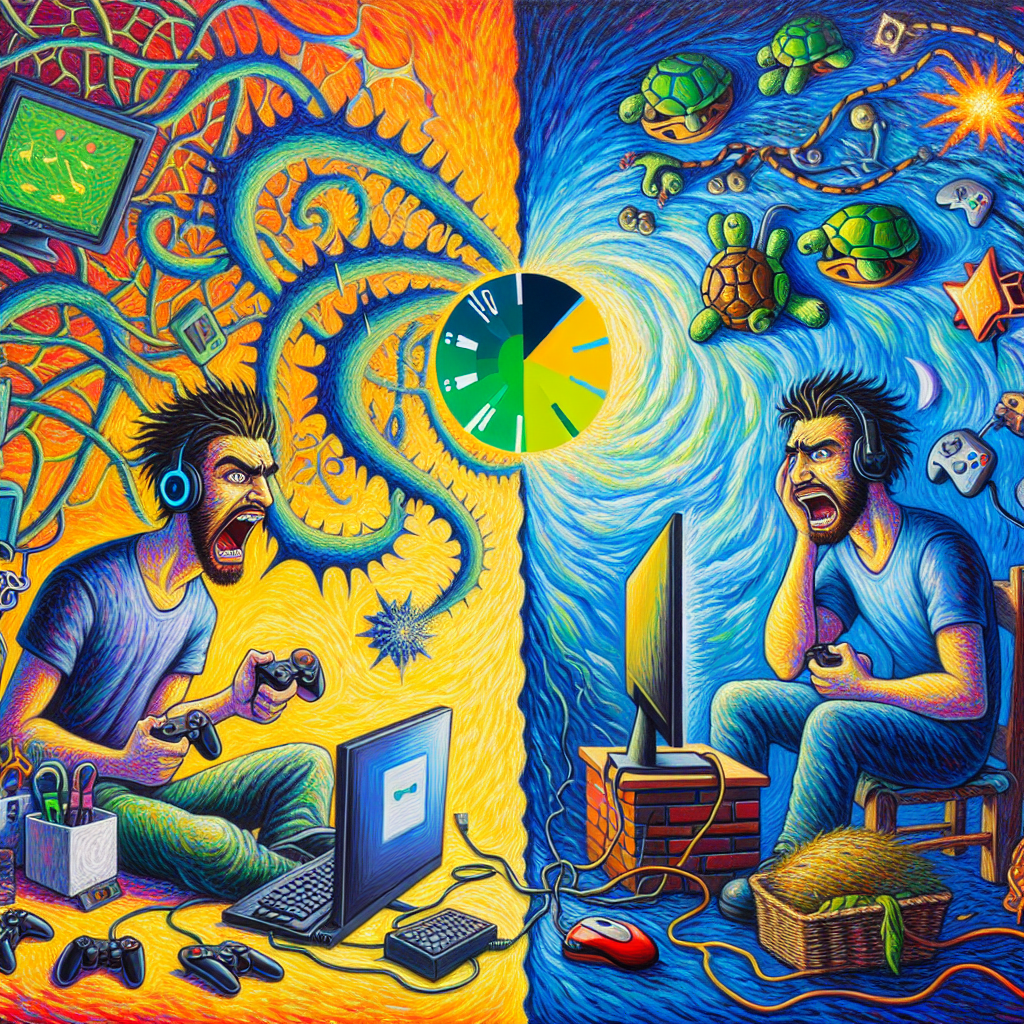
The Future Of Gaming: Millennials’ Quest For Seamless Play
By Tom Seest
At HowDoYouGame, we help people who love board games by collating information and news about games.
Be sure to read our other related stories at HowDoYouGame to learn more about games.
From PC to Ps5 – Why Millennials Demand Seamless Gaming Everywhere
The hum of a console, the click of a mouse, the anticipation of loading a new level—these are more than mere mechanics; they form the very heartbeat of our experiences. For many millennials, this isn’t just a pastime; it’s a passion that transcends the limitations of time zones or personal schedules. They crave a kind of gaming that flows seamlessly across platforms, alluringly simple yet infinitely complex, and here’s the crux: they want to take their games with them, anywhere and everywhere.
Imagine this vibrant community: a melting pot of creativity, nostalgia, and a relentless pursuit of adventure. You’ve conquered dungeons on your PC during a late-night binge, only to hop into a new quest on your PS5 while lounging in your living room. It’s a transition from clicks to console that embodies freedom and flexibility, a world where you aren’t tethered to one device or location, but instead, are free to let your gaming down fully wherever you see fit. This is more than demand; this is a lifeline for connection in an increasingly fragmented world.
It’s not just about tech; it’s about how these experiences make us feel. Games become the threads that weave us into communities, offering stories of triumph, humor, and sometimes heartbreak. We share these experiences not just with family and friends but in larger circles online, bonding with strangers who resonate with our struggles and victories alike. Each gaming session tells a story, a new chapter in an ongoing saga of human experience, building a bridge of empathy and understanding.
From the bold adventurer diving into a digital expanse to the casual gamer venturing into friendship tournaments, the beauty lies in participation. These journeys offer not only entertainment but lessons in teamwork, strategy, and community. The call for seamless gaming elevates the conversation beyond mere enjoyment—it speaks to a basic human desire for connection and effortless interaction.
As we stand on the brink of this new era, embracing the demand for cross-platform play, we confront our biases about where and how games should be played. The unifying feeling of gaming can uplift us all, breaking down walls one session at a time. So, let’s keep the conversation going, challenge the norms, and unite in pursuit of a culture where gaming exists not just in its silos but flows freely—because that’s what our hearts, heads, and guts are truly craving.

From PC to Ps5 – Why Millennials Demand Seamless Gaming Everywhere
From PC to Ps5 – Why Millennials Demand Seamless Gaming Everywhere
- The sounds and actions of gaming create an immersive experience that resonates deeply with millennials.
- Millennials seek seamless cross-platform gaming, allowing them to play anytime and anywhere.
- A vibrant gaming community thrives on creativity, nostalgia, and adventure across different devices.
- Gaming fosters connections through shared stories and experiences, transcending geographical boundaries.
- Participation in gaming teaches valuable lessons in teamwork, strategy, and community engagement.
- The call for cross-platform play challenges traditional views on gaming locations and consoles.
- Embracing this demand can break down barriers and promote unity within the gaming culture.

From PC to Ps5 – Why Millennials Demand Seamless Gaming Everywhere
Table Of Contents
- From PC to Ps5 – Why Millennials Demand Seamless Gaming Everywhere
- What Emotions Drive Your Passion for Gaming Across Platforms?
- How Do You Feel When Switching From PC to Ps5 Disrupts Your Gameplay?
- What Rational Benefits Do You See In a Unified Gaming Ecosystem?
- What Role Does Accessibility Play In Your Experience Of Gaming?
- How Does the Gaming Community Shape Your Views on Cross-Platform Play?
- What Stories Do You Share to Highlight Your Best Gaming Moments?
- How Do Technical Barriers Affect Your Enjoyment Of Gaming Experiences?
- Conclusion
- Other Resources
- Glossary Of Terms
- Other Questions
- Haiku
- Poem
- Checklist
What Emotions Drive Your Passion for Gaming Across Platforms?
What drives our passion for gaming across platforms is boundless and deeply rooted in the experiences we share. Think about it: when you immerse yourself in games, you’re not merely tapping buttons or swiping screens—you’re embarking on a journey that resonates with your heart, sparks thoughts in your head, and sends a thrill through your gut.
In a world increasingly driven by screens, the games we play become our connective tissue. They are a vibrant tapestry weaving together diverse narratives and emotions, where victory feels euphoric, and loss is gut-wrenching. It’s those moments of triumph or downright defeat that speak to the raw human experience—showing us that we are not alone in our struggles. We connect with heroes and villains alike, reflecting on our own battles along the way.
From the casual gamer to the esports fanatic, the games we love often stem from shared stories that pull on our heartstrings. Each level navigated or challenge conquered can evoke happiness, nostalgia, or even a stirring sense of achievement. They elevate our spirits, much like a warm coffee shared on a cold morning, reminding us of the camaraderie found in collaboration with others. This is a significant part of why gaming communities thrive; there’s an underlying tempest of emotion waiting to be harnessed, a celebration of winning together or commiserating over a hard-fought loss.
The rational side? Gaming sharpens critical thinking and decision-making skills. It cultivates resilience as every player learns the value of persistence—how our failures teach lessons that often translate to real-life. Despite the ethical debates that occasionally swirl around the industry, at the core, gaming fosters creativity and problem-solving. You’re not just playing; you’re strategizing, adapting, and evolving every time you pick up the controller.
In a significant way, gaming reflects the fabric of our societies. It mirrors our culture, values, and aspirations. Whether we’re escaping into fantastical realms or confronting stark realities, games hold up a mirror to our lives, offering insights and sometimes even forging a path to new understandings. This is where trust is built—not just in the games themselves, but in the community that rallies around them.
So, what stirs your passion for gaming? Is it the magic of connection, the exhilaration of challenge, or the undeniable stories written and rewritten each day? Embrace it, foster it, and let it guide your journey across the creative vastness of the gaming world.

What Emotions Drive Your Passion for Gaming Across Platforms?
What Emotions Drive Your Passion for Gaming Across Platforms?
- Gaming elicits deep passion rooted in shared experiences.
- Playing games immerses individuals in journeys that resonate emotionally.
- Games serve as a connecting force, weaving diverse narratives and human emotions.
- Victories bring euphoria, while losses evoke strong feelings, highlighting our shared struggles.
- Gaming fosters community, where triumphs and setbacks are collectively experienced.
- It enhances critical thinking and resilience, promoting creativity and problem-solving skills.
- Games reflect societal values and culture, offering insights and fostering connections.

What Emotions Drive Your Passion for Gaming Across Platforms?
How Do You Feel When Switching From PC to Ps5 Disrupts Your Gameplay?
When you switch from a PC to the PS5, it feels like stepping into a new world. Sure, the graphics are stunning and the controller fits perfectly in your hands, but it’s not just about the tech; it’s about the emotional landscape that unfolds before you. You settle into your chair, feeling that familiar pulse of anticipation as the console hums to life. Yet, there’s an undercurrent of anxiety that plagues even the most seasoned gamer. Will your gameplay be disrupted?
Let’s face it; it’s not just about firing up a new system. It’s a shift in our gaming identity. You’ve mastered the intricacies of mouse sensitivity, the fluidity of keyboard shortcuts, the fine-tuned precision of every click. And now, the shift to a console requires a massive mental leap. As you wrestle with the unfamiliar controller layout, a part of you wonders if you’ll lose what you’ve worked so hard to master. It’s a moment of vulnerability.
But here lies the beauty of gaming: it’s a universal language. You’re no longer alone in your quest; millions of players are journeying through the same trials. Each game becomes a shared experience—a bond formed over endless late-night sessions and impossible boss battles. Your anxieties transform into a shared narrative, making the transition not just an individual journey, but a collective adventure.
Think of the ethical implications too. You’re opening the doors to a broader gaming community, one that welcomes diversity and expands the horizons of game design. In every pixel, in every line of code, there’s a story waiting to be told. By embracing new platforms, you’re participating in that evolving narrative. You’re not just a consumer; you’re part of an ever-growing dialogue about what gaming can and should be.
It’s natural to feel apprehensive, but adopting the PS5 doesn’t mean abandoning your roots. Rather, it’s an evolution—a way to engage and connect on deeper levels. Channel that gut instinct; let it guide you to embrace this change. Your passion for games will only deepen, and the joy of that next gaming session will be sweeter than ever. By stepping out of your comfort zone, you strengthen not just your skills, but your connection to this vibrant community. Welcome the disruption; trust that it will lead to exhilarating new heights.

How Do You Feel When Switching From PC to Ps5 Disrupts Your Gameplay?
How Do You Feel When Switching From PC to Ps5 Disrupts Your Gameplay?
- Switching from PC to PS5 feels like entering a new world with stunning graphics and a comfortable controller.
- The transition involves emotional challenges, including anticipation and anxiety about gameplay disruptions.
- Moving to a console represents a shift in gaming identity, requiring adaptation to a new controller layout.
- Despite the changes, gaming remains a universal language, fostering shared experiences among players.
- Transitioning to new platforms opens doors to a diverse gaming community and new narratives in game design.
- Adopting the PS5 is an evolution, deepening the connection to gaming without abandoning previous skills.
- Embracing change strengthens skills and connections within the gaming community, leading to exciting new adventures.

How Do You Feel When Switching From PC to Ps5 Disrupts Your Gameplay?
What Rational Benefits Do You See In a Unified Gaming Ecosystem?
Imagine a world where your favorite games aren’t confined to the walls of individual consoles or locked behind exclusive subscriptions. A unified gaming ecosystem is more than just a buzzword—it’s a promise: a promise of accessibility, connection, and community. As players, we are not just consumers; we are part of a larger narrative woven together by shared experiences and cooperative victories.
At its core, this ecosystem elevates the very act of playing. Imagine firing up your console, pulling up your favorite game, and instantly teaming up with friends, regardless of whether they’re on a PC, a console, or even a mobile device. The ability to play together, no matter the platform, transforms gaming from a solitary endeavor into a communal celebration. You share not just victories, but memories, laughter, and the collective thrill of facing challenges as a united front.
From a rational standpoint, a unified ecosystem consolidates resources, reduces fragmentation, and extends the lifespan of games. Why juggle multiple subscriptions or hardware when you can enjoy a streamlined experience that invites collaboration? The financial implications are significant, allowing players to invest in what truly matters—the games themselves. You wouldn’t buy a new toolbox every time you needed a wrench, would you?
Ethically, a unified gaming ecosystem fosters inclusivity, breaking down barriers that separate players by platform. It’s about leveling the playing field, ensuring everyone has a seat at the table. Everyone deserves the chance to experience the joy of gaming, regardless of their background or financial situation. This focus on inclusivity not only enriches the community but builds trust—a trust that makes you feel valued and part of something bigger than yourself.
We have the opportunity to create an environment where players aren’t just passive participants but empowered contributors. Each time you log in, you’re ushered into a dynamic network of individuals who share your passion. So the question isn’t just about technology; it’s about connection. It’s about understanding that the love for these games transcends devices and encompasses a richer experience.
This is the time to advocate for a unified ecosystem—where gaming is not just about competition, but about camaraderie, growth, and the pursuit of a shared adventure. Let’s make our voices heard and ensure that the future of gaming is not just bright, but brilliantly interconnected.

What Rational Benefits Do You See In a Unified Gaming Ecosystem?
What Rational Benefits Do You See In a Unified Gaming Ecosystem?
- A unified gaming ecosystem promotes accessibility, connection, and community among players.
- Players can team up across different platforms (PC, console, mobile), enhancing the gaming experience.
- A streamlined experience reduces the need for multiple subscriptions and consolidates resources.
- A unified system extends the lifespan of games and allows for better financial investment in gaming.
- Inclusivity is fostered, breaking down barriers and ensuring everyone can enjoy gaming.
- The ecosystem encourages active participation, transforming players into empowered contributors.
- Advocating for a unified ecosystem emphasizes camaraderie and shared adventures in gaming.
What Rational Benefits Do You See In a Unified Gaming Ecosystem?
What Role Does Accessibility Play In Your Experience Of Gaming?
Imagine the thrill of diving headfirst into a pixelated world teeming with adventure, where every choice shapes your journey. Now, imagine that thrill slipping through your fingers because a simple design flaw stands between you and the immersive experience that everyone else seems to enjoy. Accessibility in gaming is not just an add-on; it’s a cornerstone that can transform an entire experience.
Games have evolved into intricate narratives offering rich storytelling, vibrant worlds, and thrilling challenges. Yet, for many, these fantastical realms remain locked behind barriers that quietly whisper, “Not for you.” It’s critical to recognize that the absence of accessibility measures denies people the chance to engage with their passion fully. Just think about it: how devastating would it be for children or adults, who crave the camaraderie of gaming, to be sidelined by an interface that was never meant for them?
Access extends beyond physical advantages; it embodies the idea that our shared human experience should encompass all voices and abilities. If you’ve ever cheered at a victory or empathized with a character’s struggle, you’ll understand that gaming is universally loved because it links us together. When games are designed with accessibility in mind, they bridge gaps, foster connection, and empower every player to express themselves, regardless of challenge or circumstance.
Let’s paint a picture. Picture a veteran returning from war; PTSD may rob them of moments of peace. Yet, through adaptive controls and thoughtful design, a game can offer an escape, a band of comrades in arms, and a chance to confront inner demons. Are we willing to overlook such an opportunity to provide hope? This is not just an ethical consideration; it’s a moral imperative.
As we navigate this vibrant landscape of stories and engagements, advocates for accessible gaming remind us of a simple truth: everyone deserves to play. The gaming community flourishes when diverse voices are heard, and when empathy drives design, trust is built. You are not just a player; you are part of a movement, a collective responsibility to ensure no one is left out of this extraordinary mix of pixels and joy. So, let’s rally together, embrace accessibility, and create a gaming environment where every soul can feel the joy of adventure, inclusion, and connection.

What Role Does Accessibility Play In Your Experience Of Gaming?
What Role Does Accessibility Play In Your Experience Of Gaming?
- Gaming accessibility is essential for creating immersive experiences for all players.
- Many gamers face barriers that exclude them from fully engaging with the gaming world.
- Exclusion due to lack of accessibility denies individuals the joy of gaming and forming connections.
- Games should cater to diverse abilities, fostering an inclusive community.
- Accessible game design can provide hope and support for individuals facing challenges, such as PTSD.
- Advocating for accessible gaming emphasizes the importance of empathy in design, enhancing community trust.
- Everyone deserves to experience the joy of gaming, and collective responsibility is needed to promote inclusivity.

What Role Does Accessibility Play In Your Experience Of Gaming?
How Does the Gaming Community Shape Your Views on Cross-Platform Play?
When we dive into the realm of gaming, we’re not just picking up a controller; we’re stepping into a vibrant community that shapes our experiences, our friendships, and ultimately, our perspective on what gaming can be. Imagine Saturday nights spent side by side with friends—laughter echoing in the room while you strategize over the latest game release. This connection isn’t merely a hobby; it’s a celebration of camaraderie that transcends the screen.
Yet, as the gaming landscape evolves, so too do our expectations, particularly around cross-platform play. This isn’t just a technical feature; it’s an ethical proposition that speaks to how we view inclusivity. Shouldn’t everyone, regardless of their device, be able to join the fun? When the community advocates for cross-platform capabilities, it’s not just about convenience; it’s about leveling the playing field. It’s easier said than done, but the voices of gamers unite in a shared desire for equality. In an age where division feels all too commonplace, gaming reminds us that togetherness can break down barriers.
Now, think about it rationally. Cross-platform play expands the gaming ecosystem, allowing players from different consoles to interact and collaborate. This makes games more engaging and fun—not just for the hardcore gamer, but for the casual player dabbling in their first adventure. Here, the gaming community acts as a powerful entity, pushing developers to think outside the box, to innovate, and to create an inclusive environment. The louder our collective voice, the more we inspire change.
But let’s take it a step further—consider the stories we create within these games. Each match, each shared victory or defeat weaves a narrative that brings us closer together. The triumphs of collaboration can outweigh individual accomplishments. When people come together across platforms, they forge connections and create memories that linger long after the game is over.
The reality is clear: the gaming community has the power to shape our views on cross-platform play far beyond the pixels on our screens. It’s not just about personal enjoyment; it’s about carving out a digital world where everyone feels welcome, valued, and encouraged to play. Trust in that vision, connect with your fellow gamers, and let’s champion the cause of cross-platform play together. Your voice matters—let’s make it heard.

How Does the Gaming Community Shape Your Views on Cross-Platform Play?
How Does the Gaming Community Shape Your Views on Cross-Platform Play?
- Gaming is a vibrant community that enhances experiences, friendships, and perspectives.
- Shared gaming experiences foster camaraderie, exemplified by social gaming nights with friends.
- Cross-platform play is an ethical proposition focusing on inclusivity within the gaming community.
- The push for cross-platform capabilities aims to create equality and remove barriers among players.
- Cross-platform play enriches the gaming ecosystem, making games more engaging for both casual and hardcore gamers.
- Collaboration in gaming creates lasting narratives and memories that strengthen connections among players.
- The gaming community can significantly influence perceptions of inclusion and advocate for the importance of cross-platform play.

How Does the Gaming Community Shape Your Views on Cross-Platform Play?
What Stories Do You Share to Highlight Your Best Gaming Moments?
When you think about your best gaming moments, it’s like flicking through a personalized scrapbook of triumphs, failures, and unforgettable camaraderie. Each game is a thread woven into the rich tapestry of our experiences, a bridge connecting us to friends, family, and even strangers who become comrades in arms. The stories we share around the digital campfire are what make those moments tangible, resonating deeply, not just with our hearts but with our heads and guts as well.
Take a moment to reflect on the last time you rallied a group to face an insurmountable challenge in a game. Maybe it was that nail-biting raid where every second counted, and all seemed lost until a flicker of inspiration sparked from one voice in the chat. It’s this spirit of perseverance, this mutual reliance on each other, that makes gaming so captivating. It’s more than just pressing buttons; it’s about strategy, teamwork, and the unexpected twists that can lead to glorious victories—or valuable lessons learned through defeat. These narratives, imbued with laughter and sometimes tears, contain the essence of what we cherish in our gaming journey.
Consider for a moment the ethical responsibility of sharing these stories. When we recount our experiences, we challenge the culture often painted by cynics who view gaming as merely escapism. Sharing our moments of success, or vulnerability, helps to reshape that narrative, highlighting the resilience, creativity, and adaptability that games demand of us. We elevate the medium, showing the world that these experiences reflect real-life lessons about community and integrity.
Embrace the powerful voice you have within your community. By sharing tales enriched with authenticity—of a back-alley skirmish in your favorite battle royale or that nail-biting final match that left your heart racing—you invite others into your journey. Those moments ignite a spark of recognition and kinship. You create a space where connections flourish, where everyone feels like they belong.
Ultimately, the stories we tell can inspire action, nudging someone else to take the leap into that next gaming adventure. The thrill of facing the unknown, the joy in unleashing a plan that unfolds beautifully, or the compassion in helping a teammate find their footing—all of these encapsulate what gaming truly is: a shared journey marked by friendship, challenge, and growth. So, what stories do you have to share? Paint the picture, invite others in, and let the momentum build. Your best moments are waiting to resonate with someone else’s heart.

What Stories Do You Share to Highlight Your Best Gaming Moments?
What Stories Do You Share to Highlight Your Best Gaming Moments?
- Gaming moments create a personalized scrapbook of triumphs, failures, and camaraderie.
- Each game connects us to friends, family, and strangers, fostering shared experiences.
- The spirit of perseverance and teamwork enhances the gaming experience beyond mere gameplay.
- Stories from gaming encapsulate laughter, tears, and lessons learned, enriching our journey.
- Sharing experiences reshapes negative perceptions of gaming, emphasizing community and integrity.
- Authentic storytelling within the gaming community fosters connections and a sense of belonging.
- Our shared stories can inspire others to embark on their own gaming adventures.

What Stories Do You Share to Highlight Your Best Gaming Moments?
How Do Technical Barriers Affect Your Enjoyment Of Gaming Experiences?
When you’re immersed in a game, every pixel has the potential to draw you into a world of adventure, strategy, and storytelling. But what happens when that experience is muddled by technical barriers? Picture this: you’re on the verge of slaying a dragon, and then—wham! You’re snagged by lag or an inconvenient glitch that pulls you right out of the fantasy. Your heart races with adrenaline, but suddenly, it’s replaced with frustration. That disconnect is not just a nuisance; it’s a call to recognize the impact of technical limitations on our enjoyment of games.
Imagine a young gamer, eager to jump into a multiplayer showdown. They save their allowance, purchase the latest title, only to find that it won’t run on their hardware. That’s not just a technical mishap; it’s a barrier that stifles their passion and dampens their excitement. For many, gaming is more than just a pastime—it’s a social bond, a means of escaping reality and connecting with others. When technology fails them, it feels like a betrayal, and it can leave scars that linger longer than any battle wound.
These barriers affect more than just individual gamers; they ripple through communities. Think of the friendships forged through cooperative play or the strategy discussions that unfold in online forums. Every disconnect, every piece of outdated hardware, rends that fabric of connection. The ethical obligation of game developers and hardware manufacturers is to provide access and enhance enjoyment rather than create divides.
Rationally, we know that technology can be fickle. Each system has its limits, but as gamers, we also crave the thrill of pushing those limits. We want our experiences to be seamless, our journeys to be uninterrupted. We trust that the creators of these games will prioritize the player experience, optimizing their artistry to ensure that we can fully delve into the worlds crafted for us.
At the core, our enjoyment of gaming experiences hinges on overcoming these technical barriers. So as you settle in with your controller, remember that every moment in a game is a chance to transcend reality, to forge connections, and to expand horizons. By advocating for better access and performance, we champion a richer, more inclusive gaming landscape where everyone can feel the power of play. Let’s embrace the challenge to ensure that nothing stands between us and the epic stories waiting to be told.

How Do Technical Barriers Affect Your Enjoyment Of Gaming Experiences?
How Do Technical Barriers Affect Your Enjoyment Of Gaming Experiences?
- Technical barriers can disrupt immersive gaming experiences, causing frustration for players.
- Players, especially younger gamers, may face hardware limitations that prevent access to new games.
- Gaming serves as a social bond and a means of escape; technical failures can feel like betrayals.
- Barriers not only affect individuals but also impact community connections and friendships formed through gaming.
- Game developers and hardware manufacturers have an ethical obligation to enhance accessibility and enjoyment.
- Gamers desire seamless experiences and trust creators to optimize their games for the best player experience.
- Advocating for better access and performance fosters a richer and more inclusive gaming landscape for all.

How Do Technical Barriers Affect Your Enjoyment Of Gaming Experiences?
Conclusion
Gaming, for millennials, is more than just a pastime; it’s a lifeline to connection, creativity, and community. The journey from PC to PS5 encapsulates the evolving landscape of gaming—a realm where seamless play across platforms is not just desired, but demanded. The emotional pulse of this experience is undeniable. With every loading screen we conquer, we’re not merely switching devices; we are transitioning through memories crafted with friends and strangers alike. Imagine a Saturday night spent strategizing alongside familiar voices, transforming solitary clicks into a shared symphony of laughter and camaraderie. This interaction is the lifeblood of community.
Yet, as we embrace this vibrant, interconnected gaming culture, we must confront the barriers that stifle our passion. Technical limitations can disrupt the flow, pulling us from the captivating worlds we’ve immersed ourselves in. Picture a newcomer, fueled with excitement, only to find their gaming ambitions halted by inadequate hardware or software incompatibilities. These interruptions are not just technical glitches; they are barriers that can fracture the very connections gaming seeks to foster. They highlight a significant ethical responsibility for developers and manufacturers—to create inclusive experiences that welcome everyone to the adventure, regardless of their starting point.
Rationally, we understand that every gamer can’t be on the cutting edge, but gaming should never be a privilege reserved for the elite. Embracing accessibility means transforming barriers into bridges—can you imagine the depth of storytelling and experience we could share if everyone had the opportunity to join in? We need to champion the cause of unity in gaming, advocating for cross-platform play that breaks through silos and brings us closer together. It’s not just about technical capability; it’s about ensuring that everyone has a seat at the table, that each voice can resonate in the narrative we create together.
This is a movement fueled by shared stories—of triumph, resilience, and learning. Every session has the potential to build connections that stretch beyond screens, reminding us that gaming is not just about escaping reality, but about shaping it. Together, we can craft a future where barriers fall, experiences flourish, and every gamer—whether they wield a mouse, a controller, or a smartphone—feels empowered to embark on their next adventure. In this collective journey, trust, connection, and celebration can reign, making every quest not just a game, but a tapestry of our lives intertwined.

Conclusion
Conclusion:
- Gaming for millennials serves as a vital connection to creativity and community.
- The transition from PC to PS5 reflects the demand for seamless cross-platform play.
- Each gaming session fosters memories and interactions with friends and strangers.
- Technical limitations can disrupt gaming experiences, highlighting barriers to access.
- Developers have an ethical responsibility to create inclusive gaming experiences.
- Advocating for cross-platform play can enhance unity and storytelling in gaming.
- Gaming fosters connections and shapes reality, empowering every gamer regardless of their platform.

Conclusion
Other Resources

Other Resources
Here is a list of other resources you can review online to learn more:
- Tabletop Gaming News
- Tantrum House
- Mayfair Games
- Horrible Guild
- Jumbo
- Cyclades
- Piatnik
- Gamelyn Games
- Ticket to Ride
- Forbidden Stars
- Meeple Mountain
- Legendary: A Marvel Deck Building Game
- Miniature Market
- Ravensburger
- How to Play Podcast
- The Resistance: Avalon
- Canasta
- DriveThruRPG
Use This Prompt To Get More Resources With Your Favorite Online AI Tool: Please provide me with a list of online articles with their URLs in a bulleted list that I can read regarding From PC to Ps5 – Why Millennials Demand Seamless Gaming Everywhere

Other Resources
Glossary Terms
From PC to Ps5 – Why Millennials Demand Seamless Gaming Everywhere – Glossary Of Terms
1. Cross-Platform: The ability to play games on multiple gaming consoles or platforms, allowing players to enjoy their favorite titles without being restricted to one system.
2. Seamless Gaming: A smooth gaming experience that allows players to switch between devices without interruptions, maintaining progression and performance.
3. Cloud Gaming: A game delivery method where players stream games over the internet without needing powerful hardware, allowing accessibility on various devices.
4. Remote Play: A feature that enables users to play console games on a different device, often over the internet, ensuring gaming can occur anywhere.
5. Microtransactions: Small purchases made within games that can enhance the gaming experience, such as buying in-game currency, skins, or additional content.
6. Game Streaming: Broadcasting gameplay live to an audience using platforms that support interactive viewing experiences and community engagement.
7. Social Gaming: Multiplayer gaming experiences that emphasize interaction and community building among players, often through cooperative or competitive play.
8. Subscription Services: Payment models that provide users access to a library of games for a recurring fee, popularized by platforms like Xbox Game Pass and PlayStation Plus.
9. Native Performance: The ability of a game to run at its highest potential on a specific hardware platform without any compromise or need for optimization.
10. Game Library: A collection of games available for a particular platform or subscription service, reflecting the varied options accessible to players.
11. User Interface (UI): The visual elements and layout of a game or platform that facilitate navigation and enhance user experience.
12. Graphics Fidelity: The quality and realism of graphics in games, critical for immersive experiences and appealing visuals.
13. Latency: The delay between a player’s action and the game’s response, affecting gameplay smoothness, particularly in competitive online settings.
14. Game Mechanics: The rules and systems that govern gameplay, defining how players interact with the game world and each other.
15. Augmented Reality (AR): Technology that overlays digital information onto the real world, enhancing gaming experiences by merging virtual elements with real-life environments.
16. Virtual Reality (VR): A simulated experience using headsets that immerse players in a 3D environment, providing a heightened sense of presence in games.
17. E-Sports: Competitive gaming at a professional level, often involving structured tournaments with significant prize pools and dedicated fanbases.
18. Gamer Culture: The shared interests, values, and communities formed around gaming, significantly impacting social interactions and entertainment preferences.
19. Quality of Life (QoL) Features: Adjustments in games that enhance user experience, such as faster loading times and better resource management.
20. Console Gaming: Playing video games on dedicated gaming consoles like PlayStation, Xbox, or Nintendo Switch, distinguished from PC gaming.
21. Hardware: The physical components of a gaming system, including processors, graphics cards, and consoles, influencing performance and graphics quality.
22. Game Development: The process of designing, creating, and programming video games, involving multiple phases from concept to release.
23. In-Game Events: Special occurrences within games that engage players, such as timed challenges, limited-time modes, or seasonal updates.
24. Modding: Modifying a game’s content or mechanics by players, often enhancing or changing the gaming experience through community-created mods.
25. P2P Networking: Peer-to-peer connections between players for online gaming, allowing direct interaction without relying solely on centralized servers.
26. Accessibility Features: Options within games that accommodate players with disabilities, enhancing inclusivity and user experience.
27. Boot Time: The duration it takes for a game or console to start and become playable, impacting user satisfaction and engagement.
28. Community Engagement: Strategies and methods developers use to maintain interaction with players, fostering loyalty and feedback loops.
29. Digital Distribution: The delivery of games through online platforms, eliminating physical copies and allowing instant access upon purchase.
30. Skill-Based Matchmaking: A system that pairs players of similar skill levels in competitive multiplayer games, enhancing fairness and enjoyment in matches.

Glossary Of Terms
Other Questions
From PC to Ps5 – Why Millennials Demand Seamless Gaming Everywhere – Other Questions
If you wish to explore and discover more, consider looking for answers to these questions:
- What specific features do millennials want in a unified gaming ecosystem?
- How do different gaming platforms affect the sense of community among players?
- What advancements in technology could enhance seamless cross-platform play?
- How does gaming culture influence social interactions outside of gaming?
- What are the emotional impacts of losing access to a preferred gaming platform?
- How do game developers prioritize accessibility in their designs?
- What role does nostalgia play in millennial gaming preferences?
- How can the gaming community advocate for more inclusive gaming practices?
- What are the economic implications of a unified gaming ecosystem for players?
- How might accessibility issues vary across different demographics?
- What are the most common technical barriers faced by gamers today?
- How can gamers effectively share their stories to inspire others?
- What ethical responsibilities do game developers have towards their players?
- How does cross-platform play change the competitiveness of gaming?
- What strategies can enhance the emotional connection to gaming experiences?

Other Questions
Haiku
From PC to Ps5 – Why Millennials Demand Seamless Gaming Everywhere – A Haiku
Joyful worlds await,
Yet barriers cloud the way—
Gaming’s heart must thrive.

Haiku
Poem
From PC to Ps5 – Why Millennials Demand Seamless Gaming Everywhere – A Poem
In the realm of pixels, hearts unite,
A call for gaming, a boundless flight.
From PC to PS5, the quest we embark,
For seamless adventures that spark in the dark.
Millennials gather, voices grow bold,
In pursuit of connection, stories retold.
Each session a chapter, a bond that we weave,
In worlds and in battles, together we grieve.
The hum of consoles, the thrill of a quest,
Gaming expands, it’s our passion expressed.
Not just entertainment, but a lifeline we find,
Building our communities, our hearts intertwined.
Accessibility beckons, a right to engage,
Every gamer’s story deserves a new page.
From laughter to lessons, in victories bright,
In shared narratives, we bask in the light.
Technical barriers, though they may break,
Can’t sever the ties that our memories make.
For every glitch faced, we rise from the fall,
A testament bold to the strength of us all.
Advocates rise, in a chorus so clear,
For cross-platform play, let’s banish the fear.
A unified ecosystem, a tapestry spun,
Where all are invited, and together, we run.
So challenge the norms, let your voice be the key,
In the vastness of gaming, let each heart be free.
For it’s not just the play that keeps us alive—
It’s the connections we forge that truly help us thrive.

Poem
Checklist
From PC to Ps5 – Why Millennials Demand Seamless Gaming Everywhere – A Checklist
Checklist: Embracing Seamless Gaming Experiences
Heart Appeals:
1. Reflect on your favorite gaming memories. How do they connect you with friends or create a sense of belonging?
2. Share a gaming story that made you laugh or cry. What emotional moments resonate with you and your gaming community?
3. Consider the sense of camaraderie in gaming. How does collaboration during gameplay enrich your experience?
Head Appeals:
4. Identify the skills you’ve improved through gaming. How have critical thinking and decision-making abilities evolved?
5. Analyze the benefits of a unified gaming ecosystem. How does it impact accessibility and community among diverse players?
6. Reflect on the ethical responsibility of developers. How important is inclusivity in gaming design to you?
Gut Appeals:
7. Recognize your initial feelings when transitioning between platforms (e. g. , PC to PS5). What anxieties or excitement do you experience?
8. Acknowledge the impact of technical barriers on your gaming enjoyment. How do lag or glitches affect your overall experience?
9. Embrace the challenges of learning new controls. How does overcoming these obstacles heighten your thrill during gameplay?
Social Appeals:
10. Join discussions within your gaming community about cross-platform play. How can collective voices advocate for inclusivity?
11. Share experiences that highlight the benefits of accessibility in gaming. How does creating a welcoming environment enhance community engagement?
12. Celebrate diverse narratives within your gaming activities. What stories can you share that reflect the multiplicity of players and experiences?
Narrative Appeals:
13. Create a personal gaming narrative. What challenges have you faced, and how did they shape your identity as a gamer?
14. Illustrate the moral lessons learned through gaming. How have your adventures informed your understanding of resilience and teamwork?
15. Document memorable game moments that illustrate the themes of victory, teamwork, and emotional connection. How can you inspire others by sharing these stories?
Practical Steps:
16. Experiment with different platforms and games. How does this exploration expand your horizons in gaming?
17. Advocate for better accessibility features in games. What specific changes would enhance the experience for all players?
18. Formulate a plan to engage with the gaming community about cross-platform capabilities. How can you contribute to a more connected gaming experience?
Use this checklist as a guide to deepen your gaming experiences, foster connections in the community, and advocate for an inclusive future in the gaming world.

Checklist
At HowDoYouGame, we help people who love board games by collating information and news about games.
Be sure to read our other related stories at HowDoYouGame to learn more about games.