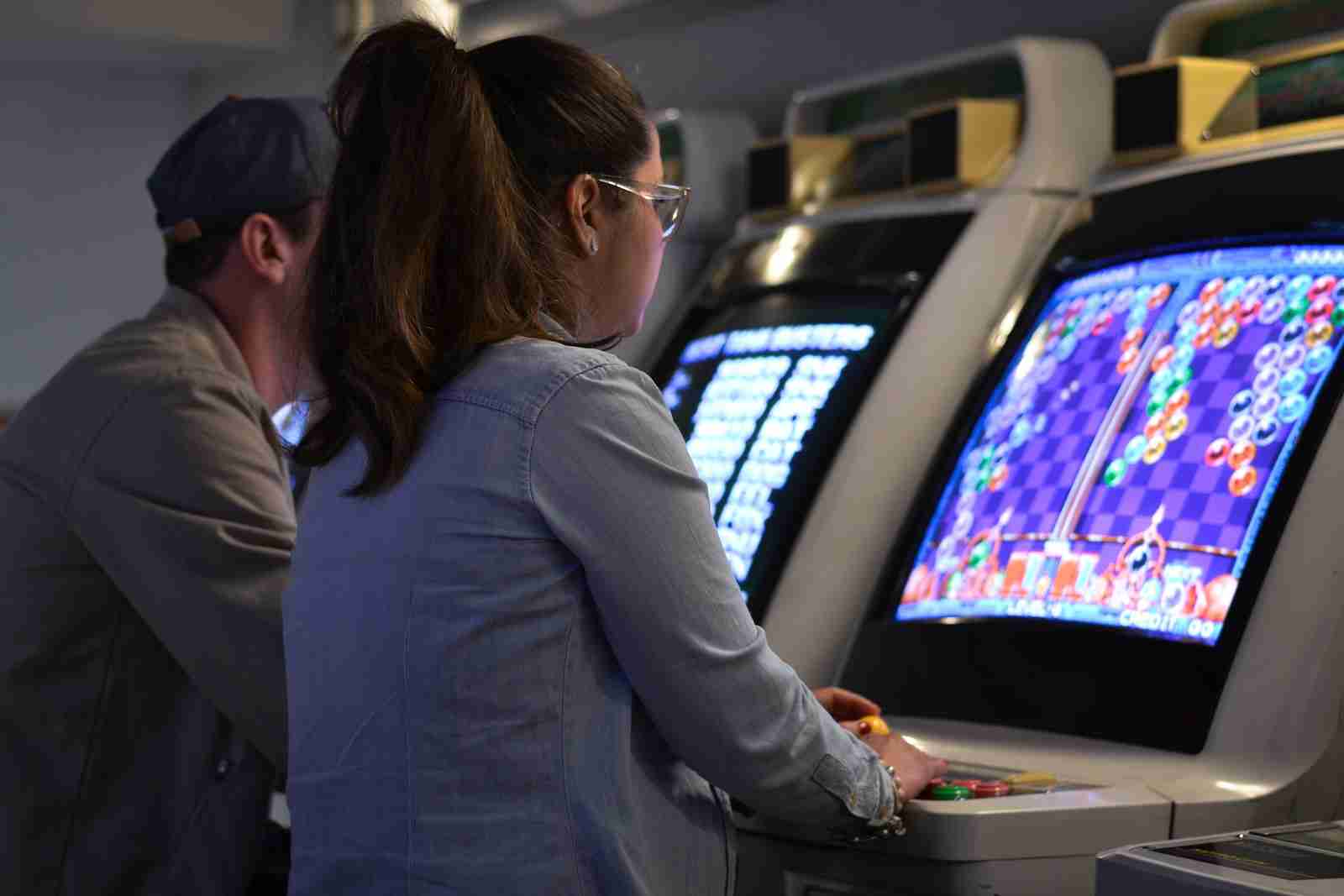
Leveling Up: Gaming As A Tool For Creative Problem Solving
By Tom Seest
At HowDoYouGame, we help people who love board games by collating information and news about games.
Be sure to read our other related stories at HowDoYouGame to learn more about games.
Could Gaming Help Kids Tackle Real Problems More Creatively?
Let’s take a moment to consider the world of gaming—not just as a source of entertainment but as a unique platform for fostering problem-solving skills. Imagine a child, controller in hand, immersed in a digital landscape teeming with challenges. While some might see mere pixels on a screen, others recognize the intricate web of gamification at play. In this world, when players encounter an obstacle, they are not merely thwarted; they push ahead, strategize, and think outside the box. This kind of immersive experience could hold the key to unlocking creativity in tackling real-world problems.
Gamification engages young minds in ways traditional education often cannot. It transforms potential dread into adventure. That pesky math problem or challenging science concept? In a game, it becomes a quest, a puzzle waiting to be solved, all while tickling that innate curiosity. Instead of merely drilling facts, gaming asks kids to apply what they know in dynamic, often unpredictable situations. They learn to adapt, to invent, and most importantly, to collaborate—because let’s face it, no epic win was ever achieved alone.
Think about the myriad of challenges facing us today: climate change, social justice, public health. These are complex problems requiring innovative thinkers—individuals who can see a puzzle and not just the pieces scattered on the floor. And in gaming, that vision is cultivated. Kids learn that every obstacle can be approached from multiple angles; every failure is simply a stepping stone to find a better solution.
By allowing children to dive headfirst into environments where they can experiment without the fear of grave consequences, we are cultivating a generation that is not just adept at finding solutions but eager to tackle issues head-on with creativity and resilience. Feats in gaming translate to confidence in real life, encouraging kids to step up, take risks, and voice their thoughts in the face of adversity.
So, as we marvel at the evolution of gaming from simple joys to profound learning tools, let us embrace this powerful medium. With the right perspective, we can inspire our kids not just to play games, but to become architects of their futures—ready, willing, and able to tackle the real problems of tomorrow with creativity and courage. After all, the quest for knowledge and understanding is the greatest game of all.

Could Gaming Help Kids Tackle Real Problems More Creatively?
Could Gaming Help Kids Tackle Real Problems More Creatively?
- Gaming fosters problem-solving skills in children through immersive experiences.
- Challenges in games encourage strategizing, creativity, and thinking outside the box.
- Gamification transforms learning into adventures, making subjects like math and science engaging.
- Kids learn to apply knowledge in dynamic situations, boosting their adaptability and collaboration skills.
- Gaming cultivates innovative thinking to tackle complex real-world issues like climate change and social justice.
- Experimentation in gaming builds resilience and confidence, preparing kids to confront challenges.
- Embracing gaming as a learning tool inspires children to become proactive problem-solvers for the future.

Could Gaming Help Kids Tackle Real Problems More Creatively?
Table Of Contents
- Could Gaming Help Kids Tackle Real Problems More Creatively?
- How Can Games Foster Critical Thinking Skills In Kids?
- In What Ways Do Video Games Encourage Problem-Solving Abilities?
- Can Gaming Provide A Safe Space For Kids To Experiment With Solutions?
- How Do Games Teach Kids To Collaborate And Communicate Effectively?
- What Role Does Storytelling In Games Play In Developing Creativity?
- Are There Specific Games That Excel In Teaching Real-World Skills?
- How Can Parents Select Games That Promote Creative Problem-Solving?
- Conclusion
- Other Resources
- Glossary Of Terms
- Other Questions
- Haiku
- Poem
- Checklist
How Can Games Foster Critical Thinking Skills In Kids?
Alright, let’s dig right into it! When you think about games, you probably imagine kids glued to screens, fingers tapping away and eyes darting across pixelated worlds. But here’s the twist: those very games could be sharpening critical thinking skills—if we approach them with a savvy mindset. You see, in today’s world, the line between play and learning isn’t just blurred; it’s practically non-existent. Gamification, a fancy term for adding game-like elements to non-game scenarios, transforms even the dullest tasks into engaging challenges. And that’s where the magic happens for kids.
Picture this: a child immersed in a strategy game where they must navigate through obstacles, solve problems, and outsmart opponents. It’s not just about winning; it’s about evaluating options and making decisions on the fly. This is critical thinking in action! Each choice has consequences, and kids quickly learn that their thinking must adapt, evolve, and improve if they want to succeed. They’re not merely reacting; they’re strategizing and predicting outcomes, laying a foundation for skills that are crucial not just in gaming, but in real-life scenarios too.
Now, let’s talk about the inclusion of teamwork in many games. Whether it’s working together to conquer a dungeon or collaborating to complete a puzzle, games encourage kids to communicate effectively and consider multiple perspectives. This interaction builds trust and respect among peers, and guess what? It fosters a collaborative spirit that goes beyond the screen. Kids learn to value their teammates’ ideas, developing empathy and understanding—a cornerstone of effective problem-solving.
But here’s the kicker: while games can be fun, they can also serve as a springboard for deeper conversations with kids. You can sit down with them after a gaming session and ask them what strategies they employed, how they felt when things didn’t go according to plan, or what they might do differently next time. Engaging in these discussions nurtures a reflective mindset, turning mere entertainment into a powerful learning tool.
So next time you hear someone lamenting about kids’ gaming habits, take a moment to consider the bigger picture. When approached thoughtfully, games are more than just a pastime; they’re dynamic platforms that can cultivate critical thinking skills in children. By embracing the power of play through gamification, we not only make learning fun but also equip our kids with the skills they need to navigate life’s complex landscape. Let’s give them the tools to think critically and tackle challenges head-on, shall we?

How Can Games Foster Critical Thinking Skills In Kids?
How Can Games Foster Critical Thinking Skills In Kids?
- Games can sharpen critical thinking skills when approached with a savvy mindset.
- The line between play and learning is almost non-existent in today’s world.
- Gamification turns dull tasks into engaging challenges for kids.
- Strategy games require navigating obstacles and making decisions, fostering critical thinking.
- Teamwork in games encourages effective communication and perspective-taking among peers.
- Games can facilitate deeper conversations about strategies and emotions, nurturing a reflective mindset.
- Thoughtfully approached, games are dynamic platforms that equip kids with essential life skills.

How Can Games Foster Critical Thinking Skills In Kids?
In What Ways Do Video Games Encourage Problem-Solving Abilities?
If you’ve ever found yourself lost in a game, you know there’s something special about that virtual world, where challenges pop up like weeds in a garden, and the only way through is to embrace your inner detective. You might think video games are just about escapism, but dig a little deeper and you’ll discover that they are a playground for your brain. It’s like gym training for your problem-solving abilities, and trust me, every level completed is a mini-lesson in dealing with obstacles.
At the heart of many games is a little something called gamification. This isn’t just a fancy term — it’s a powerful tool that transforms mundane tasks into engaging experiences. Think about it: when you’re racing against the clock to solve a puzzle, or strategizing your way through enemy territory, every choice carries weight. These moments teach you to analyze situations quickly, weigh options, and make decisions under pressure, all while your heart races and your palms get sweaty. That’s real-world problem-solving wrapped in a colorful package!
Consider the story-driven adventures, where a single miscalculation can lead to unexpected twists. You are often faced with choices that demand creativity and critical thinking. For instance, remember that moment when you had to choose between two paths, one laden with traps and the other shrouded in mystery? There’s a palpable thrill in navigating those dilemmas, and what’s more, you’re learning to tackle complex problems without even realizing it. You’re equipping yourself with strategies that apply to life outside of that screen.
And let’s not overlook the social aspect. Many games encourage teamwork, compelling players to collaborate and communicate effectively to achieve a common goal. This isn’t just about strategy; it’s about fostering relationships and understanding diverse perspectives. You learn to navigate conflict, negotiate roles, and adapt on the fly — skills that are incredibly valuable off-screen.
So, the next time someone brushes off gaming as a mere pastime, consider how it’s nurturing a generation of problem-solvers. Each game you play shapes your ability to think critically, collaborate, and innovate. It’s not just play; it’s preparation for the complexities of life, served up in a way that’s both engaging and rewarding. Dive in, and watch as those problem-solving skills level up!

In What Ways Do Video Games Encourage Problem-Solving Abilities?
In What Ways Do Video Games Encourage Problem-Solving Abilities?
- Video games offer a unique environment that enhances problem-solving skills.
- Gamification transforms mundane tasks into engaging challenges, requiring quick analysis and decision-making.
- Story-driven adventures encourage creativity and critical thinking through calculated choices.
- Gaming teaches players to tackle complex dilemmas, equipping them with real-world strategies.
- Many games foster teamwork, enhancing collaboration and communication among players.
- Players learn to navigate conflict and adapt, developing skills valuable in everyday life.
- Gaming nurtures critical thinking and innovation, preparing players for life’s complexities.

In What Ways Do Video Games Encourage Problem-Solving Abilities?
Can Gaming Provide A Safe Space For Kids To Experiment With Solutions?
It’s no secret that kids today are growing up in a world saturated with screens, and while some might argue that this is a hindrance, let’s take a moment to dig deeper. Video games, contrary to popular belief, can offer a beneficial arena for children to explore, learn, and experiment with solutions in ways that traditional methods often fall short.
Think about it: in a virtual world, the stakes are low, and failure is just another part of the learning process. When they stumble upon a challenge, whether it’s navigating a tricky puzzle or strategizing to defeat a formidable opponent, they engage in a kind of gamification that encourages critical thinking and problem-solving. It’s as if these digital quests are encrypted pathways to real-world skills, packaged in a way that keeps kids coming back for more.
What makes this approach invaluable is the way gaming incorporates trial and error. You can’t build an intricate castle without a few missteps along the way. These games often promote a safe space for risk-taking, allowing children to experiment with different methods and solutions without fear of catastrophic consequences. Failure within a game can lead to crucial insights, teaching resilience and adaptability—two traits that are immensely beneficial in adulthood.
Furthermore, let’s not overlook the collaborative aspects of gaming. Most contemporary games emphasize teamwork, forcing players to work together, communicate, and share strategies. This not only cultivates social skills but empowers kids to express their ideas and learn from their peers. Rather than being isolated in their rooms, they are actually honing their ability to collaborate with allies, which is a vital skill in any future career they choose.
Now, don’t get me wrong. Gaming is not a panacea. It’s important for parents to strike a balance between screen time and other forms of engagement. However, when embraced mindfully, gaming can serve as a dynamic platform for exploration. It’s about more than just having fun; it’s about opening doors to new perspectives and possibilities.
Let’s celebrate the idea that through gaming, kids can develop skills—they just might not realize it while they’re immersed in their favorite fantasy realm. So, the next time you see them wrapped up in a game, take a moment to reflect on the learning opportunities hidden within those pixelated landscapes. The future is bright, and there’s a good chance your child is boldly navigating the challenges that lie ahead, one game at a time.

Can Gaming Provide A Safe Space For Kids To Experiment With Solutions?
Can Gaming Provide A Safe Space For Kids To Experiment With Solutions?
- Kids are growing up in a screen-saturated world, but video games can provide beneficial learning opportunities.
- Virtual worlds reduce the stakes of failure, encouraging children to develop critical thinking and problem-solving skills.
- Gaming promotes trial and error, allowing kids to experiment and learn resilience and adaptability.
- Collaborative gaming emphasizes teamwork and communication, enhancing social skills among peers.
- Gaming encourages children to express their ideas and learn from others rather than isolating them.
- While gaming should be balanced with other activities, it can be a dynamic platform for exploration and skill development.
- Through gaming, children can unknowingly acquire valuable skills while having fun in immersive environments.

Can Gaming Provide A Safe Space For Kids To Experiment With Solutions?
How Do Games Teach Kids To Collaborate And Communicate Effectively?
When you think about games, you might picture kids huddled over a screen, raving about high scores or the latest character unlocks. But peel back that shiny layer of pixels, and you’ll discover a world overflowing with opportunities for collaboration and communication. Welcome to the fascinating realm of gamification—the art of turning activities into engaging experiences that teach invaluable life skills.
At first glance, it might seem trivial. How can navigating a virtual world or strategizing to defeat a boss in a game translate into real-life skills? But here’s the kicker: games compel players to work together towards a common goal, whether that’s saving the galaxy or conquering a challenging puzzle. In the throes of competition, kids learn to navigate the delicate balance of teamwork. They quickly realize that in order to succeed, they must merge their ideas, lending their voices to the shared conversation. That’s where true collaboration begins.
Consider a game where players must solve intricate puzzles to advance levels. Each player has a unique skill set that comes into play, almost like a mini think tank. You’ve got the strategist, the creative thinker, and perhaps the one who simply knows where all the hidden treasures are buried. Together, they must communicate effectively, sharing their thoughts, debating strategies, and encouraging one another. It’s a crash course in communication that’s as engaging as it is educational.
Picture this: friends gathered around a table, not to argue over whose turn it is, but to brainstorm how to defeat a challenging opponent. They’re not just exchanging words; they’re building friendships through shared victories and collective setbacks. Each success heightens their trust in one another, and each defeat becomes a lesson learned. In these moments, it’s not just about winning, but about fostering a culture of collaboration.
Now, you might be wondering how to harness this power of gamification outside the realm of gaming. Encourage your kids to engage in activities that require teamwork—in school projects, community service, or even family game nights. Here, you’re helping them understand that effective collaboration isn’t just relegated to the digital world; it’s a skill they can carry into their futures. When kids learn to communicate and collaborate effectively while having fun, they’re not just leveling up in a game; they’re leveling up in life.
How Do Games Teach Kids To Collaborate And Communicate Effectively?
How Do Games Teach Kids To Collaborate And Communicate Effectively?
- Games provide opportunities for collaboration and communication beyond entertainment.
- Gamification turns activities into engaging experiences that teach life skills.
- Players learn teamwork as they work together towards common goals in games.
- Effective communication is essential for solving puzzles and strategizing in multiplayer games.
- Sharing victories and setbacks helps build friendships and trust among players.
- Gamification principles can be applied to real-life activities like school projects and family game nights.
- Learning to communicate and collaborate through games prepares kids for future challenges.

How Do Games Teach Kids To Collaborate And Communicate Effectively?
What Role Does Storytelling In Games Play In Developing Creativity?
What Role Does Storytelling in Games Play in Developing Creativity?
Ah, the world of gaming—a universe where stories unfold, and creativity ignites like a well-tended fire. You know, when you step into a game, you’re not just picking up a controller or clicking a mouse; you’re diving headfirst into a rich tapestry of narrative, character, and conflict. It’s a digital landscape filled with possibilities, where every choice you make can spin a tale that’s uniquely yours. Now, let’s take a moment to think about what this really means for creativity.
At its core, storytelling in games is a powerful catalyst. It invites players to not only engage with a narrative but to shape it. With each decision, players contribute to the unfolding drama—turning them from passive consumers into active creators. This concept doesn’t merely reside in entertainment; it translates into real-world applications. Think about it: when you’re navigating a complex storyline, weighing options, and predicting outcomes, you’re honing skills that are invaluable everywhere—from classrooms to boardrooms.
But here’s where it gets particularly interesting. Gamification—yes, that buzzword you keep hearing—plays a vital role. When games harness the principles of storytelling alongside gamification, they create multifaceted environments where creativity can flourish. Imagine a classroom that integrates game mechanics into lessons. Suddenly, a history lesson morphs into an epic quest, challenging students to save a civilization through their choices. It’s not just about memorizing dates; it’s about living and breathing the past, understanding motivations, and creative problem-solving. That’s where true innovation stems from.
Storytelling in games allows players to explore the depths of their imagination. It encourages brainstorming and cognitive exploration by pushing boundaries and challenging norms. The characters and worlds presented can serve as mirrors or windows, inspiring players to dig deeper and consider perspectives they may never have encountered otherwise. As they immerse themselves in these narratives, they learn to innovate, collaborate, and dream bigger.
So next time you find yourself in a game, remember—it’s not merely a collection of pixels on a screen. It’s a classroom, a workshop, and a laboratory all rolled into one. Your journey through these stories is an exercise in creativity, and the skills you cultivate in those virtual realms can empower you in ways that are surprisingly practical and profoundly impactful in the real world. Embrace the stories, channel your creativity, and watch as it spills over into many facets of your life. The world needs more of that!

What Role Does Storytelling In Games Play In Developing Creativity?
What Role Does Storytelling In Games Play In Developing Creativity?
- Storytelling in games creates a rich narrative environment that enhances creativity.
- Players transition from passive consumers to active creators through their decisions in the game.
- This engagement with storytelling translates to real-world skills applicable in various settings.
- Gamification integrates storytelling and game mechanics, creating dynamic learning environments.
- Games enable players to explore imagination, brainstorm, and innovate by challenging norms.
- Narratives in games serve as tools for empathy, encouraging players to consider diverse perspectives.
- Interacting with game stories can cultivate skills that are impactful and practical in real life.

What Role Does Storytelling In Games Play In Developing Creativity?
Are There Specific Games That Excel In Teaching Real-World Skills?
Picture this: you’re in a room with a group of eager faces. Rather than staring blankly at a PowerPoint, everyone’s geared up for a challenge—an immersive experience that’s a whole lot more captivating than a textbook. Welcome to the world of gamification, where games aren’t just for leisure; they can be powerful tools for learning real-world skills that matter.
You might be wondering, “Can a game really teach me anything useful?” Ah, my friend, step into this vibrant arena, and you’ll discover a host of games meticulously designed to sharpen a range of competencies—from problem-solving to teamwork. Consider the ever-popular “Minecraft.” At first glance, it looks like a simple world of blocks. But peel back the layers, and you’ll find players navigating complex engineering concepts, resource management, and even basic economic principles as they build their virtual worlds. Here’s a chance to foster creative thinking while having a blast.
Then there’s “Portal,” a mind-bending puzzle game that challenges your spatial reasoning and critical thinking. Each level is like a mini-engineering feat, requiring you to think outside the box and strategize your way through challenges. Suddenly, you’re not just gaming; you’re sharpening your cognitive toolkit for problem-solving in everyday life.
But let’s not forget team dynamics—essential in our fast-paced world. Games like “Overcooked” drop players into chaotic kitchens where teamwork is the only way to plate those perfect dishes on time. You and your teammates must communicate, delegate tasks, and navigate stress. In short, it’s a recipe for collaboration that you can take straight into the workplace.
And if you’re eyeing the entrepreneurial path, there’s “SimCity.” Here, you’re not merely controlling a little pixelated city; you’re grappling with real-world urban planning challenges, balancing budgets, and responding to the needs of digital citizens. Experience that feeling of managing resources, problem-solving under pressure, and making decisions that impact your outcomes.
So, whether you’re a student eyeing the future or someone seeking to hone your practical skills, gamification could be your gateway. These carefully crafted experiences don’t just entertain—they cultivate valuable skills, making you a stronger, more adaptable version of yourself. Dive in, embrace the challenge, and you might just find that learning can be one thrilling ride.

Are There Specific Games That Excel In Teaching Real-World Skills?
Are There Specific Games That Excel In Teaching Real-World Skills?
- Gamification transforms learning into an immersive and captivating experience.
- Games can effectively teach real-world skills, such as problem-solving and teamwork.
- “Minecraft” encourages creative thinking and practical skills through complex building challenges.
- “Portal” enhances spatial reasoning and critical thinking through innovative puzzle-solving.
- Team-based games like “Overcooked” emphasize collaboration and communication under pressure.
- “SimCity” involves managing urban planning challenges and making impactful decisions.
- Gamification is a powerful tool for students and professionals to cultivate valuable skills.

Are There Specific Games That Excel In Teaching Real-World Skills?
How Can Parents Select Games That Promote Creative Problem-Solving?
Finding the right games for our kids can feel a bit like searching for gold in a riverbed—there’s plenty of glitter, but real value? That’s a different story. We all want lively, engaged children, and one of the best ways to foster that is through play. With a little guidance, we can find games that not only entertain but also empower our youngsters with the vital skill of creative problem-solving.
First things first: look for games that incorporate gamification. It’s a fancy term, I know, but at its core, it simply means adding game-like elements to non-game situations. Think about it—when kids are motivated, they’re eager to tackle challenges, engage with each other, and explore new ideas. Whether it’s leveling up in a video game, earning badges for completing tasks, or unlocking new areas in a board game, these elements make problem-solving feel like a thrilling adventure rather than a chore.
Next, consider the type of obstacles presented in the games you’re exploring. The best problem-solving games aren’t just about reaching a finish line; they’re about the journey. Look for games where players must think critically, strategize, and sometimes even collaborate to overcome challenges. Puzzles, adventure games, and role-playing games often provide rich environments where creativity can blossom. Kids will learn to think outside the box when they encounter a rival team in a game who doesn’t play by the rules.
Don’t overlook the power of storytelling in games, either. A captivating narrative can inspire kids to think creatively, as it encourages them to imagine potential solutions and outcomes. A well-crafted game allows players to step into roles, making decisions that can have far-reaching effects on the storyline. This aspect not only captivates their attention but also enhances their ability to view problems from various angles.
Lastly, involve your kids in the selection process. Turn game shopping into a family affair! Whether it’s browsing online or visiting a local store, let them voice their preferences and opinions. This engagement fosters a sense of ownership and responsibility, making it more likely they’ll dive into problem-solving with enthusiasm.
So, as you sift through the options, remember to look for games that encourage curiosity, creativity, and critical thinking. The right picks can set the stage for a lifetime of innovative thinking, and in today’s fast-paced world, there’s nothing more valuable than that.

How Can Parents Select Games That Promote Creative Problem-Solving?
How Can Parents Select Games That Promote Creative Problem-Solving?
- Finding engaging games for kids is essential for fostering lively, creative play.
- Look for games incorporating gamification to motivate kids and enhance their willingness to tackle challenges.
- The best problem-solving games focus on the journey, emphasizing critical thinking, strategy, and collaboration.
- Puzzles, adventure games, and role-playing games are excellent for encouraging creative problem-solving.
- Storytelling in games inspires kids to think creatively and view problems from various angles.
- Involve kids in the game selection process to foster ownership and responsibility.
- Choose games that promote curiosity, creativity, and critical thinking for lifelong innovative skills.

How Can Parents Select Games That Promote Creative Problem-Solving?
Conclusion
Alright folks, let’s wrap this up. When you take a good hard look at the realm of gaming, it’s easy to think of it merely as entertainment. But, trust me, there’s far more at play here than just pixelated fun and high scores. What we’ve uncovered is the surprising potential of games—those colorful digital landscapes can serve as robust platforms for kids to cultivate their problem-solving skills and unleash their creativity. Picture a kid ensconced in a fantastical world, controller in hand, facing a dizzying array of challenges; it’s not just about jumping over barrels. Each obstacle they encounter helps them think outside the box, collaborate with friends, and strategize their way through setbacks. That’s not just gaming—that’s an exercise in resilience and critical thinking.
Let’s face it—the realities of today’s world are riddled with complex challenges, whether it’s climate change or social justice. The kids behind those game controllers may just be our future solvers of these monumental puzzles. While traditional education can sometimes feel rigid, gamification allows young minds to approach learning like an exhilarating quest. They learn to adapt to shifting situations, collaborate with teammates, and embrace failure as a valuable lesson, all without the pressures of real-world stakes. In many ways, games are the ultimate safe space—offering an arena where trial and error is the name of the game.
What’s fascinating is how narratives in gaming push kids to not only engage with a story but to shape it—providing a pathway to creativity that textbooks simply can’t match. By immersing themselves in these rich narratives, they learn to brainstorm, innovate, and reflect, enriching not just their gaming experience but their real-life problem-solving capabilities.
So, to all the parents and guardians out there, let’s shift our perspective on gaming. Instead of viewing it as a guilty pleasure, let’s harness its potential as a powerful educational tool. Choose games that encourage curiosity, collaborative spirit, and strategic thinking. In doing so, we aren’t just letting our kids play; we’re empowering them to become the innovative thinkers they need to be—ready to tackle the complexities of not just their future, but ours as well. After all, if we’re going to play this game of life, we might as well learn how to win it creatively!

Conclusion
Conclusion:
- Gaming is more than just entertainment; it offers potential for skill development.
- Games serve as platforms for enhancing problem-solving abilities and creativity in children.
- Challenges in gaming foster resilience, critical thinking, and collaboration among players.
- Games provide a safe space for learning through trial and error, without real-world pressures.
- Narratives in games encourage kids to engage with and shape stories, boosting creativity.
- Parents should view gaming as an educational tool rather than a guilty pleasure.
- Selecting games that promote curiosity and strategic thinking empowers children for future challenges.

Conclusion
Other Resources

Other Resources
Here is a list of other resources you can review online to learn more:
- Matagot
- Hanabi
- Osprey Games
- Rising Sun
- Board Game Quest
- Dungeon Lords
- GeekDad
- Asyncron
- Star Realms
- Pandasaurus Games
Use This Prompt To Get More Resources With Your Favorite Online AI Tool: Please provide me with a list of online articles with their URLs in a bulleted list that I can read regarding Could Gaming Help Kids Tackle Real Problems More Creatively?

Other Resources
Glossary Terms
Could Gaming Help Kids Tackle Real Problems More Creatively? – Glossary Of Terms
1. Gamification: The application of game elements in non-game contexts, aimed at enhancing engagement and motivation.
2. Problem-Solving: The process of finding solutions to difficult or complex issues often practiced in both games and real life.
3. Critical Thinking: The ability to analyze facts to form a judgment, which can be enhanced through strategic gameplay.
4. Creativity: The use of imagination or original ideas to create something new, often fostered by open-world games.
5. Simulation: A method of modeling real-world activities within a controlled environment, allowing players to experiment with solutions.
6. Collaboration: Working together with others towards a common goal, a key element in many multiplayer games.
7. Virtual Reality (VR): A simulated experience that can mimic or differ from the real world, providing immersive problem-solving scenarios.
8. Augmented Reality (AR): An interactive experience that blends real-world elements with computer-generated content, enhancing learning.
9. Decision Making: The cognitive process of selecting a course of action from among multiple alternatives, often practiced in strategy games.
10. Social Interaction: The process by which individuals act and react in relation to others, significantly enhanced through online gaming communities.
11. Resilience: The ability to recover from setbacks, failures, or challenges, cultivated by overcoming in-game obstacles.
12. Innovation: The act of introducing new ideas, often fostered by the creative aspects of game design and gameplay.
13. Scenario Planning: A strategic planning method used to make flexible long-term plans, and a common feature in simulation and strategy games.
14. Role-Playing: Assuming roles and acting them out in a fictional environment, which can help develop empathy and perspective-taking.
15. Interactive Learning: A hands-on approach to education facilitated by games, enhancing engagement and knowledge retention.
16. Game-based Learning: The use of games to enhance the learning experience, promoting educational outcomes in various subjects.
17. Cognitive Flexibility: The mental ability to switch between thinking about different concepts, applied in fast-paced gaming situations.
18. Empathy: The capacity to understand or feel what another person is experiencing, often developed through narrative-driven games.
19. Flow State: A mental state where an individual is fully immersed in an activity, which can enhance learning and creativity.
20. Team Dynamics: The unconscious, psychological forces that influence a team’s behavior and performance in cooperative gameplay.
21. Feedback Loops: Mechanisms that provide players with feedback on their actions, promoting reflection and improvement.
22. Ethical Decision Making: The process of evaluating and choosing among alternatives in a manner consistent with ethical principles, often modeled in games.
23. Strategic Thinking: The ability to plan for the future by analyzing complex scenarios, developed through game tactics.
24. Persistence: The quality of continuing in a course of action despite difficulties, reinforced by completing challenging game levels.
25. Game Design: The art and science of creating games, emphasizing the importance of rules, narrative, and player experience.
26. Achievement Motivation: The drive to pursue and attain goals, often ignited by game progression systems and rewards.
27. Learning Objectives: Specific goals that educators set for what students should learn through gameplay and game-related activities.
28. User Engagement: The emotional investment and participation of players in a game, critical for educational success.
29. Interdisciplinary Learning: An integrative approach that combines concepts across different subjects, often found in educational game design.
30. Mindfulness: The psychological practice of being present in the moment, which can be enhanced through focused gaming experiences.

Glossary Of Terms
Other Questions
Could Gaming Help Kids Tackle Real Problems More Creatively? – Other Questions
If you wish to explore and discover more, consider looking for answers to these questions:
- What specific problem-solving skills can kids develop through gaming?
- How do different genres of games impact creativity and critical thinking?
- Can gaming help with emotional intelligence in children?
- What age-appropriate games are best for fostering collaboration?
- How can parents balance gaming with other forms of learning?
- Are there studies or research supporting these claims about gaming?
- What are some warning signs that gaming is negatively affecting a child?
- How does the multiplayer aspect of gaming enhance communication skills?
- Can gaming be integrated into educational curricula effectively?
- What role do game developers play in promoting educational benefits?
- How can parents encourage reflective discussions after gaming sessions?
- What are some examples of successful educational games?
- How can gaming facilitate resilience and perseverance in children?
- Are there online communities or resources for parents about gaming for skills development?
- Do all children respond to gaming as a learning tool in the same way?

Other Questions
Haiku
Could Gaming Help Kids Tackle Real Problems More Creatively? – A Haiku
Games spark young minds,
Creativity unleashed,
Solving life’s puzzles.

Haiku
Poem
Could Gaming Help Kids Tackle Real Problems More Creatively? – A Poem
Leveling Up: A Quest for Insight
In realms of pixels where dragons soar,
Children wield controllers, opening doors
To worlds filled with puzzles, grand quests to roam,
Problem-solving magic, a digital home.
Each challenge they face, a test in disguise,
Turning dread into adventure, where curiosity lies.
Math turns to treasure, science a tale,
In games, young minds learn to prevail.
Collaboration shines in the heat of the fight,
Teammates united, strategizing the night.
Words exchanged, trust is born,
In the gauntlet of play, new friendships sworn.
But deeper than quests in fantastical lands,
Lies resilience sculpted by careful hands.
For every misstep is merely a start,
Teaching boldness and grit, and a daring heart.
Through narratives woven, creativity’s reign,
Players embrace choices, joy mingled with pain.
As stories unfold, so do vast insights,
Building problem-solvers ready for life’s fights.
From Minecraft’s constructs to puzzles in play,
Games cultivate skills that brighten the way.
So let’s shift the lens, embrace what we see,
In gaming’s embrace, the future can be.
Together we mold a generation bright,
Armed with the courage to search for the light.
For through play and adventure, together we stand,
Creating bold thinkers, with hope close at hand.

Poem
Checklist
Could Gaming Help Kids Tackle Real Problems More Creatively? – A Checklist
Checklist: Encouraging Creative Problem-Solving Through Gaming
For Parents and Educators
1. Identify Gamification Elements:
_____ Look for games with features that motivate kids (e. g. , leveling up, earning badges, unlocking new areas).
2. Select Problem-Solving Focused Games:
_____ Choose games that require critical thinking and strategizing rather than merely completing tasks.
3. Encourage Collaborative Gameplay:
_____ Seek games that necessitate teamwork, communication, and negotiation among players.
4. Opt for Story-Driven Games:
_____ Select games that feature rich narratives that require players to make impactful decisions.
5. Engage in Post-Game Discussions:
_____ Talk with your child about their gaming experiences, strategies used, and feelings about challenges encountered.
6. Balance Between Screen Time and Other Activities:
_____ Ensure that gaming is one of several activities to cultivate a well-rounded skill set.
7. Promote Reflection and Adaptation:
_____ Teach kids to view failures and setbacks in games as learning opportunities to push for better solutions.
8. Explore Different Types of Games:
_____ Include a variety of games such as puzzles, adventure games, and simulations to develop a range of skills.
9. Review Game Ratings and Educational Value:
_____ Check reviews and ratings to ensure the games you choose are age-appropriate and beneficial for skill development.
10. Involve Kids in Game Selection:
_____ Make game shopping a family activity to foster engagement and enthusiasm for chosen games.
11. Monitor Development of Skills:
_____ Observe changes in your child’s creativity, critical thinking, and collaborative abilities as they engage with different games.
12. Encourage Creative Expression:
_____ Provide opportunities for kids to create their own stories, characters, or game ideas to enhance their imaginative skills.
Emphasize the Learning Benefits of Gaming
_____ Use this checklist to help your child explore the world of gaming not just as entertainment but as a powerful tool for developing essential life skills.

Checklist
At HowDoYouGame, we help people who love board games by collating information and news about games.
Be sure to read our other related stories at HowDoYouGame to learn more about games.