The Psychological Impact Of Gaming Setbacks
By Tom Seest
At HowDoYouGame, we help people who love board games by collating information and news about games.
Be sure to read our other related stories at HowDoYouGame to learn more about games.
Can In-Game Failure Trigger Real-World Anxiety?
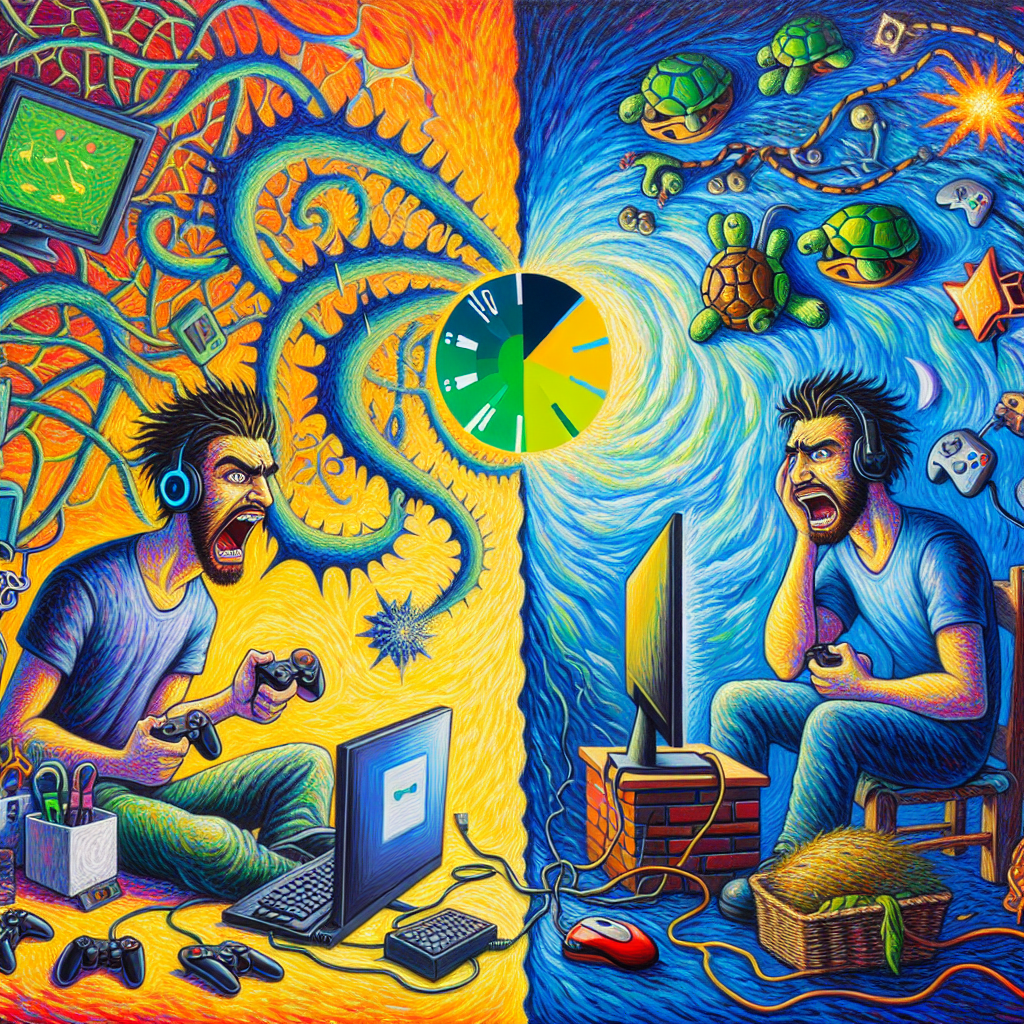
The lure of video games is undeniable, drawing players into vibrant worlds filled with challenges, narratives, and the sweet satisfaction of success. But what happens when the virtual becomes too real? Most folks treat gaming as a pleasant escape, a way to unwind after a long day. Yet, lurking in the pixels, there’s a pressure that can trigger anxiety—especially when you’re staring down the barrel of a screen, and those pesky game mechanics become more than just obstacles to overcome.
Let’s unpack this idea a bit. Picture yourself in a high-stakes game, with a timer counting down. Every decision feels monumental, and the fear of failure looms like a shadow. Miss a jump, and you’re not just restarting a level; you’re feeling a surge of frustration that lingers long after you’ve put down the controller. That’s where it gets tricky. The sensation of failure in games can extend beyond pixels and polygons, seeping into our real-world psyche.
For some, this tether to failure may seem trivial. After all, it’s just a game, right? But what if that game was based on competitive rankings or social rewards? Suddenly, the stakes feel different. The pressure to perform, to rise through the ranks, can evoke a feeling akin to standing up in front of a crowd and speaking your mind. The exhilaration of victory is addictive, but the weight of loss can usher in a familiar friend: anxiety.
When failures start to pile up—even in a fictional context—players might not just reset their games; they may carry that burden into their everyday lives. Real-world responsibilities start to feel heavier, and the line between virtual success and personal achievement blurs. That’s the dangerous dance of digital and reality. Gamers often find themselves replaying those failed moments, trying to understand why victory eluded them. This can snowball, resulting in a constant state of stress, as each new game presents potential failures.
So, what’s the solution? Recognizing the impact that games have on our emotions and mental state is a vital first step. It invites players to engage thoughtfully with their gaming habits. Like all good things, moderation is key. Balance that penchant for competitive play with some good old-fashioned relaxation, and you’ll find a healthy relationship with the gaming worlds that captivate us so completely. After all, the aim is to enjoy the ride, rather than getting lost in the endless cycles of win and lose.

Can In-Game Failure Trigger Real-World Anxiety?
Can In-Game Failure Trigger Real-World Anxiety?
- Video games create engaging worlds with challenges and narratives that captivate players.
- Gaming often serves as an escape, but it can also trigger anxiety due to high-pressure scenarios.
- Failure in games can lead to real-world consequences, impacting players’ emotions and mindset.
- Competitive gaming increases the pressure to perform, leading to feelings similar to public speaking anxiety.
- Accumulated failures in games can burden players, affecting their real-life responsibilities and achievements.
- Players often replay failed moments, which can result in a persistent state of stress with new gaming experiences.
- Recognizing the emotional impact of gaming is crucial, promoting moderation and a balanced approach for a healthier relationship with games.

Can In-Game Failure Trigger Real-World Anxiety?
Table Of Contents
- Can In-Game Failure Trigger Real-World Anxiety?
- What Are The Psychological Effects Of In-Game Failure?
- How Does Game Design Influence Player Anxiety?
- Can Repeated Failures In Games Change Behavior?
- Do Competitive Games Create Higher Anxiety Levels?
- How Can Players Cope With In-Game Failure Stress?
- What Role Does Immersion Play In Gaming Anxiety?
- Are Some Players More Prone To Anxiety From Failure?
- Conclusion
- Other Resources
- Glossary Of Terms
- Other Questions
- Haiku
- Poem
- Checklist
What Are The Psychological Effects Of In-Game Failure?
In an age where digital escapism reigns supreme, the question of what goes on behind the scenes of our beloved games is worth contemplating. We dive headfirst into captivating worlds, execute elaborate strategies, and forge connections with characters that often feel more real than many faces outside our screen. But lurking behind those immersive experiences is the shadow of failure, and it can leave a hefty psychological toll.
When players find themselves staring at a “Game Over” screen, those moments can evoke a cocktail of emotions. The thrill of victory is often vivid, but the agony of defeat hits harder. It’s like a knee to the gut—unexpected and unwelcome. In this realm of games, failure can provoke feelings of frustration, inadequacy, and even shame. After pouring hours into leveling up or completing quests, suddenly being thrust back to square one has a knack for undermining confidence.
Consider the time invested. Each session brings anticipation, each challenge follows the heart’s rhythm. When a crucial play goes awry, the result can be disheartening. Instead of basking in the glow of achievement, players may find themselves wrestling with thoughts like, “What did I do wrong?” or “Could I have done better?” These questions don’t just linger; they can fester and lead to negative self-reflection.
Moreover, these experiences can perpetuate a cycle of behavioral conditioning. A misstep can make players approach the next game with a cloud of anxiety, casting a long shadow over future encounters. This can sow doubt in one’s abilities, leading to a detrimental loop where the fear of failure overshadows the joy of gameplay. In essence, it’s the psychological tightrope walked by many in the gaming community.
Interestingly, however, this failure isn’t without its silver lining. The sting of defeat can also serve as a profound teacher. It pushes players to analyze shortcomings, refine tactics, and develop resilience—qualities that extend beyond the screen. Embracing failure can ultimately transform it into a stepping stone toward mastery, steering them to greater heights.
So, the next time you find yourself in a bind, remember: within the realm of games, failure is not merely a setback. It’s an opportunity to reflect, grow, and emerge stronger. The psychological landscape of gaming is as rich and complex as the worlds we explore. Embrace it all—the victories, the defeats, and everything in between.

What Are The Psychological Effects Of In-Game Failure?
What Are The Psychological Effects Of In-Game Failure?
- Digital escapism immerses players in captivating worlds, shaping their emotional experiences.
- Failure in games often results in feelings of frustration, inadequacy, and shame.
- A “Game Over” screen can evoke strong emotions, contrasting the thrill of victory.
- Moments of failure can lead to negative self-reflection and undermine player confidence.
- Anxiety stemming from past failures can cloud future gameplay experiences.
- Despite its challenges, failure teaches resilience and encourages self-improvement.
- Embracing failure provides opportunities for growth within the complex psychological landscape of gaming.

What Are The Psychological Effects Of In-Game Failure?
How Does Game Design Influence Player Anxiety?
In the realm of interactive entertainment, few topics generate as much intrigue as the interplay between game design and player anxiety. As players dive headfirst into virtual worlds, they’re not just looking for a distraction; they’re seeking experiences that evoke emotions, including the hair-raising thrill of fear. But what is it about game design that can ramp up the anxiety meter to eleven?
First off, let’s talk about atmosphere. Games are meticulously crafted spaces, where every sound, visual, and mechanic works together to create a world that feels alive. Think about the eerie silence in a horror game. The absence of sound can be deafening and can make players hyper-aware of their own surroundings, intensifying their anxiety levels. Coupled with dim lighting and unexpected shadows, game designers create a breeding ground for unease. When you’re on the edge of your seat, staring at the screen, waiting to see what lurks in the darkness, that’s no accident; it’s intentional design aimed at keeping players engaged—and anxious.
Game mechanics also play a crucial role in inducing anxiety. The stakes set by a game can dictate how players emotionally approach a challenge. A well-crafted survival game may have resources that are sparse or enemies that are relentless, compelling players to constantly weigh their options. In these scenarios, every decision feels significant, and the anxiety of making the wrong choice can be palpable. This is no mere walk in the park—it’s a survival dance on a wire.
Narrative pacing is another piece of the puzzle. A tightly woven storyline with twists and turns can pull players into a web of suspense. When the unfolding plot keeps players uncertain, they’re in for an anxiety-laden ride. Games that use cliffhangers effectively will keep players guessing, their minds racing as they ponder what might come next.
Finally, consider the community aspect. Multiplayer environments can amplify anxiety as players navigate the unpredictability of human behavior. The pressure of competition, the fear of letting teammates down, or even the thrill of outsmarting an opponent can feed into the anxiety loop.
In a world where players seek visceral emotional experiences, the art of game design creates a fertile ground for anxiety, turning simply playing a game into a heart-pounding adventure. And really, is there any better testament to the skill of a designer than crafting a world that keeps you coming back for more, even while your heart races and palms sweat?

How Does Game Design Influence Player Anxiety?
How Does Game Design Influence Player Anxiety?
- The interplay between game design and player anxiety is a central theme in interactive entertainment.
- Atmosphere is crucial, with sound, visuals, and mechanics working together to create a sense of unease.
- Game mechanics influence player anxiety through high stakes and challenging resource management.
- Narrative pacing with unexpected twists can heighten suspense and keep players engaged.
- Multiplayer environments amplify anxiety due to unpredictable human behavior and competition.
- Effective game design transforms play into visceral emotional experiences, heightening tension.
- A skilled designer can craft immersive worlds that entice players back despite the anxiety they evoke.

How Does Game Design Influence Player Anxiety?
Can Repeated Failures In Games Change Behavior?
Games have a unique way of revealing our true selves. They can be a mirror, reflecting our strengths, weaknesses, and even the not-so-great habits we’ve developed along the way. But here’s the kicker—what happens when we fail, and fail again? Often, repeated failures in games can serve as an unexpected catalyst for change in our behavior.
Think about it. When you’re deep into a game, whether it’s a complex strategy game or an exhilarating first-person shooter, you inevitably encounter setbacks. The thrill of leveling up can quickly turn into the frustration of being outmaneuvered by a clever opponent or defeated by an impossible boss. Initially, you might feel like tossing the controller across the room in a fit of rage, but over time, those failures can push you toward a shift in perspective.
It’s in the crucible of repeated failures that we tend to reevaluate our strategies. Every defeat becomes a lesson waiting to unfold. You start to analyze what went wrong. Was it poor planning? A lack of resource management? Maybe you got a bit too cocky? Whatever the reason, you find yourself confronted with the opportunity to adapt and improve. This could translate into better decision-making, not just in games but in real life as well.
Moreover, there’s a psychological component here. When we fail, we often feel the urge to dig deeper, to pull ourselves up by our bootstraps and gain a better understanding of our limitations. This process of self-examination can steadily transform how we approach challenges, helping us build resilience. We learn to embrace the struggle, to value the lessons embedded in our losses, which ultimately leads to a growth mindset.
And let’s not forget about cooperation and competition, two vital elements in many games. Repeated failures can foster a sense of camaraderie with fellow players, as you share tips and support each other through the hard knocks. It cultivates a community of learners who appreciate the grind as much as the success.
Repeated failures in games can indeed change behavior, nudging us toward better habits and a more thoughtful approach to challenges. We might not always win the game, but we can always come away with something far more valuable: the knowledge that growth often starts with a good, old-fashioned stumble.

Can Repeated Failures In Games Change Behavior?
Can Repeated Failures In Games Change Behavior?
- Games can reveal our true selves by reflecting strengths, weaknesses, and habits.
- Repeated failures in games can catalyze changes in behavior and perspective.
- Setbacks prompt players to reevaluate strategies and analyze mistakes.
- Failures provide opportunities for improvement in decision-making, both in gaming and real life.
- Self-examination following failure fosters resilience and a growth mindset.
- Cooperation and competition in games create a supportive community among players.
- Growth often starts with failure, leading to valuable lessons and personal development.

Can Repeated Failures In Games Change Behavior?
Do Competitive Games Create Higher Anxiety Levels?
When you think about competitive games, whether they be video games, sports, or board games, it’s hard not to recognize the thrill they bring. But let’s take a moment to peel back that glossy layer of excitement and examine the engine underneath. It begs the question: Do competitive games create higher anxiety levels? Spoiler alert: the answer might just make you squirm—at least a little.
Picture this: two teams battling it out on the basketball court, every point scored sending ripples through the crowd. The energy is palpable, the stakes are high, and for those playing, anxiety levels can skyrocket. Why? Well, the competitive nature of these games taps into our primal instincts, making us feel the weight of pressure and expectation. In competition, every move counts, every decision can lead to glory or defeat.
But it’s not just the face-off between well-coached teams or seasoned gamers that incites anxiety. Take a look at that group of friends gathered around a board game on a Saturday night. Tensions run high as players jockey for position, strategizing their next moves in hopes of glory. The lighter atmosphere can quickly shift as the stakes rise, and even in a casual environment, the thrill of competition can morph into something a little less fun.
The science behind it is equally fascinating. Our bodies respond to competition by flooding us with stress hormones like cortisol and adrenaline. This cocktail of chemicals can activate the fight-or-flight response, turning what should be an enjoyable experience into a stress-filled game of nerves. That pulse-quickening pressure inspires some players to excel, pushing them past their limits. Others? Well, they might find themselves frozen in fear, torn between playing to win and simply wanting the game to end.
Now, don’t get it twisted: competition can also be a beautiful thing. It can inspire us to strive for excellence, forge friendships, and even teach valuable life lessons. But we must also recognize the double-edged sword that is anxiety. Not every player emerges unscathed. In fact, some walk away feeling drained, questioning whether the pursuit of victory is worth the mental toll.
So, as you lace up your sneakers or grab that game controller, keep in mind the fine line between adrenaline and anxiety. In the wild world of competitive games, it’s important to keep your head in the game while also taking good care of your mind.

Do Competitive Games Create Higher Anxiety Levels?
Do Competitive Games Create Higher Anxiety Levels?
- Competitive games, including video games, sports, and board games, generate excitement but may lead to increased anxiety levels.
- The pressure of competition activates primal instincts, heightening feelings of pressure and expectation.
- Even casual board games can turn tense as players compete for victory, shifting the atmosphere from fun to stress.
- Competition triggers the release of stress hormones like cortisol and adrenaline, affecting players’ responses.
- This physiological response can either motivate players to excel or paralyze them with fear and anxiety.
- While competition fosters excellence, friendship, and life lessons, it can also have a mental toll on players.
- It’s crucial to balance the thrill of competition with taking care of one’s mental health during gameplay.

Do Competitive Games Create Higher Anxiety Levels?
How Can Players Cope With In-Game Failure Stress?
In the wild world of digital escapades, where every click can lead to triumph or disaster, players often find themselves grappling with the beast known as in-game failure stress. As those little avatars tumble from a cliff or get pulverized by an unsuspecting enemy, it’s easy to forget that behind the colorful graphics and frenetic soundtracks, there are real emotions at play. So, how can a gamer navigate the choppy waters of failure?
First off, let’s talk about perspective. Games are designed to challenge us, to make us think, improve our skills, and sometimes, yes, to make us fail spectacularly. Rather than viewing these setbacks as losses, players can reframe them as opportunities for growth. Every epic failure can be an unwelcome tutor, showing you exactly where your strategy went wrong or what that big boss fight taught you about timing. Embracing this mindset transforms what could be a confidence-crushing experience into one of learning and resilience.
Another crucial thing to remember is the power of community. Gamers often find solace in sharing their experiences, triumphs, and fails with fellow players. Engaging with others can help alleviate that nagging sense of isolation that often accompanies failure. By joining forums, social media groups, or even in-game chat rooms, players can swap stories and strategies. Laughter becomes a great antidote; when friends share a collective groan over a shared failure, it lightens the emotional load.
Equally important is the concept of taking breaks. When the game becomes overwhelming, stepping away might be the best move. Engaging in a walk outside or switching to a different hobby can drastically reduce stress. This time away can provide fresh perspectives on what went wrong and give players the energy to tackle their challenges head-on when they return.
Lastly, celebrating small victories can create a buffer against the sting of failure. A successful sequence or conquering a minor challenge can lift spirits and remind players of their capabilities. It’s vital to recognize and appreciate the steps taken, no matter how small they may seem.
So, the next time your character meets an untimely demise, remember this: it’s all part of the game. The keys to coping lie in perspective, community, breaks, and celebrating victories. Embrace the chaos, and find joy in the journey—after all, in the grand tapestry of gaming, it’s not just about winning, but discovering who you really are in the midst of adversity.

How Can Players Cope With In-Game Failure Stress?
How Can Players Cope With In-Game Failure Stress?
- In-game failure stress is a common experience for players, often causing real emotional reactions.
- Perspective is key; view setbacks as opportunities for growth rather than losses.
- Failures can serve as valuable tutors, highlighting areas for improvement and strategy refinement.
- Engaging with the gaming community helps alleviate feelings of isolation through shared experiences.
- Taking breaks is essential; stepping away can reduce stress and offer fresh perspectives.
- Celebrating small victories can boost confidence and remind players of their capabilities.
- Ultimately, gaming is about the journey and personal discovery, not just winning.

How Can Players Cope With In-Game Failure Stress?
What Role Does Immersion Play In Gaming Anxiety?
When we talk about gaming anxiety, let’s dig into the role of immersion—because, in the world of games, immersion isn’t just a pleasant side effect; it can be a double-edged sword.
Imagine you’re deep in a narrative-driven role-playing game, where the stakes are high and your character’s fate hangs in the balance. You’ve invested time building this character, understanding their background, and weaving their story. Suddenly, an unexpected monster appears, and your pulse quickens. This is immersion at its finest. Your heart races, your palms sweat—this is the power of games drawing you in like a moth to a flame. You’re no longer merely a player; you’re deep within that virtual world, and you feel every heartbeat and misstep.
But herein lies the paradox. While this immersive experience can transport you to new heights, it can also plunge you into the depths of anxiety. Let’s face it, not everyone handles high-stakes scenarios with poise. For some gamers, that heartbeat might not just be the thrill of the chase but a harbinger of panic. The closer you get to defeat, the more you may grapple with the weight of failure—especially if that failure could mean loss of progress or accomplishment, echoing throughout your gaming experience.
Awareness of this phenomenon has led developers to embrace various methods to cater to different player experiences. Some games allow for adjustable difficulty settings, letting players ease their way into the challenges without triggering a chaotic anxiety response. Others incorporate guided narratives or relaxation elements, creating spaces where players can catch their breath. It’s understanding that we’re in a world of games—some lend themselves to anxiety while others offer a comforting embrace.
Moreover, the setting of social dynamics and multiplayer scenarios can amplify this sense of anxiety. Imagine coordinating with friends in a co-op mission only to find yourself underperforming compared to your peers. Here, immersion can transform from a trellis of enjoyment to a net of restraint, ensnaring you in the fear of judgment or failure.
While immersion is a hallmark of great game design, it’s essential to recognize its potential to generate anxiety. Understanding this balance can lead players to not only enhance their gaming experience but also manage the emotional rollercoaster that comes along for the ride. In this world of games, it’s all about striking that delicate balance between immersion and enjoyment, crafting an adventure that’s as liberating as it is exhilarating.

What Role Does Immersion Play In Gaming Anxiety?
What Role Does Immersion Play In Gaming Anxiety?
- Immersion in gaming is a powerful experience, enhancing player engagement.
- High-stakes scenarios can induce anxiety instead of excitement for some gamers.
- Failure in games can lead to significant emotional responses, impacting overall enjoyment.
- Developers are addressing gaming anxiety through adjustable difficulty settings.
- Guided narratives and relaxation elements in games provide a respite from anxiety.
- Social dynamics and multiplayer scenarios can increase feelings of anxiety and fear of judgment.
- Finding a balance between immersion and emotional wellbeing is crucial for an enjoyable gaming experience.

What Role Does Immersion Play In Gaming Anxiety?
Are Some Players More Prone To Anxiety From Failure?
In the world of competitive sports, the spotlight can shine so brightly that it often casts long shadows. Some players, even the most talented among them, harbor a fraught relationship with failure. We all know that games are designed to test limits, to push individuals to their thresholds—and not everyone emerges unscathed. While talent, skill, and practice play monumental roles in a player’s journey, there’s an underlying current of anxiety that can turn the thrill of competition into a source of dread.
Imagine a young athlete, brimming with potential, standing at the edge of the field. Every glance at the scoreboard triggers a wave of self-doubt. For some, the pressure of the games can feel like a noose tightening with each moment that passes. That fear of stumbling, of letting teammates down, or of failing to meet expectations can create a psychological landscape fraught with peril. The stakes rise, and so does the anxiety. A missed goal, a dropped pass, or an unfortunate blunder can cascade into a spiral of stress that seemingly consumes them.
Research suggests that certain players are more susceptible to falling into this anxiety trap. Personality traits, past experiences, and even upbringing can significantly influence how individuals cope with the pressures of competition. Take a player nurtured in an environment that emphasized perfection; for them, every setback might feel like a personal failing. In contrast, another player, having grown up in a more forgiving atmosphere, may view mistakes as stepping stones rather than stumbling blocks.
Then there are the external pressures. Coaches, fans, and even social media can exacerbate this sense of anxiety. The louder the cheers and the sharper the scrutiny, the heavier the burden becomes. Players constantly navigate a landscape where failure feels magnified, and the stakes feel insurmountably high. For those who are wired differently, the consequences of a single missed opportunity can seem more like a fracture in their identity rather than a mere part of the game.
Ultimately, it’s a complex interplay that determines who emerges from the crucible of competition unscathed and who carries the weight of anxiety. It’s crucial for athletes, coaches, and everyone in the sporting world to recognize these disparities and foster an environment where failure is not the end of the road, but merely a stepping stone along the winding journey of the game.

Are Some Players More Prone To Anxiety From Failure?
Are Some Players More Prone To Anxiety From Failure?
- Competitive sports often create intense pressure, leading to a fraught relationship with failure among players.
- While talent and skill are essential, anxiety can transform the excitement of competition into dread.
- The pressure of the game can feel overwhelming, triggering self-doubt and fear of failure.
- Personality traits and upbringing significantly influence how players cope with competitive pressures.
- External factors, such as coaches and fans, can heighten feelings of anxiety and scrutiny.
- For some athletes, a missed opportunity can feel like a significant blow to their identity.
- Recognizing the complexities of anxiety in sports is crucial to fostering a supportive environment for athletes.

Are Some Players More Prone To Anxiety From Failure?
Conclusion
As we pull the curtain on our exploration of the psychological impact of gaming setbacks, let’s take a moment to catch our breath and reflect. Video games have undeniably woven themselves into the fabric of our lives, offering not just entertainment but experiences that evoke a plethora of emotions. We dive into immersive worlds, only to be jolted by failures that can echo far beyond the virtual confines of our screens. But these experiences are not merely bumps in the road; they can be significant markers on our journey toward self-discovery and growth.
Think about it. How many times have you found yourself gritting your teeth at a “Game Over” screen, feeling that familiar rush of frustration and inadequacy? For many, the stakes feel incredibly high, especially when social and competitive elements are woven into the gameplay. Suddenly, every defeat can morph from a little setback to a weighty burden, making us question our abilities and leading us down paths of anxiety. The truth is, as much as gaming offers escapism, it can also stir up real-world emotions that leave marks long after the console powers down.
The fascinating paradox emerges where these failures serve as potent teachers. Each misstep invites introspection, analysis, and ultimately, resilience. It’s a dance with adversity that, when navigated with intention, can enhance not just our gameplay but our approach to life’s myriad challenges. Embracing failure as a necessary companion on the journey could open new avenues for personal growth.
Let’s not forget the crucial role of community in this digital escapade. Sharing our experiences with fellow gamers can lighten the load. Laughter over shared struggles fosters connections that transcend the constraints of the game, reminding us we’re all in this together. Taking breaks and celebrating even the smallest victories can further buffer the sting of failure, allowing us to maintain perspective.
Ultimately, we are the architects of our gaming experiences. Recognizing our emotional responses to in-game failures—be it frustration, anxiety, or growth—arms us with the ability to curate healthier relationships with our beloved games. As we lace up our gaming shoes for our next adventure, let’s remember to enjoy the journey, learn from the losses, relish the wins, and embrace, above all, the wonderfully chaotic ride that is gaming. After all, in the grand narrative of life, we’re not just battling for scores; we’re forging stories worth telling.

Conclusion
Conclusion:
- Video games are integral to our lives, providing entertainment and emotional experiences.
- Failures in gaming can lead to feelings of frustration and inadequacy, impacting real-world emotions.
- Defeats can prompt self-reflection and resilience, contributing to personal growth.
- Embracing failure can enhance both gameplay and our approach to real-life challenges.
- Community plays a crucial role; sharing experiences with others can alleviate the burden of setbacks.
- Celebrating small victories and taking breaks helps maintain perspective on gaming failures.
- Recognizing emotional responses to gaming setbacks enables healthier relationships with games.

Conclusion
Other Resources

Other Resources
Here is a list of other resources you can review online to learn more:
- Paizo Publishing
- Czech Games Edition
- Puerto Rico (with two expansions)
- Cyclades
- Fantasy Flight Games
- The Secret Cabal Gaming Podcast
- Aeon’s End
- Castles of Mad King Ludwig
- Robinson Crusoe: Mystery Tales Expansion
Use This Prompt To Get More Resources With Your Favorite Online AI Tool: Please provide me with a list of online articles with their URLs in a bulleted list that I can read regarding Can In-Game Failure Trigger Real-World Anxiety?

Other Resources
Glossary Terms
Can In-Game Failure Trigger Real-World Anxiety? – Glossary Of Terms
1. Anxiety: A psychological state characterized by feelings of worry, nervousness, or unease, often in response to perceived threats or challenges.
2. Game Mechanics: The rules and systems that govern how players interact with a game, which can influence their experiences and emotional responses.
3. Immersion: The degree to which a player is absorbed in the game environment, potentially heightening emotional reactions to in-game success or failure.
4. Failure: The inability to achieve a desired outcome within a game, which can trigger emotional responses in players.
5. Feedback Loop: The cycle of actions and consequences in games that can reinforce behaviors; failure can negatively impact a player’s motivation and enjoyment.
6. Stress: A natural response to perceived threats, which can be triggered by in-game challenges and failures.
7. Frustration: An emotional response stemming from repeated failures or obstacles in gameplay, leading to negative feelings.
8. Coping Mechanism: Strategies or behaviors that players might employ to manage anxiety or stress generated by game interactions.
9. Desensitization: The process of becoming less sensitive to emotional responses after repeated exposure, which could occur through frequent gaming experiences.
10. Performance Anxiety: The fear of not performing well in a game, especially when high stakes or competitive elements are involved.
11. Attachment: The emotional bond players develop with characters or storylines, which can amplify reactions to in-game challenges.
12. Challenge: A critical component of gaming that can lead to both positive engagement and potential anxiety when players struggle to overcome obstacles.
13. Virtual Failure: The experience of losing or not succeeding in-game, potentially translating into feelings of inadequacy in the real world.
14. Reward System: The game’s framework for providing rewards for success, which can modify player behavior and expectation levels.
15. Social Comparison: Evaluating oneself against other players can heighten anxiety, particularly in competitive or community-based games.
16. Escapism: The use of gaming as a means to escape from reality, which can sometimes lead to challenges in managing real-world emotions.
17. Game Flow: A state of complete absorption in a game, which can be disrupted by failure, leading to anxiety or frustration.
18. Replayability: The ability for players to find value in continuing to play a game, potentially prompting anxiety if they repeatedly encounter failure.
19. Psychology of Gaming: The study of how games affect mental processes, behavior, and emotions, including the impact of failure on anxiety.
20. Skill Gap: The difference in ability levels among players, which can create anxiety for less experienced players facing more skilled opponents.
21. Microtransactions: Financial transactions for in-game purchases, which can lead to anxiety about spending money versus achieving success.
22. Expectation Management: The process of setting realistic goals and outcomes in gaming that can mitigate anxiety related to performance.
23. Dopamine Response: The brain’s release of dopamine during rewarding game experiences, which can contrast sharply with feelings of failure.
24. Community Pressure: The expectations imposed by gaming communities that can lead to increased anxiety for players trying to meet social standards.
25. Narrative Stakes: The importance of story elements in a game that can make failure feel more significant, enhancing emotional responses.
26. Time Investment: The amount of time players dedicate to a game; failures can feel more impactful after long engagement.
27. Realism: The degree to which a game mimics real-life situations, which can amplify the emotional significance of in-game failures.
28. Mental Health: The state of emotional and psychological well-being, which can be affected by gaming experiences, especially failures.
29. Game Over: The finality of failing in a game, which can evoke strong emotional reactions and contribute to anxiety.
30. Therapeutic Gaming: The use of gaming as a tool to address mental health issues, which may also involve understanding the impact of in-game failures on anxiety.

Glossary Of Terms
Other Questions
Can In-Game Failure Trigger Real-World Anxiety? – Other Questions
If you wish to explore and discover more, consider looking for answers to these questions:
- What specific psychological effects can in-game failures have on different types of players?
- How can game mechanics be designed to minimize anxiety while still providing challenge?
- What role does individual mental health play in how players experience anxiety related to gaming?
- Are there particular genres of games that are more likely to induce anxiety than others?
- How can players recognize when their gaming anxiety is becoming a problem?
- What strategies can players implement to prevent anxiety from affecting their performance in games?
- How does player age or maturity affect their reaction to in-game failure?
- What are some successful examples of game design that address or mitigate player anxiety?
- Can social interactions in gaming contribute positively or negatively to anxiety levels?
- What are the long-term effects of experiencing repeated failures in video games on a player’s mental health?
- How do different cultures perceive and respond to gaming setbacks and failure?
- Are there any studies that highlight the relationship between gameplay styles and anxiety levels in players?

Other Questions
Haiku
Can In-Game Failure Trigger Real-World Anxiety? – A Haiku
Gaming’s sweet embrace,
Yet failures feed the anxiety—
Joy and stress entwined.

Haiku
Poem
Can In-Game Failure Trigger Real-World Anxiety? – A Poem
In digital realms where pixels gleam,
We chase our fortunes, weave our dream,
Yet lurking close in every game,
Is the specter of fear, the sting of shame.
With controllers gripped in anxious hands,
We navigate battles through shifting sands,
Each jump and quest—a test of will,
The thrill of success, but oh, the chill!
When the screen fades to “Game Over,”
Frustration blooms, a heavy hover,
Framing our minds in shadows so stark,
As we replay the moments, searching for spark.
Competition’s high stakes ignite our dread,
Pressure rises, the thrill fills with lead,
Every move matters, every choice weighs,
A dance of anxiety through long, treacherous plays.
But from failure’s bite comes wisdom’s glow,
A chance to reflect, to learn, to grow,
In the crucible of loss, resilience is born,
Emerging stronger with each new dawn.
Community beckons, where laughter subsides,
In shared tales of losses, true friendship abides,
Breaks in the action, sweet moments embraced,
Reframe each setback, let not joy be chased.
Amidst the immersion, where we pour our hearts,
Anxiety can ripple, yet each player departs,
With their own unique scars from the field of play,
Some rise unshaken, while others sway.
So, grasp the controller with insight anew,
Balance your gaming—let joy break through,
For in this grand tapestry, remember this truth:
In every failure lies a path to your proof.

Poem
Checklist
Can In-Game Failure Trigger Real-World Anxiety? – A Checklist
Understanding Emotional Responses
_____ Acknowledge your feelings after an in-game failure (frustration, sadness, insecurity).
_____ Reflect on how in-game experiences affect your real-world emotions and mindset.
Game Design Awareness
_____ Recognize how game design elements (atmosphere, mechanics, narratives) can induce anxiety.
_____ Identify if your favorite games have been designed to create high emotional stakes.
Coping Mechanisms
1. Perspective Shift
_____ Reframe setbacks as learning opportunities rather than failures.
_____ Focus on specific lessons learned from each game experience.
2. Community Engagement
_____ Share your gaming experiences with friends or on online forums.
_____ Seek support from fellow players to alleviate feelings of isolation.
3. Taking Breaks
_____ Schedule regular breaks while gaming to maintain mental health.
_____ Engage in activities outside of gaming, such as walks or different hobbies.
4. Celebrate Small Wins
_____ Acknowledge and celebrate minor victories to boost confidence.
_____ Keep a record of achievements, no matter how small.
Behavioral Changes
_____ Self-analyze your gaming strategies after setbacks to improve future performance.
_____ Foster resilience by embracing challenges and understanding that growth often comes from failure.
Managing Competitive Pressure
_____ Recognize the difference between healthy competition and excessive stress.
_____ Set realistic goals to lessen the pressure of performing under scrutiny.
Immersion and Mindfulness
_____ Practice mindfulness while gaming to help manage anxiety.
_____ Understand the dual role of immersion: it enhances enjoyment but can also cause anxiety.
Personal Reflection
_____ Consider if you are more prone to anxiety based on personality traits or past experiences.
_____ Reflect on external pressures that may exacerbate your anxiety when gaming.
Seek Help If Needed
_____ If gaming-related anxiety becomes overwhelming, consider talking to a mental health professional.
_____ Be open to exploring therapy options specifically geared towards managing gaming and anxiety.
End Note
_____ Remember that gaming is about enjoyment. Balance play with relaxation and self-compassion.
Feel free to print this checklist and use it as a guide to help manage the psychological impact of in-game failures and anxiety!

Checklist
At HowDoYouGame, we help people who love board games by collating information and news about games.
Be sure to read our other related stories at HowDoYouGame to learn more about games.