The Impact Of Video Games On Children’s Problem-Solving Skills
By Tom Seest
At HowDoYouGame, we help people who love board games by collating information and news about games.
Be sure to read our other related stories at HowDoYouGame to learn more about games.
Are Video Games Making Kids Smarter Or Just More Impatient with Problems?
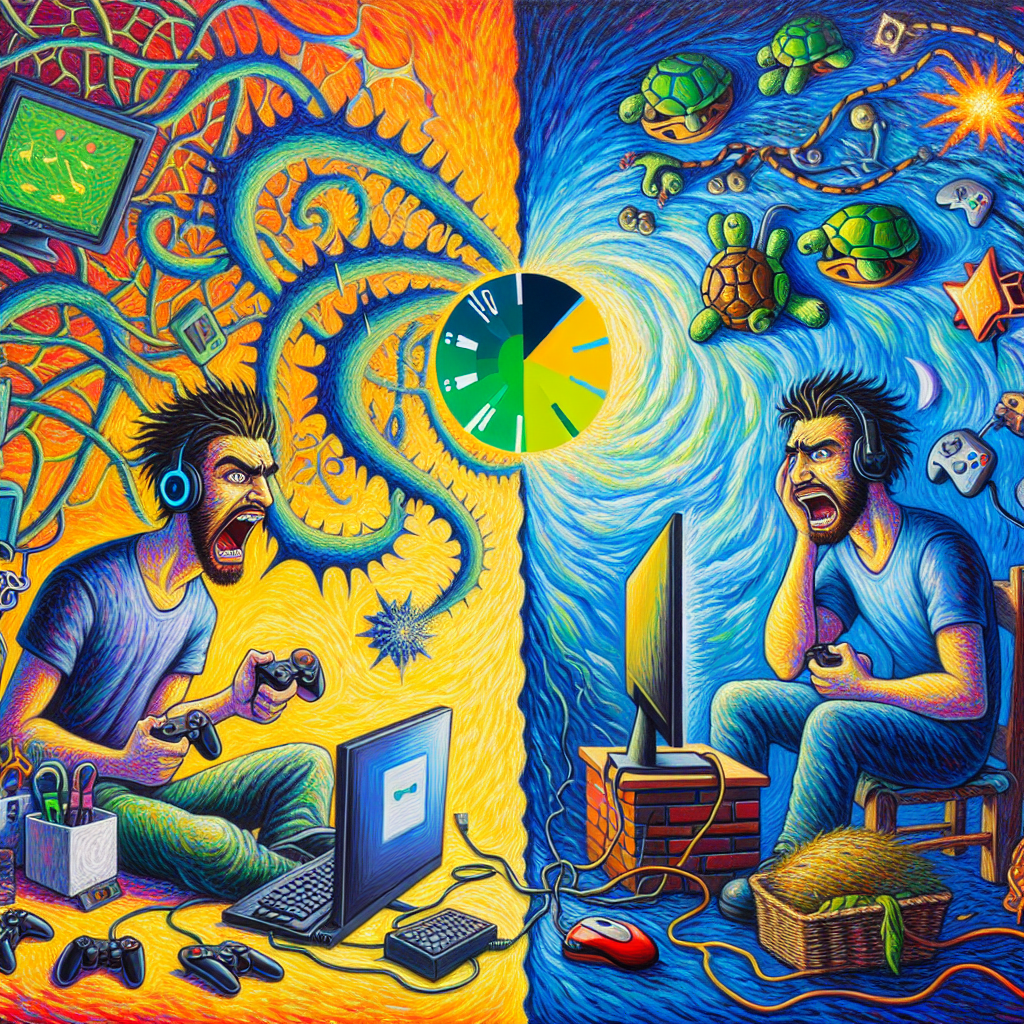
In the not-so-distant past, video games were often relegated to the status of mere toys—joyful distractions for kids who’d much rather be staring at a screen than, say, cracking open a textbook. But today’s gaming landscape is an entirely different beast, and it begs the question: Are these pixelated adventures genuinely enhancing our children’s intellect, or are we merely nurturing a generation of kids who tap their fingers impatiently when faced with a real-world hiccup?
Enter the phenomenon of gamification. It’s a term that might sound like something cooked up in a tech laboratory, but at its core, it’s a simple concept: taking something that’s often seen as mundane and injecting it with the engaging vitality of game mechanics. This could mean rewarding students with badges for solving math problems or using points to redeem real-life rewards for achieving tasks. It’s a clever way to harness the allure of gaming to drive motivation, learning, and even problem-solving skills.
Take a moment and reflect on the lessons embedded in our most beloved games. From organizing a virtual farm to saving the world from impending doom, players constantly strategize, analyze, and make split-second decisions. They fail, they learn, and they try again—an iterative process that sounds awfully familiar to anyone who’s ever faced a tough problem in life. Games teach us not only resilience but also critical thinking and teamwork. Those skills are invaluable, whether one is defusing a conflict in the playground or navigating the complexities of a career down the line.
But let’s be honest; there’s a flip side to this coin. While these games may spawn innovative thinkers, they also cultivate an intolerance for the slow grind of traditional learning. A child accustomed to instant rewards may not have the patience for deeper inquiry or prolonged problem-solving. Instead of digging into a challenge with tenacity, they might deem the effort not worth their time.
So, how do we strike a balance? It’s about understanding what it means to navigate both worlds—the thrill of gaming and the foundational skills required in the real world. By integrating the lessons from video games into everyday life, we can cultivate a generation of smart, capable kids who know how to tackle problems head-on while still savoring the satisfying depth of patience and perseverance. It’s a balancing act worth contemplating, and it starts with understanding how these two dimensions can coexist harmoniously.

Are Video Games Making Kids Smarter Or Just More Impatient with Problems?
Are Video Games Making Kids Smarter Or Just More Impatient with Problems?
- Video games have transitioned from being viewed as mere toys to a topic of serious consideration regarding intellectual enhancement for children.
- The concept of gamification involves making mundane tasks engaging through game-like mechanics, such as rewards for achievements.
- Games encourage critical skills including strategy, analysis, and decision-making through iterative learning processes.
- While games foster resilience and teamwork, they may also promote a lack of patience for traditional, slower learning processes.
- Children used to instant gratification from games may struggle with deeper inquiry and prolonged problem-solving.
- Striking a balance between gaming and real-world skills is essential for developing well-rounded individuals.
- Integrating video game lessons into everyday life can help cultivate smart and capable children who value patience and perseverance.

Are Video Games Making Kids Smarter Or Just More Impatient with Problems?
Table Of Contents
- Are Video Games Making Kids Smarter Or Just More Impatient with Problems?
- Is Gaming Improving Cognitive Skills In Children?
- How Do Video Games Affect Attention Spans?
- Do Video Games Enhance Problem-Solving Abilities?
- Are There Specific Genres That Benefit Learning?
- Can Gaming Lead To Impatience In Real-Life Scenarios?
- What Impact Do Video Games Have On Social Skills?
- Are Educational Games More Effective Than Traditional Learning?
- Conclusion
- Other Resources
- Glossary Of Terms
- Other Questions
- Haiku
- Poem
- Checklist
Is Gaming Improving Cognitive Skills In Children?
Let’s face it, we’ve all seen those gaming marathons—kids glued to the screen, fingers flying across controllers, and a concentration that could put even the most seasoned professionals to shame. But while we might roll our eyes and mutter about “screen time,” there’s a fascinating world unfolding behind those pixels, one that could be enriching our kids’ cognitive skills in ways we’re just starting to understand.
You see, gamification is more than just a trendy buzzword. It’s the idea of applying game-design elements in non-gaming contexts, and it’s already permeating education, health, and yes, even daily routines. When we introduce gamification into learning, for instance, we transform mundane tasks into thrilling challenges that engage young minds. Suddenly, memorizing math facts or practicing spelling can be a race against the clock or a quest to conquer virtual worlds. Not so boring anymore, right?
Research shows that certain types of video games can enhance problem-solving abilities, improve spatial awareness, and promote critical thinking. Imagine that! Those same kids who seem to be merely shooting aliens or racing cars might just be refining skills that are crucial for their academic and personal lives. Studies have indicated that action games can lead to faster decision-making and better multitasking. We’re talking about skills that can crossover into real-world scenarios—like determining the quickest route during a traffic jam or analyzing complex problems in the classroom.
Now, it’s essential not to get lost in the excitement of digital adventures. Balance is key. Just as we’d encourage moderation in diet—with plenty of fruits and veggies among those tasty treats—we should apply the same wisdom to gaming. It’s about harnessing that potent concentration and creativity in a way that’s healthy and productive. Parents, educators, and kids alike should engage in open conversations about what’s being played, how much time is being spent, and what skills can be cultivated through these virtual experiences.
At the end of the day, the real victory comes when we nurture a sense of curiosity and a love for learning—whether that’s fostered through books or buttons. So, indulge those gaming sessions, but keep an eye on the potential they bring. After all, who knows? Those little gamers might just be the future innovators, thinkers, and problem solvers we desperately need.

Is Gaming Improving Cognitive Skills In Children?
Is Gaming Improving Cognitive Skills In Children?
- Gaming marathons can enhance children’s cognitive skills in unexpected ways.
- Gamification involves applying game-design elements to non-gaming contexts like education and health.
- Integrating gamification makes learning engaging, turning tasks into thrilling challenges.
- Certain video games can improve problem-solving abilities, spatial awareness, and critical thinking.
- Action games may lead to quicker decision-making and better multitasking skills.
- Balanced gaming is crucial, with open discussions around time spent and the educational value of games.
- Encouraging curiosity and a love for learning can foster future innovators and problem solvers.

Is Gaming Improving Cognitive Skills In Children?
How Do Video Games Affect Attention Spans?
When we dive into the world of video games, we often hear the term “gamification” tossed around like a beach ball at a summer barbecue. It’s a fancy word for an age-old human practice: turning tasks into games to make them more engaging. Think about it – from childhood games to corporate training modules, we’ve always had an innate desire to add a little fun to the mundane. But how does this desire translate to our attention spans, especially in a world bursting with distractions?
Picture a classic video game scenario. You’re immersed, gripping the controller like it’s a lifeline. Each pixel on the screen begs for your attention. You’re not just a passive observer; you’re an active participant, navigating a world filled with challenges that require focus and quick decision-making. This experience can sharply contrast our day-to-day activities, where mundane tasks often demand far less engagement. The instant rewards and challenges found in gaming keep our brains firing on all cylinders, enhancing our ability to focus and maintain attention.
Now, let’s reflect on that for a moment. In today’s fast-paced, constantly connected society, many of us find our attention spans stretched thinner than a tightrope walker’s balance. The endless scrolling on social media, the barrage of notifications, and the demands of everyday life compete fiercely for our finite mental resources. But gaming, when approached mindfully, can provide a counterbalance.
So, what can we do with this newfound insight? First, let’s not demonize video games outright. Instead, consider how we can harness their positive elements – that enticing gamification – to improve our focus in other areas of life. Maybe it’s setting up a reward system for work tasks or incorporating playful elements into our daily routines. After all, many of us thrive when there’s a sense of achievement, right?
Engaging with games can also inspire us to find deeper connections in our lives, balancing pleasure and productivity. So, the next time you pick up that controller, remember: you’re tapping into powerful cognitive skills that can enhance your attention and even enrich your daily life. It’s all about finding the right balance and using what we love to cultivate focus and fulfillment in everything we do.

How Do Video Games Affect Attention Spans?
How Do Video Games Affect Attention Spans?
- Gamification refers to turning tasks into games to enhance engagement.
- Video games demand active participation and focus, contrasting with mundane daily activities.
- The rewards and challenges in gaming can improve our ability to maintain attention.
- In a distraction-heavy society, our attention spans are increasingly challenged.
- Mindful gaming can provide a counterbalance to modern distractions.
- Positive aspects of gaming can be harnessed to improve focus in other areas of life.
- Engaging with games can enrich our lives by balancing pleasure and productivity.

How Do Video Games Affect Attention Spans?
Do Video Games Enhance Problem-Solving Abilities?
Let’s face it: we’ve all been there. You settle into your couch after a long day, ready to unwind with a few rounds of your favorite video game. But did you know that while you’re dodging obstacles and leveling up, you might also be sharpening those problem-solving skills? It might sound a bit far-fetched, but there’s science behind the pixels and the action.
At its core, gamification is the art of taking elements from games and applying them to real-world scenarios. Think of it as a toolbox for your brain. Loading up a video game? You’re not just playing; you’re entering a digital workshop where every challenge is a problem to be solved. Whether you’re constructing towering structures in a sandbox game or strategizing to outsmart an opponent in a battle royale, each moment requires you to think critically and adapt.
Imagine a scenario where you’re facing a tough boss. The traditional path might be to simply charge in headfirst. But a well-honed gamer knows that the real victory lies in strategy. You learn quickly to analyze the boss’s patterns, adapt your tactics, and anticipate the next move. This adaptive thinking doesn’t just exist in the virtual realm; it’s a skill that translates into everyday life. That quick-thinking ability? It’s like a mental gym workout, conditioning you to handle unforeseen challenges in the real world with grace and efficiency.
Now, let’s not turn a blind eye to the fact that video games come in all forms, and not all of them will boost your brainpower. However, games that require critical thinking and teamwork can create dynamic environments where problem-solving becomes second nature. Remember those late nights huddled with friends around a console? That’s teamwork in action—an essential skill in any job or life situation.
So the next time you pick up the controller, remember, you’re not just gaming. You’re engaging in digital exercises that cultivate your ability to think flexibly and solve problems creatively. Embrace the challenge and enjoy the journey. After all, life’s just one big game, and each level is an opportunity to learn and grow. Whether it’s in the real world or the pixelated one, nurturing these skills will serve you well, and who knows? You might just find yourself leveling up in more ways than one.

Do Video Games Enhance Problem-Solving Abilities?
Do Video Games Enhance Problem-Solving Abilities?
- Video games can enhance problem-solving skills while providing entertainment.
- Gamification applies game elements to real-world scenarios, acting as a mental toolbox.
- Engaging in video games promotes critical thinking and adaptability in facing challenges.
- Adaptive thinking in gaming helps individuals analyze and strategize effectively in real life.
- Teamwork fostered through multiplayer games translates to essential collaboration skills.
- Not all video games enhance brainpower; focus on those requiring critical thinking.
- Playing video games can cultivate a flexible mindset and creative problem-solving abilities.
Do Video Games Enhance Problem-Solving Abilities?
Are There Specific Genres That Benefit Learning?
When we think about education, it’s easy to picture a classroom filled with textbooks and diligent students, but learning doesn’t stop at the traditional methods. What if I told you that certain genres have a special knack for making learning not just effective, but downright enjoyable? That’s right; some genres can turn the solemn process of acquiring knowledge into an engaging adventure worth embarking on.
Take video games, for instance. They’ve taken the world by storm, not just for entertainment but also for their potential in education. Enter “gamification,” a term that combines game mechanics with non-gaming contexts. Why does this matter? Think about it: when we immerse ourselves in a well-crafted story or competitive gameplay, we’re often learning without even realizing it. Games are built on challenges, rewards, and progress—it’s a thrill that ensures we absorb information almost effortlessly. Learning becomes an exciting quest, and who doesn’t love that?
Now, let’s not shy away from the arts. Genres like drama and comedy can also pack a powerful punch when it comes to imparting lessons. A well-timed laugh or a poignant moment in a movie can resonate deeply, fostering an emotional connection to the material that a lecture might never achieve. These artistic expressions not only entertain but challenge us to think critically about the human experience—struggles, victories, and everything in between.
Then there’s the realm of non-fiction: documentaries, memoirs, and informative podcasts. These formats may lack the bells and whistles of gamified experiences, but they can spark curiosity and provide invaluable insights into the world around us. Whether you’re learning about the mysteries of the universe or the intricacies of a historical figure’s life, these genres have a unique ability to deliver content in a way that feels personal and relatable.
In exploring these genres, we find a world where barriers to learning crumble. Whether you’re trying to grasp a complex concept or simply enrich your knowledge, there’s no singular path to follow. By embracing various forms of media, including the exhilarating aspects of gamification, we can tap into new levels of engagement that inspire us to learn more deeply, connect more genuinely, and ultimately, grow as individuals. So grab that book, play that game, or queue up that documentary. Learning is waiting—make it an adventure worth your time!

Are There Specific Genres That Benefit Learning?
Are There Specific Genres That Benefit Learning?
- Education extends beyond traditional classroom methods, incorporating engaging genres.
- Video games exemplify effective learning through “gamification,” blending game mechanics with educational contexts.
- Immersive stories and gameplay create thrilling learning experiences that feel effortless.
- The arts, including drama and comedy, enhance learning through emotional connections and critical thinking.
- Non-fiction genres—like documentaries, memoirs, and podcasts—offer personal insights and spark curiosity.
- Embracing diverse media breaks down learning barriers and enriches knowledge acquisition.
- Learning should be an adventure; exploring various forms can inspire deeper understanding and personal growth.

Are There Specific Genres That Benefit Learning?
Can Gaming Lead To Impatience In Real-Life Scenarios?
There’s no denying that gaming can be a thrilling escape. The rush of adrenaline, the intense focus, and the sheer joy of accomplishment strike a chord with millions. But as we plunge deeper into this digital playground, one question begs to be asked: does our penchant for fast-paced gaming create a sense of impatience in the everyday grind of life? Let’s unpack that notion together and see where the pieces land.
Take a step back and think about it. When we’re immersed in a game, every action feels urgent. The clock is ticking; every second counts whether you’re racing cars, surviving zombie apocalypses, or strategizing your next move in a fantasy world. This is where gamification shines, turning mundane tasks into engaging challenges. It’s this transformation that can lure us in, allowing us to believe that the thrill of instant gratification is a standard that should carry into our lives beyond the screen.
Now, picture this: you’ve just crushed a level in your favorite game. The euphoria of victory pulses through your veins. Suddenly, reality kicks in, and you’re back in your living room, staring at a mountain of chores that feel monumentally less exciting. Your patience starts to wear thin. You want that same satisfaction, that instant reward, and you want it now. And then it hits you: waiting in line at the store or stuck in traffic feels like an eternity compared to the pixelated world you just left.
But here’s the silver lining. Recognizing this shift is the first step toward harnessing the positive aspects of gaming. Instead of allowing impatience to simmer, how about we channel that energy? Try to view everyday errands as mini-adventures to conquer. Turn grocery shopping into a scavenger hunt or make a game of cutting down your commute time. Infusing a hint of gamification into daily life can help bridge that gap between the immediacy of gaming and the reality of waiting it out.
So, the next time you find yourself tapping your foot in frustration, remember: it’s not just a roadblock; it’s an opportunity to flex your creativity and patience muscles. Embracing life as a game can transform those slow moments into something meaningful. After all, every good adventure includes a few unexpected pauses, doesn’t it?

Can Gaming Lead To Impatience In Real-Life Scenarios?
Can Gaming Lead To Impatience In Real-Life Scenarios?
- Gaming provides an exhilarating escape, offering adrenaline, focus, and joy.
- Fast-paced gaming may foster impatience in real life.
- Gamification turns mundane tasks into exciting challenges, driving the desire for instant gratification.
- Experiencing victory in a game can highlight the drudgery of everyday chores.
- Recognizing the impact of gaming on patience can lead to positive change.
- Transform everyday errands into mini-adventures to enhance engagement and enjoyment.
- Approaching life like a game can turn frustrating moments into creative opportunities.

Can Gaming Lead To Impatience In Real-Life Scenarios?
What Impact Do Video Games Have On Social Skills?
Let’s pull up a chair and dive into a topic that’s often oversimplified or viewed through a narrow lens—video games and their impact on social skills. You might think of these digital playgrounds as a solo endeavor, where players don headsets for solitary quests in wildly imaginative worlds. But hold on just a second. The truth is, video games are far more than pixelated pastimes; they can be powerful platforms for building social connections.
You might be surprised to learn that many games employ a little trick known as gamification, which essentially translates real-world challenges into engaging gameplay. Think about it! When players strategize, negotiate, and lead their teams to victory in a virtual space, they’re not just honing reflexes; they’re sharpening communication skills. Friends gather around, not just to conquer a level but to collaborate, analyze, and sometimes even debate game strategies. That shared experience fosters bonds and encourages social interaction, much like a backyard barbecue or a local sports team, all from the comfort of your living room.
Now, it’s important to acknowledge the other side of the coin. Screen time can easily tip into isolation if not balanced with real-world interaction. Yet, there’s a growing movement among educators and parents alike recognizing the positive potential of gaming in developing social skills. Many community events today often feature competitive gaming situations that bring people together, providing a unique forum for networking and friendship formation. You’d be amazed at how a set of controllers can turn strangers into allies!
Consider the power of online multiplayer games, where players chat, strategize, and sometimes even face off against opponents across the globe. Each voice chat and text exchange is an opportunity to navigate social dynamics, whether it’s demonstrating empathy after a tough game or celebrating a hard-earned victory with newfound friends. With each session, players build both their in-game skills and their ability to connect with others.
So, if you’re contemplating whether video gaming is merely a distraction or a true social opportunity, remember this: in a world where our screens can divide, smart gaming can unite. Dive in, connect, and allow these experiences to enrich your social skills while having a blast. Who knows? You might just find that the next level of friendship is only a few clicks away.

What Impact Do Video Games Have On Social Skills?
What Impact Do Video Games Have On Social Skills?
- Video games are often misunderstood as solo activities but can enhance social connections.
- Gamification in games turns real-world challenges into engaging gameplay that fosters teamwork and communication.
- Playing together encourages collaboration and strategic discussion, strengthening friendships.
- It’s crucial to balance screen time with real-world interactions to prevent isolation.
- Community gaming events facilitate networking and friendships, transforming competitors into allies.
- Online multiplayer games provide opportunities for players to navigate social dynamics through chat and collaboration.
- Smart gaming can serve as a tool to connect people in a digitally divided world, enriching social skills.

What Impact Do Video Games Have On Social Skills?
Are Educational Games More Effective Than Traditional Learning?
When it comes to education, the age-old debate between traditional learning methods and innovative approaches, like gamification, is a topic ripe for discussion. Picture this: a classroom filled with students, their eyes glazed over as they shuffle through yet another set of textbooks. Now imagine the same group, engaged, laughing, and strategizing as they battle it out in a game that teaches problem-solving skills and teamwork. You see, turn the page on the traditional narrative—education doesn’t have to be a chore.
Gamification, the integration of game mechanics into learning, is changing the way we approach education. It’s not just about making lessons more fun; it’s about creating a dynamic environment where students become active participants in their learning journey. Think about it: when you’re playing a game, you’re not just a passive observer—you’re in the thick of it, solving puzzles, earning rewards, and navigating challenges. This sense of agency and achievement boosts motivation and retention, and isn’t that what we all want for our kids?
Now, let’s connect this to the real world. Consider a group project in a traditional setting: students gather around, each one feeling the weight of expectations. Contrast that with a game-based learning scenario, where they’re racing against the clock to complete a mission. They’re not just learning to collaborate; they’re learning to communicate, strategize, and build upon each other’s strengths. They’re mastering skills they’ll use in careers yet to come, and they’re doing it with enthusiasm that’s hard to replicate in a dry lecture.
Furthermore, there’s an element of inclusivity and accessibility in gamified learning that often gets overlooked. Educational games can break down barriers for students who may struggle in a more conventional environment. Learning at their own pace, they can tackle challenges that suit their unique abilities, driving home the idea that everyone has the potential to succeed if given the right tools.
So, what does this mean for educators and parents? It’s time to embrace this shift. Let’s move past the notion that desks in rows and stern faces are the only way to learn. Incorporating gamification into education opens new doors, inspiring our young minds to think creatively, work collaboratively, and engage deeply with the material. Whether you’re advocating for change in a school or simply looking to inspire a love of learning in your home, remember this: learning can be fun, and when it is, it sticks. Let’s get those gears turning and see what magic can happen when education becomes a game worth playing.

Are Educational Games More Effective Than Traditional Learning?
Are Educational Games More Effective Than Traditional Learning?
- The debate between traditional learning methods and innovative approaches like gamification is gaining attention.
- Gamification integrates game mechanics into education, transforming students from passive learners to active participants.
- This approach boosts motivation and retention by providing a sense of agency and achievement through gameplay.
- In game-based learning, students enhance collaboration, communication, and problem-solving skills in a more engaging way.
- Gamified education fosters inclusivity, allowing students to learn at their own pace and tackle challenges suited to their abilities.
- Educators and parents should embrace this shift to inspire creativity, collaboration, and deeper engagement with learning materials.
- Ultimately, making education enjoyable can lead to better retention and a lifelong love of learning.

Are Educational Games More Effective Than Traditional Learning?
Conclusion
As we step back to examine the vibrant intersection of video games and childhood development, it’s clear we’re unearthing a treasure trove of potential benefits and challenges. Gone are the days when video games were dismissed as mere distractions; today, they represent a complex world where cognitive skills, social abilities, and problem-solving tactics can flourish. But here’s the rub: the same pixelated realms that sharpen our kids’ minds and ignite their creativity may also cultivate a sense of impatience in the face of real-world challenges.
Now, let’s keep it real. Video games coax players to tackle obstacles with the speed and agility you’d expect from a superhero. The iterative nature of gameplay teaches youngsters to strategize, collaborate, and adapt—skills that extend beyond the screen and into classrooms, playgrounds, and boardrooms. They’re learning to think critically and make quick decisions. It’s like attending a mental boot camp, honing those problem-solving skills like nobody’s business. So, the answer to whether video games make kids smarter is a resounding “yes,” provided we approach it with a balanced perspective.
But that balance is crucial. While gaming can turn learning into a thrilling quest, it can also lead to a diminished tolerance for the grind of traditional education. When kids become accustomed to the instant gratification of the gaming world, they may struggle with tasks that require time and perseverance. That’s where the challenge lies: how do we encourage our kids to harness the excitement of gaming while also digging deep into the rich, sometimes slow-burning process of real-world problem-solving?
The answer isn’t to vilify gaming but rather to integrate its valuable lessons into everyday life. Gamification—transforming mundane activities into engaging challenges—can be a bridge, letting children experience the joy of learning while maintaining their patience for deeper inquiry. It’s all about finding that sweet spot, where the instant rewards of gaming coexist alongside the gratification of a hard-won victory in the real world.
In conclusion, it’s about alignment—understanding that video games can be both a fun escape and a valuable teacher. Let’s encourage our kids to engage with this digital landscape mindfully, blending gaming with patience, creativity, and grit. After all, life is one grand game, complete with its own set of levels and challenges. Embracing both the digital and real worlds will equip the next generation with the tools they need to conquer any quest life throws their way. So, game on, and let’s level up together.

Conclusion
Conclusion:
- Video games offer a complex world fostering cognitive skills, social abilities, and problem-solving tactics in children.
- They promote critical thinking and quick decision-making through engaging gameplay and obstacle challenges.
- Excessive gaming may lead to impatience with traditional educational processes and decreased tolerance for less stimulating tasks.
- Integrating valuable gaming lessons into daily life can help balance the excitement of games with the need for perseverance.
- Gamification of mundane tasks can create a bridge, making learning enjoyable while encouraging patience.
- Understanding the dual role of video games as both entertainment and educators is essential for healthy engagement.
- Encouraging a mindful approach to gaming can equip children with the tools to navigate both digital and real-world challenges.

Conclusion
Other Resources

Other Resources
Here is a list of other resources you can review online to learn more:
- 7 Wonders Duel
- Sushi Go!
- The Game
- What’s Your Game?
- Spades
- Memoir ’44
- White Goblin Games
- Mage Knight Board Game
- Planly
Use This Prompt To Get More Resources With Your Favorite Online AI Tool: Please provide me with a list of online articles with their URLs in a bulleted list that I can read regarding Are Video Games Making Kids Smarter Or Just More Impatient with Problems?

Other Resources
Glossary Terms
Are Video Games Making Kids Smarter Or Just More Impatient with Problems? – Glossary Of Terms
1. Cognitive Development: The process by which children learn to think, reason, and understand, often shaped by experiences like gaming.
2. Attention Span: The length of time an individual can concentrate on a task; studies often examine whether gaming affects this positively or negatively.
3. Problem-Solving Skills: Abilities to find solutions to difficult or complex issues; often cited in discussions about the benefits of gaming.
4. Critical Thinking: The ability to analyze facts and form a judgment; video games may encourage this through strategic gameplay.
5. Multitasking: The ability to handle multiple tasks simultaneously; often associated with fast-paced gaming experiences.
6. Frustration Tolerance: The capacity to manage stress and frustration, which some argue is reduced in kids due to instant gratification from games.
7. Learning Curve: The rate of progress in gaining experience or new skills; video games often have structured learning curves.
8. Gaming Dispositions: Attitudes and traits that influence how children interact with games, potentially impacting their behavior and mindset.
9. Environmental Enrichment: Refers to experiences that enhance cognitive stimulation; gaming can be considered a form of this for some kids.
10. Instant Gratification: The immediate satisfaction derived from achieving something, which video games often provide, potentially impacting patience.
11. Visual-Spatial Skills: Abilities related to understanding and manipulating visual information; many video games have been shown to enhance these skills.
12. Game-Based Learning: An educational approach that uses games to enhance learning experiences; both in formal and informal educational contexts.
13. Social Skills: Abilities that allow individuals to interact and communicate effectively; multiplayer games may help develop these.
14. Resilience: The capacity to recover quickly from difficulties; gaming can foster resilience through learning from failure.
15. Role-Playing Games (RPGs): Games where players assume the roles of characters in a fictional setting; can enhance storytelling and empathy.
16. Aggression: This term often arises in debates on gaming, measuring whether exposure to violence in games leads to real-life aggressive behavior.
17. Gamification: The application of game-design elements in non-game contexts; can be utilized in education to enhance engagement.
18. Feedback Loops: The system of providing players with information based on their behavior; important in both motivation and learning.
19. Game Mechanics: The rules and systems that govern gameplay, crucial for understanding how games facilitate different skills.
20. Immersion: The degree to which players feel absorbed in the game world; can influence learning and emotional engagement.
21. Executive Functions: Higher-level cognitive processes required for planning, decision-making, and problem-solving, potentially improved by gaming.
22. Distraction: An interruption that can inhibit focus; excessive gaming may lead to difficulty concentrating on other tasks.
23. Self-Regulation: The ability to manage one’s impulses and emotions; gaming consequences can provide practice in this area.
24. Narrative Skills: The ability to understand and craft stories; many narrative-driven games encourage deeper engagement with storytelling.
25. Achievement Orientation: The drive to pursue success; video games often foster this through achievement and reward systems.
26. Virtual Reality (VR): Technology that creates immersive environments; can be a powerful tool for learning and engagement.
27. Sensory Processing: The way the brain interprets information received from the senses; video games can present a range of sensory inputs.
28. Game Design: The art and science of creating games; understanding this can provide insights into what skills games may develop.
29. Behavior Modification: Techniques used to change behavior; the mechanics of many games can influence player behavior positively or negatively.
30. Digital Literacy: The skills required to effectively navigate and interact with digital technologies; an essential aspect of modern upbringing in a tech-driven world.

Glossary Of Terms
Other Questions
Are Video Games Making Kids Smarter Or Just More Impatient with Problems? – Other Questions
If you wish to explore and discover more, consider looking for answers to these questions:
- What are the long-term effects of gaming on children’s cognitive development?
- How can parents monitor their children’s gaming habits?
- What types of video games are considered educational?
- Are there age restrictions for certain types of video games?
- How do cultural perceptions of gaming differ around the world?
- What specific skills can be improved through various genres of video games?
- Can gaming have an impact on a child’s emotional intelligence?
- What role do peer interactions in games play in a child’s social development?
- Are there studies that provide evidence for the benefits of video games in education?
- How can educators incorporate video games into their curriculum?
- What precautions should be taken to prevent gaming addiction?
- How do video games affect young people’s behavior in real life?
- What alternative activities can help develop problem-solving skills without the use of video games?
- How can parents encourage a balanced lifestyle that includes gaming?
- What are some effective ways to use gamification in non-gaming contexts?

Other Questions
Haiku
Are Video Games Making Kids Smarter Or Just More Impatient with Problems? – A Haiku
Gaming brings us joy,
Sharpening minds, yet may breed
Impatience in life.

Haiku
Poem
Are Video Games Making Kids Smarter Or Just More Impatient with Problems? – A Poem
Pixels and Patience: A Balancing Act
In days of yore, games held little sway,
Just toys for kids to pass the time away.
Now screens aglow, with quests and bold dreams,
Raise questions profound, or so it seems.
Do they sharpen minds or spark impatience?
Crafting quick thinkers or breeding frustration?
With laughter and play, each challenge unfolds,
Yet too fast a pace leaves patience cold.
Gamification, a tool so grand,
Infusing joy into tasks we’ve planned.
Badges and points, a motivational hook,
Transforming the mundane, like pages in a book.
With strategies learned from levels we conquer,
Critical thinking grows stronger and stronger.
Through virtual farms or fierce battles online,
Problem-solving skills begin to align.
But here lies a caution, a call to reflect;
For every fast victory, there’s a need to connect.
Real-life dilemmas can’t always comply
With the instant rewards that we seek and rely.
Balance, dear reader, in gaming’s embrace,
Like fruits with our sweets, we must find our space.
Through teamwork and patience, let lessons accrue,
Harnessing games while staying true.
So as children gamely embark on their quests,
Let’s guide them to tackle both challenges and tests.
For in this grand narrative, where pixels collide,
Lies the promise of wisdom, with patience as our guide.

Poem
Checklist
Are Video Games Making Kids Smarter Or Just More Impatient with Problems? – A Checklist
Checklist for Parents: Enhancing Kids’ Problem-Solving Skills Through Gaming
1. Set Boundaries for Screen Time:
_____ Determine a daily or weekly limit for gaming hours.
_____ Encourage breaks to prevent burnout and maintain focus.
2. Choose Games Mindfully:
_____ Select games that promote critical thinking and require strategic planning (e. g. , puzzle games, strategy games).
_____ Look for educational games that incorporate problem-solving elements.
3. Discuss Game Content:
_____ Engage in conversations about what your child plays and the lessons learned from those games.
_____ Ask questions that encourage critical thinking related to game scenarios.
4. Incorporate Gamification in Daily Tasks:
_____ Create point systems or rewards for completing household chores or homework.
_____ Turn mundane tasks into fun challenges to maintain engagement.
5. Encourage Collaboration and Team Play:
_____ Promote games that require teamwork and communication.
_____ Arrange multiplayer gaming sessions in a family or friend setting to enhance social interaction.
6. Balance Gaming with Real-World Experiences:
_____ Provide opportunities for problem-solving outside of gaming (e. g. , cooking, gardening, or building projects).
_____ Organize outings or activities that require planning and decision-making.
7. Teach Patience Through Challenges:
_____ Use gaming scenarios to illustrate the value of persistence and patience.
_____ Relate gaming challenges to real-life situations to emphasize the importance of resilience.
8. Monitor Emotional Responses:
_____ Observe how your child reacts to wins and losses in games.
_____ Discuss the importance of managing emotions and handling frustration.
9. Incorporate Learning from Other Media:
_____ Encourage reading books or watching documentaries related to themes in games.
_____ Explore movies or shows that promote critical thinking and problem-solving skills.
10. Create a Supportive Learning Environment:
_____ Encourage curiosity by exploring new games and learning resources together.
_____ Foster an attitude of lifelong learning, both in gaming and everyday life.
11. Promote Healthy Competition:
_____ Encourage a friendly competitive spirit but emphasize fair play and sportsmanship.
_____ Discuss the difference between healthy competition and destructive rivalry.
By following this checklist, parents can effectively leverage the positive aspects of gaming to enhance their children’s problem-solving skills and cognitive development while maintaining a healthy balance.

Checklist
At HowDoYouGame, we help people who love board games by collating information and news about games.
Be sure to read our other related stories at HowDoYouGame to learn more about games.