Leveling Up: The Surprising Benefits Of Gaming
By Tom Seest
At HowDoYouGame, we help people who love board games by collating information and news about games.
Be sure to read our other related stories at HowDoYouGame to learn more about games.
Can Playing Games Actually Improve Life Skills?
When you hear the word “games,” what comes to mind? For some, it’s a nostalgic journey back to childhood, where the biggest dilemma was whether to pick Monopoly or Scrabble. For others, it might be a hectic evening filled with high-stakes video games. But here’s where it gets interesting: beyond fun and entertainment, games can serve as powerful tools for honing life skills. Yes, you read that right—playing games can actually improve your ability to navigate the twists and turns of daily life.
Let’s break it down a bit. Gamification—the process of integrating game mechanics into non-game contexts—has become a buzzword in recent years. This concept drives home the point that the principles of game design can be used to spice up everything from education to workplace productivity. Think about it. When faced with a challenge enveloped in game-like rewards, you’re more likely to dive in rather than back away. Who wouldn’t want to level up, earn badges, or beat their personal score?
Take problem-solving, for instance. Many video games require players to approach obstacles from different angles, strategizing to find the best solution. This kind of thinking isn’t confined to the digital realm; the skill translates effortlessly into real-world scenarios, whether it’s tackling a work project or navigating a tricky social situation. Games teach us to adapt, rethink, and overcome setbacks—all vital life skills we need on the daily.
Moreover, consider teamwork and communication. Most multiplayer games require collaboration; players must exchange ideas and strategize to achieve a common goal. This fosters a sense of community and emphasizes the importance of listening, sharing, and working together. Imagine applying those same dynamics in your workplace or even your neighborhood. The more we practice these skills in the comfort of a game, the more adept we become at managing our real-world relationships.
So, the next time someone brushes off gaming as a mere pastime, invite them to look deeper. It’s not just about having fun; it’s about unlocking potential. Whether it’s enhancing problem-solving skills, fostering teamwork, or sparking creativity, games can be more than a distraction—they can be a valuable training ground for life itself. So grab a controller or round up some friends for a board game night; you might just find that the chase for high scores leads to meaningful life lessons.

Can Playing Games Actually Improve Life Skills?
Can Playing Games Actually Improve Life Skills?
- Games evoke nostalgia and memories, from childhood board games to modern video gaming.
- Beyond entertainment, games are powerful tools for developing essential life skills.
- Gamification integrates game mechanics into various contexts, enhancing education and workplace productivity.
- Problem-solving in games helps players develop strategies that apply to real-life scenarios.
- Multiplayer games foster teamwork and communication, promoting valuable collaborative skills.
- Practicing skills in gaming environments can improve real-world relationships and interactions.
- Gaming is not just a pastime; it offers opportunities for personal growth and valuable life lessons.

Can Playing Games Actually Improve Life Skills?
Table Of Contents
- Can Playing Games Actually Improve Life Skills?
- Can Playing Games Enhance Critical Thinking Skills?
- Do Games Foster Teamwork And Collaboration?
- How Can Gaming Improve Problem-Solving Abilities?
- Can Video Games Teach Strategic Planning Skills?
- What Role Do Games Play In Developing Resilience?
- Are There Games Specifically Designed For Skill Development?
- How Do Educational Games Differ From Traditional Learning?
- Conclusion
- Other Resources
- Glossary Of Terms
- Other Questions
- Haiku
- Poem
- Checklist
Can Playing Games Enhance Critical Thinking Skills?
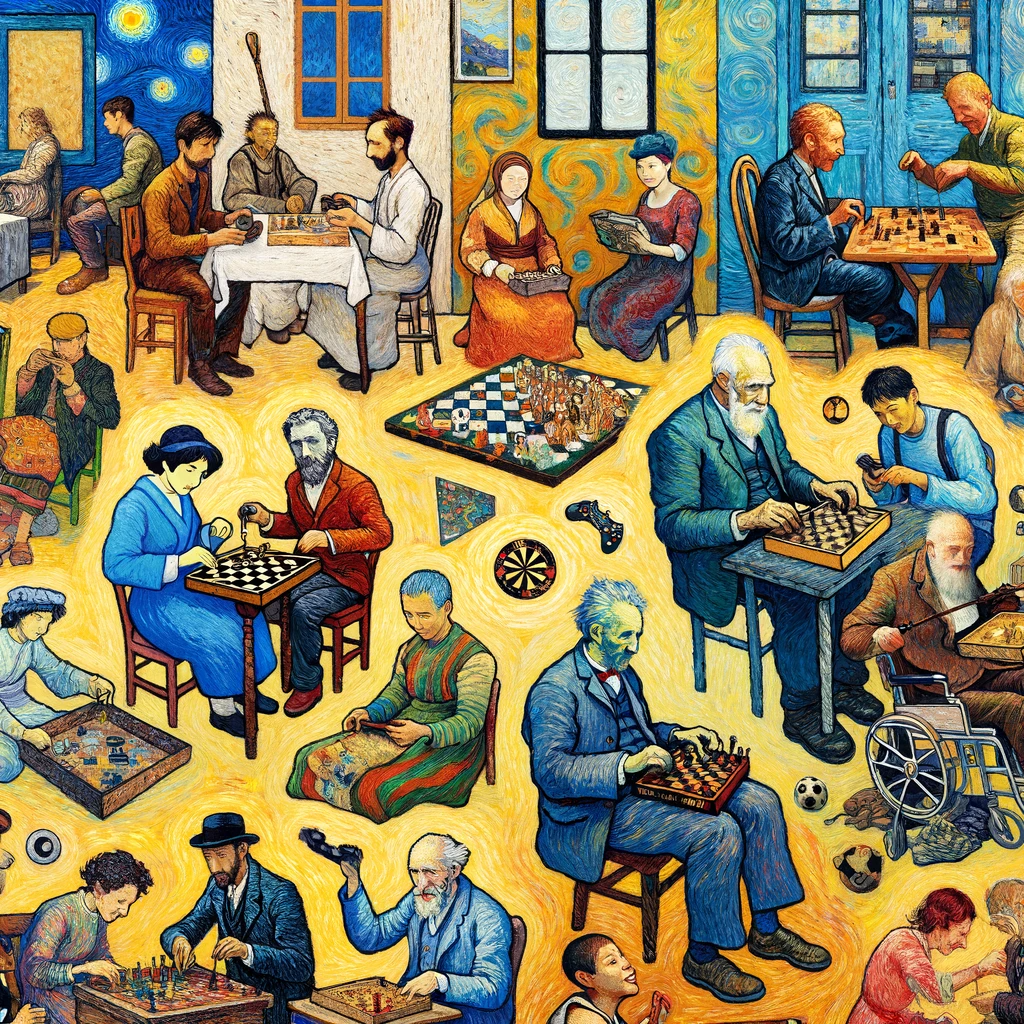
Picture this: You’re sitting with a group of friends, trying to make sense of a complex board game. The air is thick with friendly banter, your hands are moving pieces across the board, and your brain is buzzing. Each decision you make is not just about winning; it’s a mental workout—an exercise in critical thinking. That’s the magic of gamification, folks. It’s not just a trendy buzzword; it’s a powerful tool being harnessed in classrooms, corporate boardrooms, and living rooms alike.
When we think of games, we might conjure images of long hours spent in front of a screen or gripping a controller. But the benefits stretch far beyond mere entertainment. Think about it—each time you play, you’re faced with challenges that require strategic planning, quick decision-making, and sometimes even teamwork. Sure, it’s fun to level up, but the real achievement lies in how you’re training your brain to navigate complex situations.
Games like chess and strategy-based video games don’t just ask you to move pieces; they demand you to anticipate your opponent’s moves and think several steps ahead. You have to weigh risks and rewards, very much like life itself. In that sense, every gaming session is like a mini-scenario you can practice on before tackling real-world challenges. Imagine honing your ability to assess situations critically, all while engaging in something you genuinely enjoy.
Now, let’s face it—a lot of us grew up with video games being labeled as “youthful distractions,” but in a world where analytical skills are more crucial than ever, it’s time to shift that narrative. The way games use elements of competition and collaboration to stimulate thought processes can provide a solid foundation for real-world problem-solving. Gamification can transform learning, allowing us to embrace challenges with enthusiasm rather than dread.
So, if you haven’t already, it might be time to reevaluate your approach to games. Instead of viewing them as mere pastimes, see them for what they are: a gateway to enhancing cognitive abilities. Whether you’re strategizing your next move in a game or untangling a complex work project, those critical thinking skills are just a game away. Dive in, enjoy the game, and trust that you’re sharpening your mind along the way.
Can Playing Games Enhance Critical Thinking Skills?
Can Playing Games Enhance Critical Thinking Skills?
- Games offer more than entertainment; they enhance critical thinking and problem-solving skills.
- Engaging in board games or video games involves strategic planning, decision-making, and teamwork.
- Games such as chess require anticipation of opponents’ moves and weighing risks, mimicking real-life scenarios.
- Each gaming session acts as practice for navigating complex situations in real life.
- There’s a need to shift the narrative that video games are mere distractions to recognizing their cognitive benefits.
- Gamification can transform learning experiences, making challenges more engaging and less daunting.
- Viewing games as tools for enhancing cognitive abilities can improve both personal and professional skills.

Can Playing Games Enhance Critical Thinking Skills?
Do Games Foster Teamwork And Collaboration?
Let’s keep it real for a moment. Whenever you hear the word “games,” you might picture kids hustling through playgrounds or folks entrenched in a living room showdown over a video console. But dig a bit deeper, and you’ll find that games, in their many forms, are much more than mere entertainment. They can be powerful vehicles for promoting teamwork and collaboration, and I’m not just talking about the gaming world. No, I’m speaking of something far more profound that seeps into our everyday experiences.
Now, picture this: you’re on a team in an online adventure, battling trolls, solving puzzles, or hunting down treasures in an expansive digital landscape. Regardless of the fantasy setting, the real magic happens when players rally together, each pulling their weight and relying on each other’s strengths. That’s where the sparks fly! The essence of gamification shines through; it encourages people to work as a cohesive unit toward a common objective. And get this—those experiences don’t just vanish when the screen goes dark. They translate into the real world, strengthening social bonds and communication skills.
Think about it. In a well-structured game, success hinges on collaboration. It’s not just about who can score the most points alone; it’s about strategizing, problem-solving, and bouncing ideas off one another. Every time you huddle with your teammates to plan the next move, you’re honing those skills that are increasingly rare yet desperately needed in today’s society. You might even find that the same principles apply in a boardroom or during community projects. Who knew that slaying imaginary beasts could prepare us for tackling real-life challenges?
What’s more, games can break down barriers. They create a sense of belonging among players who might not otherwise connect. In virtual spaces, diversity becomes an ally rather than an obstacle. Whether you’re huddled around a table in a classroom or sustaining connections across continents, the collaboration forged through games brings people together.
So, the next time you dismiss games as trivial, think again. They’re a toolkit, a training ground for life. Dive headfirst into the world of gamification, and you may discover that, whether in the arena of play or the tapestry of life, teamwork is the name of the game. Equip yourself with these skills, and you’ll not only level up your gaming experience; you’ll enhance your ability to work with others in ways you never thought possible. It’s time to play, collaborate, and grow—because, together, we can tackle any quest that comes our way.

Do Games Foster Teamwork And Collaboration?
Do Games Foster Teamwork And Collaboration?
- Games transcend mere entertainment, serving as tools for promoting teamwork and collaboration.
- Online gaming activities, like battling and problem-solving, foster reliance on teammates’ strengths.
- Gamification encourages cohesive unit work towards common goals, translating into real-world social skills.
- Success in games hinges on collaboration, strategizing, and problem-solving, skills crucial in modern life.
- Games can break down barriers and foster connections among diverse players in virtual environments.
- Viewing games as trivial overlooks their value as training grounds for life and teamwork skills.
- Embracing gamification can improve your ability to collaborate and tackle challenges effectively.

Do Games Foster Teamwork And Collaboration?
How Can Gaming Improve Problem-Solving Abilities?
In a world that buzzes with challenge and complexity, there’s a hidden gem waiting for those who dare to pick up a controller or tap that screen. You might think gaming is just a way to unwind, but I’m here to tell you it’s much more. Picture this: Gamification isn’t just about adding points or badges to a mundane task; it’s about transforming the way we approach hurdles in everyday life. When you step into a game, whether it’s a high-stakes battle or a casual puzzle, you’re thrust into a world where every decision counts, and every action has consequences.
Let’s face it: real life can feel a bit overwhelming at times, and we often encounter problems that seem insurmountable. But in the realm of gaming, you learn quickly that persistence is key. Each level presents a new challenge, and each setback is a chance to refine your strategy and come back stronger. Instead of throwing in the towel, players push through obstacles, often experimenting with multiple solutions before landing on the right one. This trial-and-error approach fosters a mindset that transcends the screen and spills into our day-to-day lives.
Imagine how powerful it feels to solve a riddle after wading through layers of complexity, only to realize that the same thought process can be applied to your job, your studies, or your personal relationships. The beauty of gaming lies in its ability to create an immersive experience where logic, creativity, and critical thinking go hand in hand. Your brain becomes a muscle, flexing and adapting to tackle challenges big and small.
But let’s not overlook the social aspect of gaming either. Joining forces with friends or even strangers can strengthen your collaborative skills. Working together to navigate a virtual battlefield or solve a cooperative puzzle not only sharpens your problem-solving abilities but also reminds you of the power of teamwork. In a gaming world filled with diverse perspectives, players learn to communicate effectively, respect differing viewpoints, and inspire one another to think outside the box.
So, whether you’re an experienced gamer or just dipping your toes in, remember: you’re not just playing a game; you’re honing life skills that can pave the way for success beyond the screen. Embrace the challenge, and watch as your ability to solve problems grows, one level at a time.

How Can Gaming Improve Problem-Solving Abilities?
How Can Gaming Improve Problem-Solving Abilities?
- Gaming transcends mere relaxation and serves as a transformative experience.
- Gamification involves rethinking how we tackle challenges in everyday life.
- Players develop persistence and resilience through overcoming obstacles in games.
- Trial-and-error in gaming fosters a mindset applicable to real-life problems.
- Gaming enhances critical thinking, logic, and creativity as players solve complex puzzles.
- Social interaction in gaming boosts collaboration and communication skills.
- Engaging in games helps players hone life skills that contribute to success off-screen.

How Can Gaming Improve Problem-Solving Abilities?
Can Video Games Teach Strategic Planning Skills?
Let’s face it: we’ve all been there, sitting on the couch, controller in hand, rays of light from the screen illuminating our faces like a moth drawn to a flame. You might think you’re just goofing off, but in reality, you’re in the midst of a masterclass on strategic planning, whether you realize it or not. Yes, you heard me right. Video games aren’t just about leveling up your character or smashing buttons; they can be a robust training ground for those ever-important skills of strategic foresight and mapping out a plan.
What is it about these pixelated adventures that gets the gears turning in our minds? Well, it all comes down to the art of gamification. At its core, this is about turning ordinary tasks into something engaging and rewarding through game-like scenarios. Think about it: a simple mission in a role-playing game can require you to gather resources, assess threats, and make real-time decisions that could mean the difference between virtual life and digital death. These scenarios aren’t just for fun—they mirror the challenges we face every day in the real world.
Imagine you’re playing a game where you’re the commander of a spaceship. You’ve got a crew to manage, resources to allocate, and a timeline that’s tick-tocking away. Every second counts, and every decision you make has repercussions. You learn quickly that sometimes you need to play the long game, strategizing several moves ahead, not just reacting to what’s happening on the screen. This isn’t just entertainment; it’s a real-life simulation of strategic planning. The skills you honed virtually can just as easily apply to project management, running a business, or even navigating the complexities of family life.
Moreover, let’s not forget the mental agility that comes with adapting your plans in the face of unexpected challenges. In games, it’s not uncommon to shift tactics on the fly, learning how to pivot and innovate when things don’t go as planned. Sound familiar? It’s a dance we all do in life!
So, the next time you dive into a virtual quest, remember that you’re not just choosing the path less taken; you’re sharpening your mind for the challenges ahead. Embrace the gaming world for what it can offer: a playful workshop for strategic skills that you can translate into your daily adventures. After all, life is an immersive game, and you’re the one holding the controller.

Can Video Games Teach Strategic Planning Skills?
Can Video Games Teach Strategic Planning Skills?
- Video games provide a masterclass in strategic planning, enhancing skills beyond mere entertainment.
- The concept of gamification turns ordinary tasks into engaging experiences that mirror real-world challenges.
- Role-playing games often require resource management, threat assessment, and real-time decision-making.
- Playing as a spaceship commander exemplifies long-term strategizing and anticipating future challenges.
- The skills developed in gaming can translate to project management, running a business, and family dynamics.
- Games foster mental agility by teaching players to adapt strategies in response to unexpected situations.
- Engaging in video games can sharpen your mind and prepare you for real-life challenges.

Can Video Games Teach Strategic Planning Skills?
What Role Do Games Play In Developing Resilience?
Let’s take a stroll through the world of games—a realm where challenges await at every corner and victory often hinges on perseverance. Whether you’re an avid gamer or someone who’s never picked up a controller, it’s hard to deny the power of these interactive experiences. So, what is it about games that help fortify our resilience, that inner grit we all need to face life’s hurdles?
At its core, gaming is a masterclass in problem-solving. You start with a task—conquering a dragon, solving a complex puzzle, or assembling a team to defeat a rival. Each of these challenges is designed to test your skills, your patience, and yes, your tenacity. This is where the magic of gamification comes into play. It transforms mundane activities into adventures packed with excitement and rewards. Suddenly, overcoming an obstacle feels less like a chore and more like a quest. You learn to explore multiple strategies, adjust your approach when you fail, and ultimately prevail against seemingly insurmountable odds.
Imagine this: you’re in a game where you encounter a boss level that’s tough to crack. The first attempt doesn’t go as planned—you lose. But instead of waving the white flag, you dust yourself off, analyze what went wrong, and try again. Each time you confront that challenge, you build a little more resilience. Each attempt teaches you valuable lessons about patience and persistence—principles that extend far beyond the screen and into real life.
These virtual experiences translate to genuine emotional growth. Think about it: when faced with difficulties in life, we often draw on strategies we’ve honed during our gaming adventures. We learn how to manage stress, navigate setbacks, and keep our eyes on the prize. Games instill a sense of control and achievement, reminding us that failure isn’t the end of the road; it’s merely a stepping stone toward success.
So, whether you’re crafting a strategy in a competitive environment or exploring vast, uncharted territories in a single-player campaign, remember that each of these experiences is equipping you with something vital—resilience. The next time you pick up that controller or dive into a game, know that you’re not just playing; you’re training your mind and spirit for life’s unpredictable adventures. Embrace the challenges, celebrate the victories, and watch as your resilience grows.

What Role Do Games Play In Developing Resilience?
What Role Do Games Play In Developing Resilience?
- Games are a powerful medium that enhances our resilience and problem-solving skills.
- Each gaming challenge, whether defeating a dragon or solving puzzles, tests patience and tenacity.
- Gamification transforms mundane tasks into exciting adventures with rewards.
- Facing and overcoming obstacles in games builds resilience and teaches important life lessons.
- Failures in games prompt players to analyze mistakes and try again, fostering growth.
- Gaming experiences help manage stress, navigate setbacks, and maintain focus on goals.
- Engaging in games equips players with resilience, preparing them for real-life challenges.

What Role Do Games Play In Developing Resilience?
Are There Games Specifically Designed For Skill Development?
Let’s talk about games, but not the kind you might envision while lounging on your couch with snacks scattered about. No, I’m talking about games designed with intention, crafted to sharpen skills and nurture talents. In a world increasingly enamored with gamification—the blending of game mechanics into non-game contexts—there’s a vibrant spectrum of opportunities for personal growth that swipe the dusty old notion of training straight out of the park.
Picture this: You’re a budding coder, trying to get your head around algorithms—daunting, isn’t it? Enter coding games like “CodeCombat” or “CodinGame.” They draw you in with flashy graphics and the thrill of competition, but at their core, they offer a structured way to develop those invaluable coding skills—all while you’re busy having, dare I say, a blast! Suddenly, the complex language of programming isn’t an incomprehensible task; it’s an adventure waiting to unfold.
And it doesn’t stop there. Want to hone your problem-solving abilities? Games like “Portal” or “The Witness” throw you into mind-bending puzzles that require more than just quick reflexes. They challenge you to think creatively and critically—a far cry from passive learning. Isn’t it empowering to know that you can boost your cognitive skills while simply having fun?
Let’s not overlook the social aspect. Team-oriented games like “Overwatch” or “League of Legends” demand cooperation, communication, and strategic thinking. Here’s the kicker: while you might think you’re just picking up a new character skin, you’re also developing the soft skills that employers value now more than ever. Collaboration needs practice, and what better way to flex those muscles than in an environment that feels more like play than work?
But here’s the thing: don’t take my word for it. Dive in! Rediscover your inner child and approach learning with a sense of adventure. Whether it’s puzzles, code, or strategy, these games have something to offer everyone. They wrap skill development in layers of engagement, inviting you to join the fray and grow along the way. So go ahead, put your old notions aside, embrace this revolution in learning, and let the games commence! You might just find the journey exhilarating—and who knows what skills you’ll uncover along the way?

Are There Games Specifically Designed For Skill Development?
Are There Games Specifically Designed For Skill Development?
- Games designed with intention can enhance skills and nurture talents.
- Gamification blends game mechanics into non-game contexts, creating opportunities for personal growth.
- Coding games like “CodeCombat” and “CodinGame” offer structured learning in programming through engaging competition.
- Puzzle games such as “Portal” and “The Witness” boost problem-solving skills by promoting creative and critical thinking.
- Team-oriented games like “Overwatch” and “League of Legends” develop cooperation, communication, and strategic thinking.
- Engaging in these games provides a sense of adventure and transforms traditional learning into enjoyable experiences.
- Embracing skill development through play can lead to discovering new skills that are valuable in various contexts.

Are There Games Specifically Designed For Skill Development?
How Do Educational Games Differ From Traditional Learning?
Picture this: you’re trudging through another day of school, dutifully flipping through a textbook that feels more like a brick than a gateway to knowledge. Now, imagine instead, you’re stepping into a world where learning transforms into an adventure. Welcome to the brave new realm of educational games. No, this isn’t just an escape from the dusty classroom, but a powerful shift in how we approach learning—one that invites curiosity and sparks creativity.
At the core of this transformation lies gamification. It’s that magic dust sprinkled into the lessons, turning mundane subjects into an exhilarating quest. Picture solving math problems while racing against the clock, or battling historical figures in a strategy game. Suddenly, instead of memorizing dates for a quiz, you are making decisions that have consequences, fostering critical thinking and problem-solving skills. That’s the compelling allure of educational games—they blend knowledge with pleasure, making it hard to resist the urge to explore further.
Unlike traditional learning, which often feels like a one-way street—teacher talks, students listen—educational games invite interaction. They encourage trying, failing, and trying again, creating an environment where mistakes are not the end but a stepping stone toward mastery. Why? Because in a game, you aren’t just passive; you’re in control of your own learning journey, charting your path as you go along. And let’s be honest: who among us didn’t learn a thing or two about perseverance after losing at Mario Kart—more times than we’d care to admit?
But here’s the kicker—educational games don’t just engage the brain; they stimulate the heart. By tapping into our natural love for play, they create emotional connections to the subject matter. You’re not just a student anymore; you become the hero of your story, battling across the landscapes of knowledge. Whether you’re building empires in history or exploring the depths of science, the stakes feel real, and the rewards can be astonishingly satisfying.
So, as we tiptoe through this educational revolution, let’s embrace the magic of gamification. It’s about so much more than just having fun; it’s about fostering a mindset that values learning as a lifelong adventure. Whether you’re a teacher looking to innovate or a learner desperate for engagement, know this: educational games hold the potential to revolutionize how we absorb information, making it enjoyable, memorable, and utterly exhilarating. So grab your controller, or maybe just a notebook, and start your journey today. The world of knowledge is waiting!

How Do Educational Games Differ From Traditional Learning?
How Do Educational Games Differ From Traditional Learning?
- Educational games transform learning into an adventure, inviting curiosity and sparking creativity.
- Gamification turns mundane subjects into exhilarating quests, blending knowledge with pleasure.
- Games encourage interaction, allowing students to try, fail, and try again, promoting mastery.
- Students control their learning journey, making decisions that enhance critical thinking and problem-solving skills.
- Educational games create emotional connections to subjects, making learners feel like heroes in their stories.
- These games foster a mindset that values learning as a lifelong adventure.
- Educational games have the potential to revolutionize information absorption, making it enjoyable and memorable.

How Do Educational Games Differ From Traditional Learning?
Conclusion
As we close this chapter on the fascinating world of gaming, let’s pause for a moment and fully appreciate the unexpected treasures we unearth when we delve into these digital and tabletop realms. You see, games are often dismissed as mere distractions, a frivolous way to spend an afternoon. But if you look a little closer, you’ll find that they can be as potent as any classroom or boardroom, molded into a vibrant training ground for the skills we need to tackle everyday life.
Take a minute to think about it—games are about more than just high scores and flashy graphics. They demand strategic planning, critical thinking, teamwork, and resilience—all wrapped in layers of engagement that make learning feel less like a chore and more like an adventure. Whether you’re forging alliances in an online multiplayer or tackling puzzles solo in your living room, each click and decision markets a lesson in real-world problem-solving.
Look, the beauty of gamification is that it turns learning into an immersive experience. Much like we do in life, gamers are constantly assessing situations, recalibrating their strategies, and learning from missteps. This persistent cycle of challenge and adaptability breeds resilience—a skill that’s invaluable, especially beyond the screen. In fact, the moment you dust yourself off after a failed attempt and jump back in, you’re not just playing a game; you’re training your mind and spirit to embrace setbacks, pushing you to learn and grow.
Moreover, let’s not forget the social aspect of gaming. Whether you’re engaging in a competitive showdown or collaborating with friends to defeat a common foe, you’re honing vital communication and teamwork skills. These interactions break down barriers and foster connections that can translate into our workplaces and communities. Who knew that battling mythical beasts could polish our ability to work cohesively and effectively in various settings?
So, the next time you hear someone deride gaming as a waste of time, invite them to rethink this narrative. They might just discover that pressing buttons and rolling dice can unlock hidden reservoirs of creativity, leadership, and resilience. Whether you’re planting trees in a simulation game or constructing complex alliances in a strategy title, you’re not just having fun. You’re consistently leveling up—not just in the game, but in life. So go ahead, grab that controller, invite those friends for a board game night, and relish the lessons learned along the way. Remember, in this grand game called life, every little experience counts!

Conclusion
Conclusion:
- Gaming is often dismissed as a mere distraction, but it serves as a valuable training ground for essential life skills.
- Games require strategic planning, critical thinking, teamwork, and resilience, making learning engaging and fun.
- Gamification transforms learning into an immersive experience that encourages real-world problem-solving.
- Players learn to adapt and reassess strategies, cultivating resilience through overcoming challenges and failures.
- The social aspect of gaming enhances communication and teamwork skills that are applicable in various environments.
- Engaging with games can unlock creativity, leadership, and resilience, challenging the perception of gaming as time-wasting.
- Every gaming experience contributes to personal growth, reinforcing the idea that life itself is a grand game where each experience matters.

Conclusion
Other Resources

Other Resources
Here is a list of other resources you can review online to learn more:
- Solitaire
- Robinson Crusoe: Adventures on the Cursed Island
- Codenames
- The Castles of Burgundy
- White Goblin Games
- Dead of Winter: The Long Night
- Google My Business
- Sirlin Games
Use This Prompt To Get More Resources With Your Favorite Online AI Tool: Please provide me with a list of online articles with their URLs in a bulleted list that I can read regarding Can Playing Games Actually Improve Life Skills?

Other Resources
Glossary Terms
Can Playing Games Actually Improve Life Skills? – Glossary Of Terms
1. Cognitive Skills: The mental processes involved in gaining knowledge and comprehension, including thinking, knowing, memory, and judgment.
2. Strategic Thinking: The ability to think critically about long-term goals and devise plans to achieve them, often developed through playing strategy-based games.
3. Problem-Solving: The process of identifying problems and finding solutions, enhanced by challenges faced within games.
4. Social Interaction: Engaging with others, which can improve communication and teamwork skills, often facilitated in multiplayer or online games.
5. Resilience: The capacity to recover quickly from difficulties; games often teach players to persevere through challenges and failures.
6. Time Management: The ability to plan and control how much time to spend on specific activities, often practiced through gameplay.
7. Goal Setting: The act of establishing objectives, which can be improved by setting and achieving game-related milestones.
8. Decision Making: The cognitive process of selecting a course of action from multiple alternatives, a skill honed in high-stakes gaming situations.
9. Attention to Detail: The ability to notice small but significant elements in gameplay that can affect overall performance.
10. Coordination: The skill of managing actions in a smooth and efficient manner, particularly developed in video games that require precise movements.
11. Creativity: The ability to produce original ideas or solutions; many games encourage creative problem-solving and thinking outside the box.
12. Communication Skills: The ability to convey information effectively and efficiently, often improved through teamwork in multiplayer environments.
13. Leadership: The skill of guiding and motivating a group towards objectives, often practiced in team-based games.
14. Conflict Resolution: The capacity to resolve disagreements effectively, a skill often practiced in competitive or cooperative gaming scenarios.
15. Emotional Intelligence: The ability to recognize, understand, and manage emotions in oneself and others, which can be enhanced through social gaming interactions.
16. Adaptability: The ability to adjust to new conditions or challenges, a trait frequently tested in changing game environments.
17. Focus: The ability to concentrate on specific tasks without distraction, sharpened by the demands of fast-paced game scenarios.
18. Teamwork: The collaborative effort of a group to achieve a common goal, essential in various team-based games.
19. Scenario Planning: The process of imagining possible futures and planning for them, often practiced in role-playing games with complex narratives.
20. Spatial Awareness: The understanding of the relationships between objects in space, often developed through navigation in gaming environments.
21. Persistence: The determination to keep going despite difficulties, a trait often nurtured through repeated gameplay challenges.
22. Risk Assessment: The process of identifying and evaluating risks versus rewards, enhanced through decision-making in competitive games.
23. Memory Skills: The capacities related to retention and recall, improved through games that require players to remember patterns or strategies.
24. Multitasking: The ability to manage multiple tasks at once, often practiced in games that require quick thinking and simultaneous actions.
25. Feedback Mechanism: The process through which players receive input on their performance, allowing for self-reflection and improvement.
26. Cultural Awareness: Understanding and appreciating diverse perspectives, often fostered through games that feature different cultures and ideas.
27. Intrapersonal Skills: The ability to understand oneself, including one’s motivations and emotions, often developed through games that involve personal narratives.
28. Resource Management: The effective allocation of limited resources in a game, teaching players how to prioritize and budget effectively.
29. Innovation: The ability to create new ideas, value in gameplay that challenges traditional methods or strategies.
30. Growth Mindset: The belief that abilities can be developed through dedication and hard work, often encouraged by the learning experiences encountered in games.

Glossary Of Terms
Other Questions
Can Playing Games Actually Improve Life Skills? – Other Questions
If you wish to explore and discover more, consider looking for answers to these questions:
- What types of games are most effective for improving life skills?
- Can playing games improve emotional intelligence?
- How can educators integrate gaming into their teaching strategies?
- What types of multiplayer games are best for fostering teamwork?
- Are there age restrictions for different types of games that promote life skills?
- Which life skills are most commonly developed through gaming?
- How do traditional sports compare to video games in skill development?
- What research exists to support the benefits of gaming on life skills?
- How can parents and guardians select games that enhance life skills for their children?
- Can serious games be a substitute for conventional training in professional settings?
- What role do mobile games play in skill development compared to console or PC games?
- Are there specific game genres linked to skill development (e.g., puzzle vs. strategy)?
- How can gaming be used as a tool for mental health improvement?
- What are some real-life examples of people using gaming skills in their careers?
- How do online communities related to gaming impact social skills?

Other Questions
Haiku
Can Playing Games Actually Improve Life Skills? – A Haiku
Games teach us to grow,
Problem-solving, teamwork thrive—
Life’s skills through play bloom.

Haiku
Poem
Can Playing Games Actually Improve Life Skills? – A Poem
Leveling Up in Life: A Gaming Ode
In childhood’s realm, where laughter soared,
With Monopoly, Scrabble, joy restored.
Yet games, oh games, beyond mere play,
Unlock vital skills, come what may.
Gamification weaves a wondrous spell,
In classrooms and workplaces, it excels.
With challenges framed as quests to embrace,
We’re urged to dive in, to quicken our pace.
Problem-solving’s art, in pixels framed,
The obstacles faced are wisdom claimed.
Adapt and rethink, embrace every fall,
For life’s intricate puzzles echo them all.
Amongst friends we gather, in digital lands,
Teamwork and strategy—each player stands.
Ideas exchanged, united we strive,
In games, we learn how to truly thrive.
Picture the joystick, the controller in hand,
Strategic planning, like a general’s command.
Resourceful and swift, we navigate fate,
Preparing us daily for challenges innate.
In resilience’s forge, our spirits are tried,
With every defeat, we learn how to ride.
Persistence becomes our most treasured key,
Through gaming adventures, we set our minds free.
Designed for growth, some games stand apart,
Coding and problem-solving—a thrilling art.
Transforming tasks into quests full of glee,
Where learning unfolds, and we’re eager to be.
So shift your gaze, don’t dismiss the fun,
For games can sharpen the mind, everyone!
Each click, each move, is more than a play,
They craft our skills, come thrive, come and sway.
Let’s celebrate this quest for knowledge we chase,
Embrace the power of play with grace.
So gather your friends, controllers in sight,
In the grand game of life, let’s shine ever bright!

Poem
Checklist
Can Playing Games Actually Improve Life Skills? – A Checklist
Checklist: Unlocking Life Skills Through Gaming
Use this checklist to explore the various life skills you can develop while playing games. Whether you’re a seasoned gamer or just getting started, aim to engage with the following skills during your gaming sessions:
Problem-Solving Skills
_____ Identify challenges in the game and brainstorm possible solutions.
_____ Experiment with different strategies to overcome obstacles.
_____ Reflect on how gaming problem-solving techniques can be applied to real-life scenarios.
Critical Thinking Skills
_____ Analyze game situations and weigh potential outcomes before making decisions.
_____ Assess risks and rewards while strategizing next moves.
_____ Practice thinking several steps ahead, anticipating opponents’ actions or game changes.
Teamwork and Collaboration
_____ Participate in multiplayer games that require teamwork.
_____ Communicate effectively with teammates to strategize and achieve common goals.
_____ Embrace diverse perspectives and share responsibilities within the game.
Creativity and Strategic Planning
_____ Develop creative solutions for complex in-game challenges.
_____ Map out plans for achieving specific game objectives and adjust as needed.
_____ Take time to plan long-term strategies for character or resource development.
Resilience and Persistence
_____ Face setbacks in gameplay without giving up; analyze failures to improve.
_____ Keep a positive mindset even when progress is slow or challenging.
_____ Celebrate small victories along the way to sustain motivation.
Adaptability
_____ Adjust strategies in response to unexpected game developments.
_____ Stay flexible when facing changing roles or dynamics within a team.
_____ Embrace new challenges or game mechanics as opportunities for growth.
Communication Skills
_____ Practice clear and concise communication with teammates during gameplay.
_____ Engage in discussions about strategies, obstacles, and gameplay experiences.
_____ Develop active listening skills through collaboration in games.
Focus and Concentration
_____ Commit to maintaining focus during gameplay, especially in challenging tasks.
_____ Implement strategies to minimize distractions while gaming.
_____ Set short-term goals to enhance concentration and engagement.
Social Skills
_____ Interact with fellow players to improve social connections through gaming.
_____ Participate in gaming communities for shared experiences and support.
_____ Share achievements and challenges with friends after gameplay.
Lifelong Learning
_____ Explore educational games that promote skill development and learning.
_____ Reflect on how the skills learned in gaming can apply to personal and professional development.
_____ Seek out new gaming experiences to continuously challenge and grow your skills.
Whether you’re on a quest for high scores or solving complex puzzles, remember to make the most of your gaming experience by developing these valuable life skills! Happy gaming! 🎮

Checklist
At HowDoYouGame, we help people who love board games by collating information and news about games.
Be sure to read our other related stories at HowDoYouGame to learn more about games.