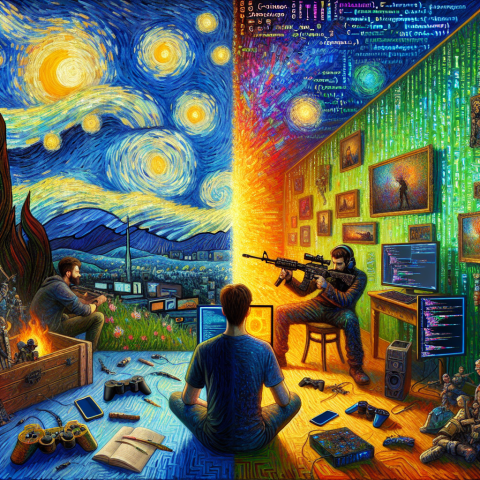
The Impact Of Gaming On Kids’ Problem-Solving Skills
By Tom Seest
At HowDoYouGame, we help people who love board games by collating information and news about games.
Be sure to read our other related stories at HowDoYouGame to learn more about games.
Are Kids More Adaptable Problem Solvers Due to Gaming?
When we think about problem-solving skills, we often picture boardrooms or classrooms, adults in suits hunched over spreadsheets, stressing about quarterly goals. But let’s step back for a moment. What if the real champions of adaptability and creativity exist on the other side of the screen, in the hands of our children? As they delve into the colorful worlds of video games, something remarkable happens. They’re not just passing the time; they’re honing a toolkit for life, steeped in the principles of gamification.
Gamification isn’t just a buzzword thrown around by techies and marketers. It’s a strategy to infuse engagement and challenge into activities. Most of us have vivid memories of failing an early level in a game, only to try again. Each setback isn’t just frustrating; it’s a lesson in determination and strategy. Children who play video games engage in a dynamic feedback loop. They identify problems, brainstorm potential solutions, and then adapt their approach based on what they learn. In other words, they’re doing what we once did with puzzles and board games, just with a shiny, high-tech twist.
Imagine a child faced with a particularly tough dungeon or a puzzle that appears impossible. Instead of throwing up their hands in defeat, they might take a moment to reassess, to observe their surroundings, figuring out that the key to success lies in teamwork or a clever maneuver. This intuitive approach to problem-solving fosters resilience and creative thinking because, let’s face it, life doesn’t come with a cheat code.
Now, here’s where it gets particularly interesting: the skills they cultivate through gaming aren’t just relegated to their digital escapades. These are transferable skills. The ability to navigate complex environments translates to real-world situations, whether it be in a school project, handling interpersonal issues, or tackling challenges at home. By giving our kids the space to play and explore, we’re not merely indulging them; we’re equipping them for a lifetime of challenges.
So, the next time you see a kid glued to the screen, resist the urge to interrupt. Instead, consider that they might just be engaged in a workshop of their own—one that fosters adaptability, problem-solving, and creativity in the most unexpected ways. Embrace it. After all, the world could always use more intuitive thinkers.

Are Kids More Adaptable Problem Solvers Due to Gaming?
Are Kids More Adaptable Problem Solvers Due to Gaming?
- Problem-solving skills are often associated with adults in professional settings.
- Children, through video games, develop adaptability and creativity.
- Gamification is a strategy to enhance engagement and challenge in activities.
- Experiencing setbacks in games teaches determination and strategic thinking.
- Children engage in a feedback loop to solve problems and adapt their approaches.
- Skills gained from gaming are transferable to real-life situations and challenges.
- Let children play and explore, as it equips them for lifelong challenges.

Are Kids More Adaptable Problem Solvers Due to Gaming?
Table Of Contents
- Are Kids More Adaptable Problem Solvers Due to Gaming?
- Are Kids Better Problem Solvers Because Of Video Games?
- What Skills Do Video Games Help Develop In Children?
- Do Kids Learn To Adapt Their Strategies Through Gameplay?
- Can Gaming Experience Lead To Better Real-Life Problem-Solving Skills?
- Are There Specific Genres Of Games That Enhance Adaptability?
- What Role Does Age Play In Gaming And Adaptability In Children?
- How Do Parents Perceive The Problem-Solving Skills Gained From Gaming?
- Conclusion
- Other Resources
- Glossary Of Terms
- Other Questions
- Haiku
- Poem
- Checklist
Are Kids Better Problem Solvers Because Of Video Games?
Let’s dive into a topic that’s sparking quite the debate among parents, educators, and gamers alike: Are our kids emerging as better problem solvers because of video games? At first glance, it might seem a bit counterintuitive. After all, we grew up hearing warnings about video games rotting our brains, right? But let’s pump the brakes and look a little closer.
First off, let’s consider gamification. It’s more than just a buzzword; it’s a revolutionary approach that’s infiltrating everything from classrooms to corporate boardrooms. Instead of viewing games as mere entertainment, we need to recognize them as intricate ecosystems where players are constantly challenged to think critically and adapt to new situations. Whether it’s dodging an enemy attack or solving a complex puzzle, video games require quick thinking and strategic planning. This isn’t just playtime—it’s training for the brain.
Imagine a young gamer deeply immersed in a world filled with quests and challenges. Not only are they honing their hand-eye coordination, but they’re also developing persistence as they attempt levels they can’t quite conquer on the first try. That’s a skill that will serve them well down the road, from tackling math problems to navigating relationships. Each game is a mini-mission, requiring them to assess the situation, gather resources, and formulate a plan, often in real-time.
Moreover, many modern games encourage teamwork. Picture a group of friends strategizing over headsets, working together to overcome formidable enemies. This collaborative environment fosters communication and critical thinking, invaluable skills that transcend the digital landscape and spill over into their daily lives. When kids learn to rely on each other, they’re not just becoming better players; they’re becoming better friends and ultimately, better problem solvers.
Now, before we all rush to hand our kids the latest console, let’s keep in mind the old saying: moderation is key. Yes, video games can be beneficial, but balance is essential. Encourage your kids to engage in a variety of activities that challenge them both mentally and physically.
Video games aren’t just ephemeral distractions; they might just be schools of thought in flashy, pixelated packaging. If approached thoughtfully, they can build a generation of innovative thinkers prepared to tackle the complex issues of tomorrow. Let’s embrace the potential and ensure our kids are not just players, but problem solvers.

Are Kids Better Problem Solvers Because Of Video Games?
Are Kids Better Problem Solvers Because Of Video Games?
- The debate on whether video games improve children’s problem-solving skills is gaining attention among parents, educators, and gamers.
- Gamification is a revolutionary approach that views video games as complex systems for critical thinking and adaptability.
- Video games require quick thinking and strategic planning, providing brain training beyond mere entertainment.
- Younger gamers develop persistence and resilience by facing challenges, skills useful in various life scenarios.
- Modern games promote teamwork, enhancing communication and critical thinking skills that carry over into real life.
- While video games can offer benefits, moderation is essential; kids should engage in diverse activities for balanced development.
- If approached thoughtfully, video games have the potential to cultivate innovative thinkers for future challenges.

Are Kids Better Problem Solvers Because Of Video Games?
What Skills Do Video Games Help Develop In Children?
Let’s face it: video games have evolved from pixelated screens and 8-bit soundtracks into immersive worlds where kids can interact, strategize, and connect with others. If you think video games are just about passing the time, think again! These digital adventures can be incredible tools for developing essential skills that serve children well beyond the screen.
One of the standout contributions of gaming is in problem-solving. Imagine your child maneuvering through intricate quests; every level presents them with challenges, requiring them to think critically and adapt their strategies on the fly. This kind of gamification—the concept of applying game-like elements in everyday situations—translates beautifully to real-life scenarios. Whether it’s tackling a math assignment or figuring out how to navigate social dynamics at school, the ability to assess a situation and pivot when necessary is a skill worth honing.
Collaboration is another vital area bolstered by gaming. Many modern games encourage teamwork, often requiring players to communicate effectively and coordinate their actions to achieve a common goal. Your child learns that success is not an individual pursuit; it often hinges on collaboration and understanding of group dynamics. They may even discover leadership qualities they never knew they had. Think about it—leading a team to victory in a game can be just as fulfilling as captaining a school project or sports team.
Don’t overlook the fostering of creativity. Games today are brimming with opportunities for self-expression, whether it’s through character customization, world-building, or storytelling. These experiences encourage kids to explore their imagination and develop innovative thinking, skills that are indispensable in any field of work or hobby they might pursue later in life.
And let’s not forget the digital literacy aspect. In our tech-driven world, being comfortable with technology is crucial. Kids who engage with video games become adept at navigating digital interfaces, understanding coding fundamentals, and even fostering problem-solving skills related to tech issues—all paramount in today’s job market.
Lastly, let’s be honest: a little lighthearted competition can be a great motivator, too. The thrill of winning or achieving a new level can inspire diligence and resilience. Kids learn that failure is just a stepping stone to mastering a skill—an invaluable lesson that applies to life itself.
So, whether you’re a parent debating the merits of screen time or a guardian seeking ways to connect with a child, remember that video games can be powerful tools for development. They blend learning with play in a way that’s engaging and memorable. It’s about striking a balance and tapping into the potential that these experiences can offer. Let’s embrace the positive side of play!

What Skills Do Video Games Help Develop In Children?
What Skills Do Video Games Help Develop In Children?
- Video games have transformed from simple graphics to immersive experiences that enhance children’s skills.
- Gaming promotes problem-solving abilities, encouraging critical thinking and adaptability.
- Collaboration is fostered through teamwork in games, teaching the value of group dynamics and leadership.
- Creativity thrives in gaming, allowing kids to express themselves through customization, world-building, and storytelling.
- Engaging with video games enhances digital literacy, preparing kids for a tech-driven world.
- Lighthearted competition in games motivates resilience and teaches that failure is part of the learning process.
- Video games blend learning with play, offering parental opportunities to connect with children and recognize their developmental benefits.

What Skills Do Video Games Help Develop In Children?
Do Kids Learn To Adapt Their Strategies Through Gameplay?
In a world increasingly steeped in technology, it’s hard to ignore the undeniable impact of gameplay on our children’s development. The magic of gamification has transformed the way kids engage with challenges, unveiling a powerful tool that encourages resilience and adaptability. Grab a seat, folks, because we’re diving into the fascinating world of how kids learn to adjust their strategies through the very games they play.
Picture this: a child engrossed in a video game, fingers flying over the controller, a look of determination etched across their face. As they navigate through levels and face off against tough opponents, they are not just having fun; they’re embarking on a journey of self-discovery. Each defeat offers a lesson, a chance to reassess their approach, and the thrill of victory makes the struggle worthwhile. It’s a process akin to life itself—resilience built through trial and error.
When we think about traditional learning, we often envision desks and textbooks. But in the realm of gamification, learning becomes interactive and dynamic. Kids are not just passive recipients of information; they immerse themselves in challenges that require thoughtful strategy and quick adaptation. They learn to take risks, experiment with new approaches, and, importantly, sit down and reassess when things don’t go as planned. This is no small feat; the ability to pivot strategies in the heat of the moment is a cornerstone of problem-solving skills that extend far beyond the screen.
Consider your own experiences with strategy games. Remember that moment of realization when you finally figured out the winning tactic? Children’s playtime often mirrors these transformative experiences. They face obstacles that require them to think critically while under pressure, where panic can lead to defeat but a calm mind can chart the way to victory.
As parents and educators, understanding this can inspire a newfound appreciation for the games our kids cherish. Instead of viewing gameplay as merely a distraction, we can recognize it as a valuable form of learning. By supporting their passion for play, we encourage them to develop valuable life skills that will serve them not only in their current gaming adventures but throughout their lives. So, let’s embrace this exciting journey of growth, encouraging our children to dive into their favorite games and come out more adaptive than ever!

Do Kids Learn To Adapt Their Strategies Through Gameplay?
Do Kids Learn To Adapt Their Strategies Through Gameplay?
- The impact of gameplay on children’s development is significant in a tech-driven world.
- Gamification provides a powerful tool for fostering resilience and adaptability in kids.
- Playing video games encourages self-discovery through challenges and victories.
- Gamified learning is interactive, requiring strategy and quick adaptation.
- Kids learn to take risks and reassess strategies in the face of difficulties.
- Gameplay helps develop critical thinking and problem-solving skills under pressure.
- Parents and educators should view gaming as a valuable form of learning rather than a distraction.

Do Kids Learn To Adapt Their Strategies Through Gameplay?
Can Gaming Experience Lead To Better Real-Life Problem-Solving Skills?
Imagine sitting in a room, controllers in hand, surrounded by friends as you collaborate to conquer a virtual kingdom. It might seem like a simple game, but peel back the layers, and you’ll find a symphony of strategizing, critical thinking, and creative problem-solving wrapped up in that experience. That’s the beauty of gamification—it turns challenges into engaging adventures, encouraging us to delve deeper and think harder.
Take a moment to consider your own experiences. Have you ever faced an obstacle in a video game that felt insurmountable at first? Maybe a boss battle that forced you to change your tactics on the fly or a puzzling level that required you to think outside the box. Each failure was a lesson, each victory a testament to your evolving skills. Now, fast-forward to real life. How many times have you encountered a problem that felt just as daunting and found yourself recalling those gaming lessons? It’s almost as if those virtual scenarios create a mental toolbox, equipped with strategies honed through practice and persistence.
The world of gaming is more than a mere pastime; it’s a training ground for real-world challenges. Think about it: you’re constantly solving intricate puzzles, strategizing with teammates, and adapting to new situations. These moments strengthen your mental elasticity and prepare you for unexpected curveballs in your day-to-day life. Whether it’s navigating a tricky work project, dealing with the unpredictability of family dynamics, or even tackling personal goals, the ability to think critically and act decisively can truly elevate your game.
But it’s not just about the victories; it’s about the journey. Every time you log on to play, you’re committing to growth—not just as a player, but as a thinker. Embracing the challenges laid before you in your favorite games can lead to tangible improvements in your ability to face life’s obstacles. So next time you hand over that controller, remember: within the realms of fantasy, you’re not merely escaping reality; you’re sharpening the very skills needed to thrive in it.
So, let’s toast to gaming, not just as entertainment, but as an incredible opportunity for personal development. Ready to level up? The next quest is waiting—and who knows how it might change your life!

Can Gaming Experience Lead To Better Real-Life Problem-Solving Skills?
Can Gaming Experience Lead To Better Real-Life Problem-Solving Skills?
- Gaming fosters collaboration and strategic thinking among friends.
- Gamification transforms challenges into engaging adventures, promoting deeper thought.
- Experiencing failures and victories in games builds a mental toolbox for real-life challenges.
- Gaming enhances critical thinking and adaptability in various life scenarios.
- Every gaming session contributes to personal growth as a thinker and problem-solver.
- Challenges in games teach valuable lessons applicable to navigation of real-world obstacles.
- Recognizing gaming as a source of personal development offers a fresh perspective on its value.

Can Gaming Experience Lead To Better Real-Life Problem-Solving Skills?
Are There Specific Genres Of Games That Enhance Adaptability?
##
When we think about adaptability, we often picture someone gracefully navigating an obstacle course or deftly juggling multiple tasks at once. But what if I told you that certain genres of games can sharpen those very skills while being downright entertaining? The concept of gamification has crept into everyday life, but gaming has cultivated adaptability in players for decades. If you’re looking for a fun way to boost your ability to adjust to new circumstances, strap in.
First off, let’s dive into puzzle games. Ever tried your hand at a complex jigsaw, or perhaps a brain-bending Sudoku? These games require you to analyze situations, assemble parts, and think critically to reach a solution. It’s about more than just finishing the game; it’s the process of trial and error that hones your ability to adapt. Each misplaced piece or wrong number serves as a lesson, nudging you to pivot your strategy. This genre encourages you to keep your cool when the pieces don’t fit, which is a valuable life skill outside of the gaming realm.
Next on our journey are role-playing games (RPGs) like “The Elder Scrolls” or “Final Fantasy.” These immersive experiences thrust you into dynamic storylines where choices matter. You’re not just a bystander; you’re the hero shaping the narrative. Here, adaptability is put to the test as you face unexpected foes and evolving challenges. The skills you develop—like assessing risks, formulating strategies, and responding to narrative twists—translate directly into real-life situations where decision-making under pressure reigns supreme.
Let’s not overlook the ever-growing realm of simulation games, whether you’re building cities in “SimCity” or managing resources in “Factorio.” These games mirror complex, real-world systems and require you to stay on your toes. The changing demands of your virtual world prepare you for similar unpredictabilities in life, allowing you to learn flexibility and creativity as you build your success.
In essence, carving time out for these genres doesn’t just satisfy a craving for entertainment; it fortifies your mind for life’s challenges. So grab your controller, load up on those puzzles, roll the dice in an RPG, or expand your virtual metropolis. You’re not just playing; you’re honing your adaptability, one pixel at a time.

Are There Specific Genres Of Games That Enhance Adaptability?
Are There Specific Genres Of Games That Enhance Adaptability?
- Adaptability is often associated with gracefully navigating obstacles and multitasking.
- Certain game genres, particularly puzzle games, can enhance adaptability in an entertaining way.
- Puzzle games, like jigsaws and Sudoku, promote critical thinking and problem-solving through trial and error.
- Role-playing games (RPGs) involve immersive storytelling and require decision-making in dynamic situations.
- In RPGs, players develop skills such as risk assessment and strategic planning in response to evolving challenges.
- Simulation games, like “SimCity,” reflect real-world systems and teach flexibility and creativity in managing unpredictability.
- Engaging in these games not only provides entertainment but also strengthens mental resilience for real-life challenges.

Are There Specific Genres Of Games That Enhance Adaptability?
What Role Does Age Play In Gaming And Adaptability In Children?
What Role Does Age Play in Gaming and Adaptability in Children?
Let’s face it: gaming isn’t just about shooting zombies or racing cars—it’s a complex world where problem-solving skills, critical thinking, and adaptability become second nature. And the beauty of it? Age plays a pivotal role in how children engage with these digital experiences. The younger the child, the more malleable their brain, and this is where the magic happens.
When we think of children under a certain age, they are often viewed as sponges, soaking up information and learning at an astonishing rate. It’s during these formative years that the concept of gamification truly shines. By transforming learning into an engaging game, we can unlock pathways of creativity and resilience in children. Gamification is more than just a buzzword; it’s a powerful tool that taps into natural curiosity and competitive spirit, helping kids develop skills that translate far beyond the screen.
Imagine a five-year-old figuring out how to build a digital fortress in a game. This isn’t just playtime; this is a masterclass in strategic thinking and resource management. They learn to plan, to adapt when faced with challenges, and to celebrate their victories, no matter how small. On the flip side, older children, perhaps those navigating the tricky waters of adolescence, may approach gaming with a different mindset. They might seek deeper narratives or enhanced multiplayer experiences, pushing their limits and exploring complex social dynamics—all of which can boost emotional intelligence and resilience.
However, let’s not forget the impact of parental guidance. Kids need a solid framework to navigate these virtual landscapes. As stewards of their development, we have a unique opportunity to encourage healthy habits and inspire curiosity through gaming. Regular conversations about what they’re playing can foster understanding and trust. Are they using games to escape reality, or are they learning and growing? Are they collaborating with friends, or isolating themselves? The answers to these questions are crucial.
Ultimately, age impacts not just the ability to adapt and learn through gaming, but the values we instill alongside it. Let’s leverage the power of play to equip our children with skills they need for the real world. After all, today’s games might just be the classroom of tomorrow. So, why not embrace the adventure?

What Role Does Age Play In Gaming And Adaptability In Children?
What Role Does Age Play In Gaming And Adaptability In Children?
- Gaming enhances problem-solving skills, critical thinking, and adaptability in children.
- Younger children have more malleable brains, making them quick learners in gaming environments.
- Gamification turns learning into engaging experiences, fostering creativity and resilience.
- Basic gaming activities for young kids develop strategic thinking and resource management skills.
- Older children may focus on deeper narratives and complex social dynamics in games, enhancing emotional intelligence.
- Parental guidance is essential; it helps children navigate gaming and develop healthy habits.
- Age influences learning through gaming, shaping values and equipping children with real-world skills.

What Role Does Age Play In Gaming And Adaptability In Children?
How Do Parents Perceive The Problem-Solving Skills Gained From Gaming?
Let’s take a moment to peel back the layers on a topic that’s more relevant than ever. Gamification isn’t just a buzzword splashed across headlines; it’s a transformative concept that parents are beginning to tune into. Picture this: your child, sitting in front of a screen, thumbs working overtime, eyes lit with that competitive spark. You might picture pure entertainment, the sweet nectar of leisure, but let’s think deeper for just a moment.
Once upon a time, video games were often dismissed as mere distractions. A lazy Sunday afternoon was for the outdoors, or so we thought. But today, many parents are starting to see a different storyline unfold, one where their kids are solving complex puzzles, strategizing on-the-fly, and collaborating with teammates halfway around the world. It’s not just a game—it’s an arena for cognitive development.
Parents, at their core, all want the same thing: to arm their children with the skills they’ll need to thrive in a complex world. And if gamification can turn a mere pastime into a battleground for problem-solving prowess, isn’t that worth a second look? The transition from skepticism to acknowledgment is where the magic happens. When a child navigates through a virtual obstacle course, they are honing critical thinking skills, learning persistence, and figuring out how to tackle challenges that arise in real life.
You might wonder what the long-term effects of this gaming culture will be. Empirical evidence and expert opinions are steadily supporting the idea that kids who engage with problem-solving games become more adept at addressing real-world challenges. Think about it: can playing a game about building a civilization really equip a child with the skills to negotiate a group project at school? You bet it can!
So to all the parents out there—let’s embrace this new perspective. Rather than fearing the gaming universe, consider stepping into it. Engage with your child, learn about the games they love, and perhaps even take a joystick for a spin. Open the door to that world. You just might be surprised at the gems of insight you’ll find waiting on the other side. Your role can transcend mere observer; you can be a mentor, a companion through this fascinating intersection of technology and development. The journey may be gaming, but it leads directly to real-world skills that will serve them for a lifetime.

How Do Parents Perceive The Problem-Solving Skills Gained From Gaming?
How Do Parents Perceive The Problem-Solving Skills Gained From Gaming?
- Gamification is a transformative concept gaining attention from parents.
- Video games, once seen as distractions, are now recognized for their cognitive development benefits.
- Children develop skills like problem-solving, critical thinking, and persistence through gaming.
- Engagement with problem-solving games can help children tackle real-world challenges effectively.
- Parents are encouraged to embrace gaming culture rather than fear it.
- Parents can engage with their children’s gaming interests, fostering mentorship and companionship.
- The skills learned through gaming can serve children well in various aspects of life.

How Do Parents Perceive The Problem-Solving Skills Gained From Gaming?
Conclusion
As we wrap up this exploration of how gaming shapes our kids into adaptable problem solvers, it’s time to peek behind the curtain of those colorful screens and pixelated worlds. Now, I know what you’re thinking: we grew up with warnings about the dangers of video games. Yet, as we dig a little deeper, it becomes clear that for our children, gaming isn’t just idle entertainment—it’s a rigorous training ground for developing resilience, creativity, and problem-solving skills that resonate well beyond the digital landscape.
Picture this: a child grappling with a tricky “boss battle” in their favorite video game. Each setback isn’t merely frustrating; it’s an invitation to strategize, reassess, and adapt. They’re not twiddling their thumbs; they’re part of a dynamic feedback loop, honing abilities that will serve them well not just in the virtual realm, but in the classroom, at home, and in life’s unexpected moments. Those moments of defeat teach perseverance and creativity, fostered by the same principles that applied to puzzles and board games of yesteryear, just wrapped in a modern, high-tech package.
But here’s the kicker: the skills gained through gaming—quick thinking, teamwork, and strategic planning—don’t remain tethered to the console. They’re transferable! Much like an athlete’s training prepares them for the big game, a child’s gaming experiences equip them to face complex real-world challenges. Whether they’re collaborating on group projects at school or navigating social dynamics, the adaptability they cultivate in the gaming world molds them into innovative thinkers.
Of course, as with any powerful tool, moderation and guidance are key. It’s vital to strike a balance—encouraging our kids to engage in various activities, fostering healthy competition, and promoting digital literacy. So, when you catch sight of that kid glued to the screen, remember: they might just be honing life skills in a colorful, interactive workshop that our generation never had the privilege to experience.
In short, let’s celebrate the potential of gaming. It’s not just pixels on a screen; it’s a pathway to problem-solving prowess that could make a real difference in shaping the intuitive thinkers of tomorrow. So, the next time you hand over that controller, consider it not just a game, but a step toward a brighter, more adaptable future for our kids. Let’s embrace this adventure; after all, who knows how they might change the world?

Conclusion
Conclusion:
- The exploration of gaming reveals its role in shaping children into adaptable problem solvers.
- Video games serve as more than just entertainment; they are training grounds for resilience, creativity, and problem-solving skills.
- Children learn to strategize and adapt through challenging game scenarios, similar to traditional puzzles and board games.
- The skills acquired from gaming, such as quick thinking and teamwork, are transferable to real-world situations.
- Moderation and guidance in gaming are essential to balance it with various activities and promote healthy competition.
- Gaming is depicted as an interactive workshop that develops life skills absent in past generations.
- Embracing gaming can foster innovative thinkers who are equipped to tackle complex challenges in the future.

Conclusion
Other Resources

Other Resources
Here is a list of other resources you can review online to learn more:
- Amigo Spiele
- Imperial Settlers
- Cosmic Encounter
- Small World
- North Star Games
- Robinson Crusoe: Mystery Tales Expansion
- Capstone Games
- Board Game Atlas
- Blood Rage
- The Crew: The Quest for Planet Nine
Use This Prompt To Get More Resources With Your Favorite Online AI Tool: Please provide me with a list of online articles with their URLs in a bulleted list that I can read regarding Are Kids More Adaptable Problem Solvers Due to Gaming?

Other Resources
Glossary Terms
Are Kids More Adaptable Problem Solvers Due to Gaming? – Glossary Of Terms
1. Adaptability: The ability to change one’s approach or behavior in response to new challenges or environments.
2. Problem Solving: The process of finding solutions to difficult or complex issues through critical thinking and creativity.
3. Cognitive Skills: Mental capabilities that include reasoning, problem-solving, planning, abstract thinking, and comprehension.
4. Gaming: Engaging in games, particularly video games, that often require strategic thinking and skill development.
5. Virtual Environments: Computer-generated spaces where players can interact, explore, and solve problems as part of a game.
6. Simulation Games: Games that mimic real-world activities, which can enhance strategic thinking and decision-making skills.
7. Cooperative Play: Games that require players to work together, promoting teamwork and collaborative problem-solving.
8. Scenario-Based Learning: An educational method that uses hypothetical situations to promote critical thinking and adaptability.
9. Rewards System: A game mechanic that reinforces behavior by providing incentives for achieving specific goals.
10. Multi-Tasking: Managing multiple tasks simultaneously, often required in gaming to respond to dynamic challenges.
11. Social Interaction: Engagement with peers during gaming activities, fostering communication and collective problem-solving skills.
12. Strategic Thinking: The ability to formulate long-term plans and quickly adapt strategies based on changing circumstances.
13. Resource Management: The skill of effectively utilizing available resources to overcome obstacles in games and real-life situations.
14. Critical Thinking: The ability to analyze facts and apply logical reasoning to evaluate situations and make decisions.
15. Engagement: The level of involvement and interest a player has in a game, which influences learning and adaptability.
16. Emotional Resilience: The capacity to recover from setbacks and keep trying despite challenges faced while gaming or in real life.
17. Feedback Loops: The process of receiving information about performance that helps players to improve their strategies and approaches.
18. Goal-Oriented Play: Gaming that emphasizes achieving set objectives, which can lead to improved focus and problem-solving skills.
19. Learning Curve: The rate at which an individual acquires new skills or knowledge, often accelerated through gaming experiences.
20. Attention Span: The length of time an individual can concentrate on a task without becoming distracted, which gaming can help improve.
21. Spatial Awareness: The ability to understand and remember the spatial relationships between objects, crucial in many games.
22. Game Mechanics: The rules and systems that govern gameplay, which challenge players to adapt their strategies.
23. Decision-Making: The cognitive process of selecting a course of action from multiple alternatives, sharpened by gaming experiences.
24. Resilience Training: Developing mental fortitude and flexibility through challenges, often facilitated by gaming scenarios.
25. Player Agency: The extent to which players feel they have control over their actions and decisions within a game.
26. Self-Regulation: The ability to manage emotions, behavior, and thoughts in pursuit of long-term goals, reinforced in gaming setups.
27. Imaginative Play: Engaging in creative and open-ended scenarios in games, promoting innovative problem-solving.
28. Analytical Skills: The ability to break down complex information into simpler parts, crucial for effective strategy development in games.
29. Endurance: The capacity to persist through difficulties, an important trait honed in competitive gaming environments.
30. Motivation: The drive to engage in activities, which can be heightened by the rewarding elements found in gaming, benefiting problem-solving skill development.

Glossary Of Terms
Other Questions
Are Kids More Adaptable Problem Solvers Due to Gaming? – Other Questions
If you wish to explore and discover more, consider looking for answers to these questions:
- What specific problem-solving skills are developed through gaming?
- How does the duration of gaming affect children’s problem-solving abilities?
- Are there any negative effects of gaming on children’s cognitive development?
- What type of parental guidance is most effective in moderating gaming?
- How do different age groups engage with video games differently in terms of skill development?
- What are some examples of games that enhance problem-solving and adaptability?
- How can educators incorporate gaming into their curriculum to foster critical thinking?
- Are there any studies or research that support the benefits of gaming on problem-solving skills?
- How can gaming be balanced with other activities to ensure holistic development in children?
- What role do social interactions within games play in developing teamwork and collaboration skills?
- How do children’s emotional responses to failure in games translate to real-life resilience?
- What other activities can complement gaming in developing problem-solving skills?

Other Questions
Haiku
Are Kids More Adaptable Problem Solvers Due to Gaming? – A Haiku
Kids in pixel realms,
Solving puzzles, learning fast—
Future minds take shape.

Haiku
Poem
Are Kids More Adaptable Problem Solvers Due to Gaming? – A Poem
In endless realms where children play,
A world unfolds in bright array,
They solve and strategize with glee,
Through pixelated paths, they’re learning to be.
With every quest and puzzle faced,
Determination is intertwined with grace.
Not just distractions, nor mindless fun,
These adventures forge skills, one by one.
Gamification breathes life into routine,
Where feedback loops flow, like a vibrant scene.
A trial in the game teaches them the way,
To pivot and adapt in each new day.
When faced with dungeons, tough and dire,
They team together, building bonds like fire.
Communication blooms, as tactics align,
In this cooperative dance, their strengths combine.
Resilience they gather, through setbacks and falls,
Each failure a lesson, answering the calls.
For life won’t grant them a cheat code or map,
But gaming equips them, bridging each gap.
As age unfolds, their minds start to mold,
Younger minds sponge up, with tales to be told.
In strategic play, the youngest ones thrive,
Learning through gaming to truly arrive.
So cherish the laughter, the focus, the grind,
For within vibrant screens, true growth you will find.
Let parents embrace this digital art,
As young minds develop, their futures to chart.
Through the lens of play, the skills they’ll refine,
Adaptable thinkers, in life’s rich design.
So next time you see screens glow in the night,
Remember, dear friend, they’re learning to fight.

Poem
Checklist
Are Kids More Adaptable Problem Solvers Due to Gaming? – A Checklist
Checklist: Enhancing Problem-Solving Skills Through Gaming
This checklist is designed to help you assess how gaming can benefit your child’s adaptability and problem-solving skills. Use this as a guide to monitor gaming practices and ensure a balanced approach that fosters growth in real-life situations.
1. Understand the Benefits of Gaming
_____ Acknowledge that gaming can enhance critical thinking and problem-solving skills.
_____ Recognize that video games provide a platform for resilience, creativity, and teamwork.
2. Select Appropriate Games
_____ Choose puzzle games that enhance analytical skills (e. g. , Tetris, Sudoku).
_____ Identify role-playing games (RPGs) that encourage strategic decision-making (e. g. , The Elder Scrolls, Final Fantasy).
_____ Incorporate simulation games that mirror real-life challenges (e. g. , SimCity, Factorio).
_____ Look for multiplayer games that promote teamwork and communication.
3. Encourage Balanced Gaming Habits
_____ Set reasonable time limits on gameplay to avoid excessive screen time.
_____ Encourage a variety of activities that challenge your child’s mental and physical skills.
_____ Discuss the importance of moderation in gaming experiences.
4. Engage with Your Child’s Gaming Experience
_____ Play games together to understand the mechanics and learning elements.
_____ Discuss in-game challenges and what strategies were effective.
_____ Use gaming experiences as a springboard for conversations about real-life problem-solving.
5. Monitor the Impact of Gaming on Development
_____ Track improvements in your child’s critical thinking and adaptability skills.
_____ Assess their ability to handle challenges outside of gaming after prolonged engagement.
_____ Observe social interactions and teamwork during multiplayer sessions.
6. Foster Critical Thinking and Reflection
_____ Encourage your child to reflect on their gameplay experiences and what they learned.
_____ Ask questions that stimulate critical thinking, such as “What would you do differently next time?”
_____ Promote a growth mindset by discussing how failures in games can lead to improvements in real life.
7. Support Parent-Child Collaboration
_____ Participate in gaming discussions to show interest in your child’s interests.
_____ Share your own experiences in problem-solving to create an engaging dialogue.
_____ Set up family game nights to foster bonding and collective problem-solving.
Conclusion
Use this checklist to create a healthy balance between gaming and real-world learning. By embracing the potential of video games as tools for development, parents can contribute positively to their child’s growth into adaptable thinkers.

Checklist
At HowDoYouGame, we help people who love board games by collating information and news about games.
Be sure to read our other related stories at HowDoYouGame to learn more about games.